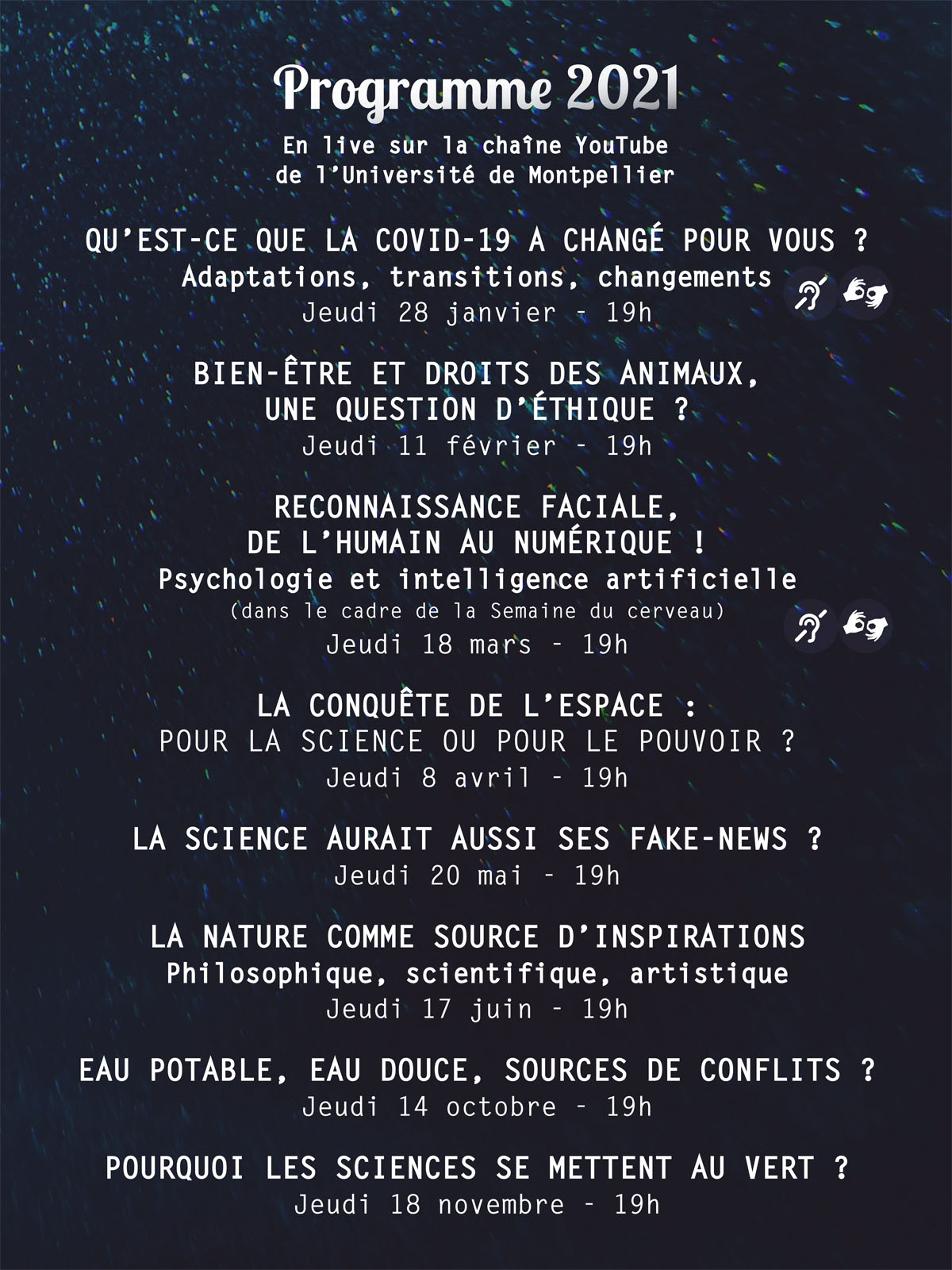
Live Science Bar: “Facial Recognition: From Human to Digital! Psychology and Artificial Intelligence”
This event has already taken place!
Available online on the "UM" YouTube channel.
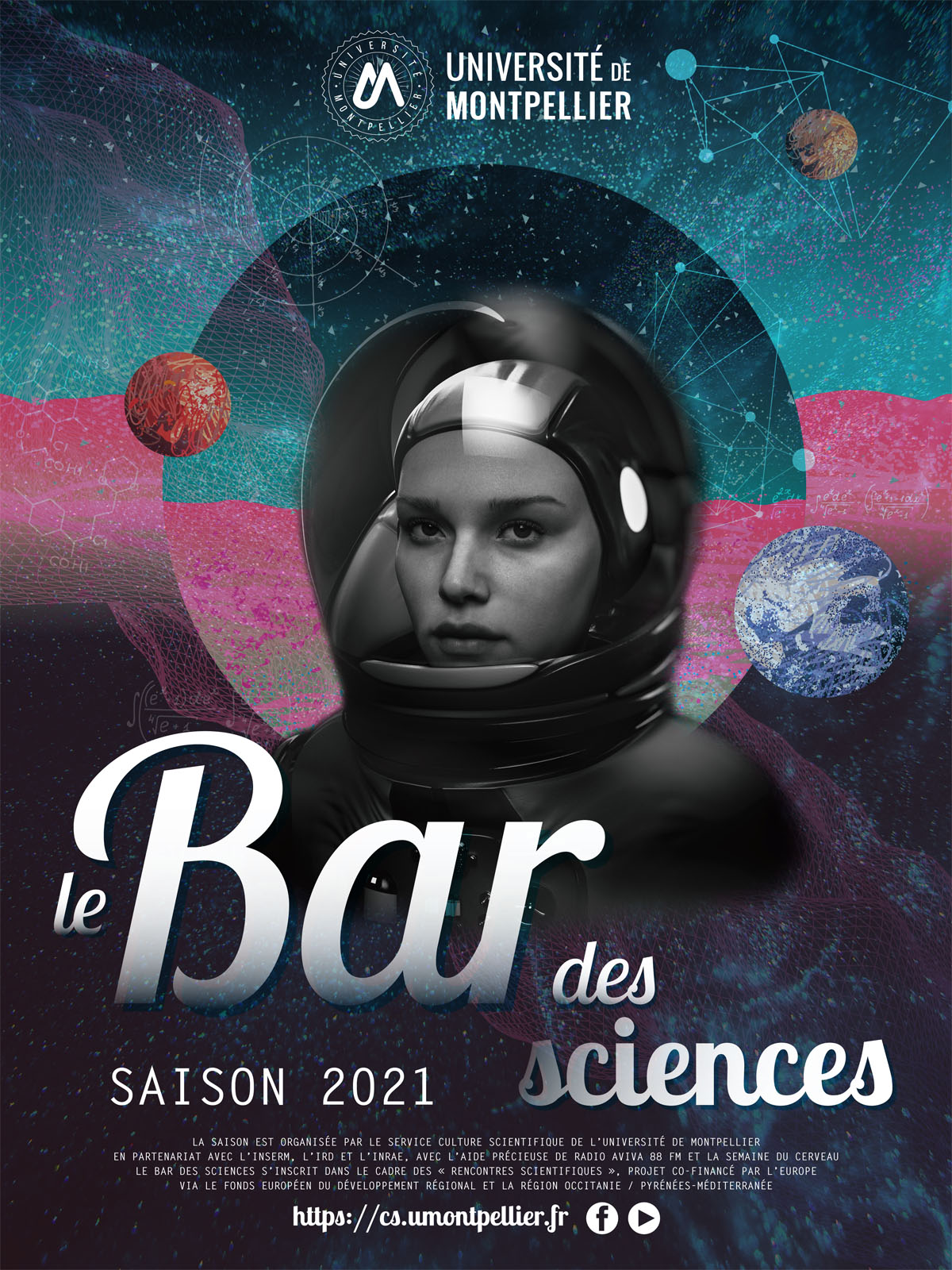 Our first interactions with the visual world begin at birth. The ability to perceive faces improves during the first few weeks of life, and by two months of age, a baby is able to recognize those around them and show a preference for their mother’s face. Very quickly, humans are able to automatically recognize familiar people, even in a crowd, thanks to brain mechanisms.
In the 1960s, American researchers began studying computer programming with the goal of recognizing faces. In the early 2000s, progress accelerated with the development of deep learning and big data. Today, facial recognition technologies—driven by the exponential growth of artificial intelligence—are becoming increasingly widespread. Facial recognition is becoming an integral part of our daily lives, particularly for securing certain access points and in numerous common applications in video surveillance, biometrics, robotics, home automation, image search, and more.
In an increasingly digitized society, the emergence of facial recognition technologies is not without implications. While they may fascinate with their science-fiction-like capabilities and futuristic nature, they in and of themselves pose significant legal, ethical, and social challenges. Governed by the General Data Protection Regulation, these uses—some more sensitive than others—raise numerous questions.
To discuss this topic, four experts from various disciplines will come together and answer questions live from the online audience
- Gina Devau, neurobiologist, researcher at the Molecular Mechanisms in Neurodegenerative Diseases (MMDN) laboratory, and professor of neuroscience in the Faculty of Sciences at the University of Montpellier.
- Adel Jomni, Professor at the Center for Research and Studies on Information Security and Cybercrime ( Research , CRESIC) at the University of Montpellier. Director of the university certificate program in Cybercrime: Law, Information Security, and Digital Forensics.
- Abderrahmane Kheddar, Ph.D. in robotics, researcher at the Montpellier Laboratory of Computer Science, Robotics, and Microelectronics (LIRMM).
- William Puech, researcher at the Montpellier Laboratory of Computer Science, Robotics, and Microelectronics (LIRMM), head of the Image and Interaction Department (ICAR), and professor at the University of Montpellier.
You can watch this Science Bar live or watch it later by clicking here.
It is part of the annual “Brain Week” event; click here to view the program.
News
“Medical Students in the Interwar Period”: A Unique Immersion into the History of the Montpellier-Nîmes School of Medicine
Published on: September 21 , 2026
The University of Montpellier is presenting an exhibition dedicated to the lives of female students and…