In Pursuit of the White Lupine
Like Alice chasing the White Rabbit in Wonderland, biologist Benjamin Péret’s team has been chasing the white lupine for the past five years.
A plant capable of absorbing nutrients even in very poor soil, which could help prevent a future phosphate crisis. The sequencing of its genome—carried out for the first time at the BPMP laboratory in Montpellier—has identified the gene responsible for this remarkable ability.
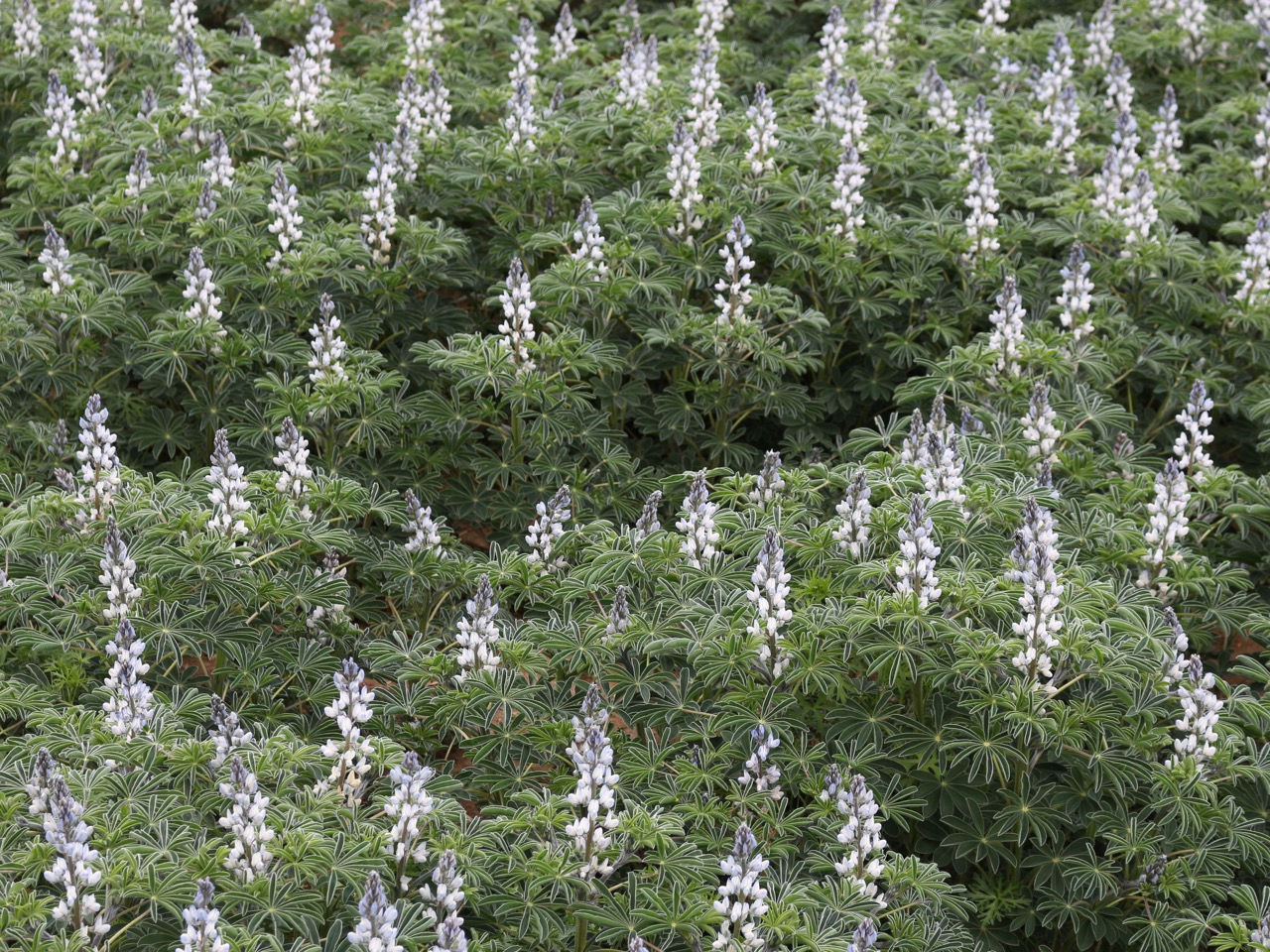
If Alice’s White Rabbit were “Late, always late“, the white lupine, on the other hand, seems to be one step ahead of the other plants in our gardens. Recognizable by its large clusters of white or multicolored flowers in its ornamental form, this legume was previously known mainly for the crunchiness of its seeds, which are served as an appetizer. Today, however, it is its roots that have caught the attention of the scientific community—and in particular Benjamin Péret, a researcher at the laboratory of Biochemistry and Molecular Physiology of Prims (BPMP). “Some "Lupins have the extraordinary ability to develop what are called proteoid roots. This is a characteristic found in very few plants," the biologist explains. Short, dense roots capable of absorbing nutrients—particularly phosphate—more efficiently, even in very poor soils.
Extraordinary Roots
Phosphate is a nutrient essential for plant growth but difficultfor plants to absorb.“Even though phosphorus is present in large quantities in the soil, it is not always in a form that plants can absorb. For example, it is estimated that 80% of the phosphate in fertilizer cannot be absorbed. Lupins are much more efficient.” How? Thanks to a specialized root system capable of secreting enzymes designed to break down phosphate from organic molecules, thereby making it available to plants. “In phosphate-rich soil, lupins will produce very few proteoid roots; in phosphate-poor soil, they will develop many,”adds the biologist.
This is a direct response by the organism to its environment—a trait typical of plants, as Laurence Marquès, also a member of the Root System Development and Plasticity team , points out : “Animals and humans are not capable of adapting their organs or limbs to the environment, whereas plants possess this plasticity that allows for direct interaction.” To take this further, the biologists sought to identify the gene responsible for the development of these remarkable roots.“We want to understand how the plant transforms the phosphate signal into a molecular signal and then into a developmental response,” explains Benjamin Péret.
Initial genome sequencing
In collaboration with eleven French and European research laboratories, including the Toulouse bioinformatics platform, Benjamin Péret’s team was the first to sequence, assemble, and publish the 38,528 genes of the lupin genome. A success in itself, but the gene responsible for the formation of these proteoid roots still had to be identified among them.
This is where mutants come into play.“All plants naturally produce mutants. It is a driving force of evolution that allows new functions to emerge over several thousand years through new genes.” Since Mother Nature’s timing does not align with that of science, the researchers used various methods to increase the natural mutation rate and were thus able to select 4 mutants out of the 25,000 tested. No magic beans or talking flowers in this story—just ordinary lupins with overdeveloped proteoid roots.
By comparing the genomes of these mutants with that of an ordinary lupin, Benjamin Péret’s team was able to identify the gene whose mutation had triggered the development of these roots.“We found that when the function of this gene is lost due to a mutation, the lupin plants produce even more proteoid roots. These mutants are fantastic tools for trying to understand the mechanism behind the formation of these extraordinary roots.”
Preventing the Phosphate Crisis
Thanks to the identification of this gene—whose identity remains a secret—biologists are considering the possibility of transferring it to field crops, which would then develop roots similar to those of lupine, resulting in significant savings in phosphate use. This is a major concern given that phosphate—extracted from mines located primarily in Morocco and China and serving as a cornerstone of global agriculture—could become scarce in the coming decades, posing the risk of an unprecedented food crisis, warns Benjamin Péret:“Phosphate isn’t like oil; there is no viable alternative.”