At theUM of Science [S06-ep04]: Plastic Pollution: The Blind Spot in Carbon Footprint Calculations
This week on *A l’UM * science, Valérie Guillard, a researcher at IATE , explains how to better measure plastic pollution using the particulate plastic footprint. We’ll stay at IATE for the report, which includes a tour of the Planet platform. A program broadcast every Wednesday on Divergence.
We’ve seen it on our beaches, in our rivers, and in our fields. We’ve seen it in the form of bags in turtles’ stomachs, as netting in birds’ nests, as bottles and straws along the roadsides, as spoons in the forests, and as microbeads in our shower gels. It’s even said to form a sixth continent in the North Pacific. Plastic is everywhere!
Unfortunately, this pollution visible to the naked eye is only the tip of the iceberg. Bottles, cotton swabs, pens, and food trays are the first incarnations of plastic that will be reincarnated for eternity—or nearly so—in the form of micro- or nanoplastics, which we’ll then find in the water we drink, the air we breathe, not to mention the food we eat. It even colonizes our brains—or worse, our placentas—like a parasite!
Global environmental pollution is, however, understood only in terms of the amount of carbon emitted to manufacture, transport, or recycle these plastic objects—but nothing is said about all those particles that invade every nook and cranny of the Earth and its inhabitants. So, since we can only control what we measure, researchers at the University of Montpellier and INRAE sounded the alarm as early as 2022 and have since developed a new indicator called the “particulate plastic footprint.”
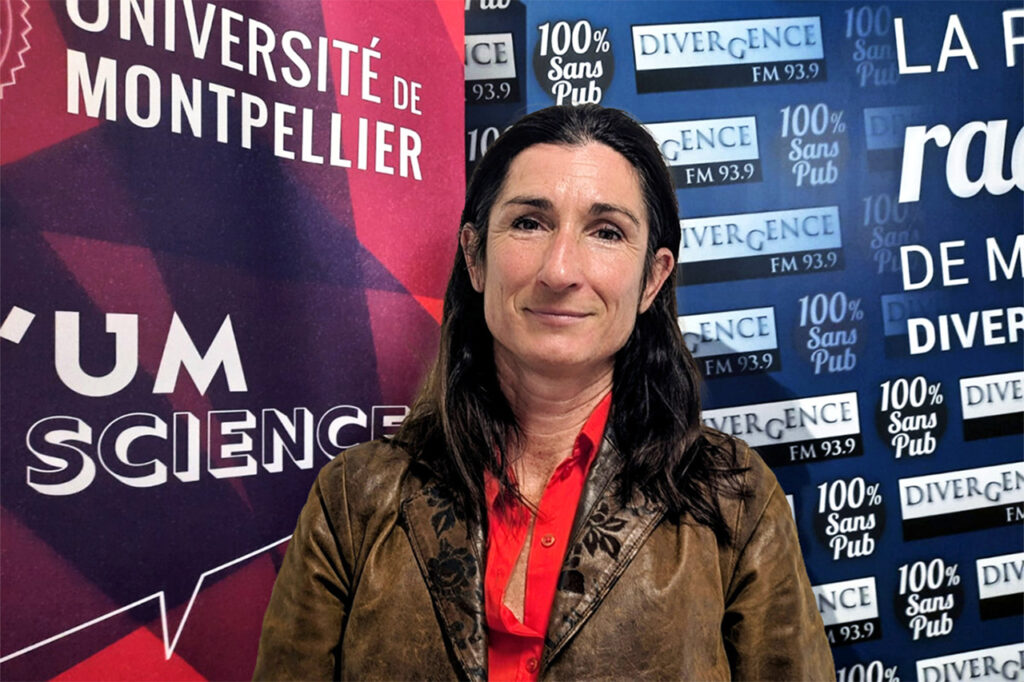
Valérie Guillard is our guest; she is a researcher at the IATE laboratory (which stands for Agopolymer Engineering and Emerging Technologies) and the author of several papers on this new indicator published last May, including one in *Science Advances* and another in *Science of the Total Environment*.
See also:
- Plastic Pollution: The Great Omitted Factor in Carbon Footprint Calculations, September 2026, The Conversation
- A pioneering concept of the "plastic particle footprint" to address the challenges posed by plastic pollution, May 2026, *Science Advances*.
- It’s Time to Learn from the Timeline of Micro- and Nanoplastic Pollution, April 2026, *Science of the Total Environment*.
In the second half of the program, we head to IATE—specifically to the Planet platform, which specializes in the processing and recovery of agricultural resources. The segment begins with its manager, Adrien Réau. He shows us an electrostatic separator used to separate components based on the particles’ charge.
At "UM : Science," here's the lineup—let's get started!
Co-production: Divergence FM / University of Montpellier
Host: Lucie Lecherbonnier
Interview: Lucie Lecherbonnier / Aline Périault
Reporting: Aline Périault
Director: Bruno Bertrand
Listen to the show “A l’UM la science” on Divergence FM 93.9
Check out theUM podcasts, now available on your favorite platform (Spotify, Deezer, Apple Podcasts, Amazon Music, etc.).