The Origins of Oyster Color: A Ph.D. Student’s Emotional Journey
The holiday season is (almost) upon us—a special time to celebrate and enjoy oysters as part of the festivities. With its distinctive shell and vibrant colors, the oyster leaves no one indifferent and still holds many secrets. This mollusk has even found its way onto researchers’ lab benches.
Michel Bonnard, University of Montpellier; Bruno Boury, University of Montpellier and Isabelle Parrot, University of Montpellier

This article is published as part of the Fête de la Science, which takes place from October1 to 11, 2021, in metropolitan France, and from November 5 to 15, 2021, in France’s overseas territories and internationally, and of which The Conversation France is a partner. The theme of this year’s event is: “Eureka! The Thrill of Discovery.” Find all the events in your region on the Fetedelascience.fr website.
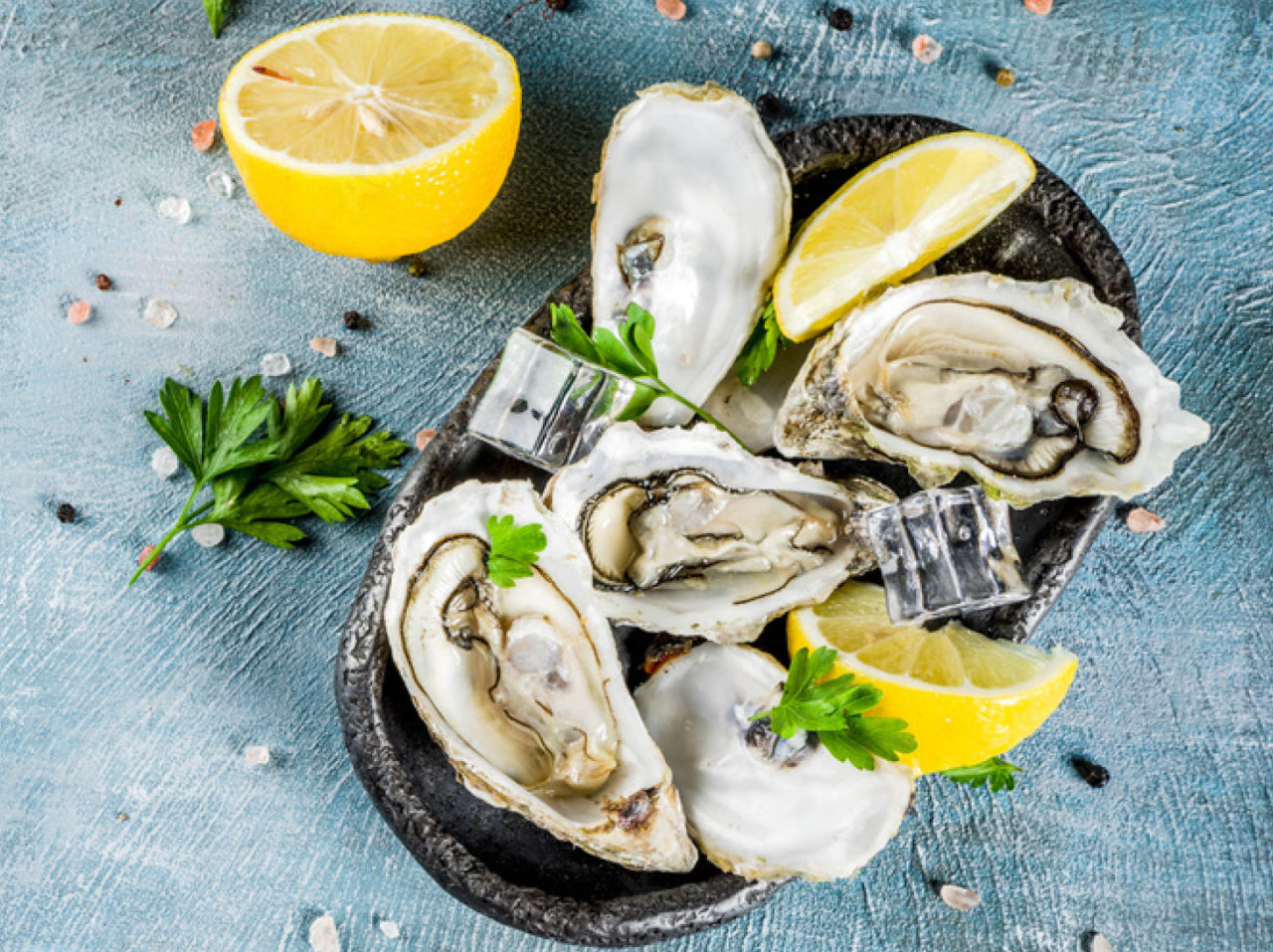
This is particularly true at the University of Montpellier, where recently, a team of researchers in natural product chemistry—of which I am a member—has been studying the molecular origin of the pink coloration of the shell of the edible oyster (Pacific oyster or Crassostrea gigas).
So how did the oyster manage to spark these researchers’ interest to the point that it led them to initiate and develop a doctoral thesis that resulted in an unexpected scientific discovery?
It all started with an intriguing pink-purple color
It all started with an observation. Patterns ranging from pink to purple partially or completely cover the outer surface of oyster shells. The scar from the adductor muscle, found on the inside of the shell, is itself sometimes colored pink, purple, or black.
Given this intriguing purplish-pink color, which is uncommon among bivalve shells, a number of hypotheses can be considered: Could this pink color be common to other biological systems, such as in flamingos, which acquire their color through a diet rich in pink algae high in carotenoids—the same family of pigments found in carrots and shrimp?
Or could this color be due to a specific structure of the shell at the nanoscale, as is the case with the iridescence of mother-of-pearl? Could it be a combination of several pigments associated with a specific structure? And what might be the applications of a material with such a color?
While the scientific community has focused on describing the shape and composition of mollusk shells that are gold, green, or blue, no published studies have examined pink shells in oysters. To explore this topic further and answer these questions, a doctoral student has been recruited—myself.
Coloring and Texturizing: Initial Experiments
Now that the initial excitement of learning about the project and meeting the supervising team has subsided, it’s time for me to review the current state of scientific knowledge.
While this literature review may not have been a true “path to the stars,” the structuring and implementation of the scientific approach, the initial experiments, and the discovery of new techniques and expertise quickly gave way to the first results, which made it possible to test the initial hypotheses against experimental reality.
Elemental and structural analyses of solid samples do not reveal a link between shell coloration and shell structure.
This color is therefore likely due to the presence of a very small amount of one or more pigments, the precise identification of which requires selective extraction from the shell.
Pigments and Mining: A Time for Reevaluation
The first challenge is to successfully extract these pigments from the 98% calcium carbonate that makes up the shell. Methods for dissolution, extraction, separation, and analysis are being specifically developed. In science, nothing ever goes exactly as imagined—there’s no room for complacency or routine.
The first challenges arise; choices do not always pay off in the face of negative results. Not all of the methods tested are reproducible, and the project stalls; perseverance and rigor are needed to establish a reliable methodology. This is a time for self-reflection in the face of failure and the fear of not measuring up or not belonging.
We explore other experimental approaches, take a step back, and discuss the project with other researchers until we are surprised by an unexpected observation.
A Discolored Sample, Hope Is Renewed
A sample left exposed to sunlight faded. Could this be evidence of a property specific to certain natural substances? Hope is rekindled, but this empirical observation must be replicated and understood.
The back-and-forth between literature reviews and laboratory work is beginning to bear fruit and is helping to reveal the outlines of an answer to the initial hypotheses.
Everything is picking up speed, experiments are multiplying, and the results are resonating with one another: it’s the euphoria of discovery. When illuminated under black light, this pink color is thought to be due, in part, to the presence of a family of photoluminescent pigments: porphyrins.
These porphyrins are consistently present in the pink patterns on the outer surface of the shells and on the scar of the adductor muscle, in contrast to the uncolored areas.
Pink shell samples are collected and then dissolved in acidic aqueous media. After filtration, the resulting solution is purplish pink. When exposed to black light at approximately 400 nm, the solution emits a reddish-pink color characteristic of certain porphyrins, including turacine.
Exploring new horizons—hard work pays off
This discovery has led our research team to explore avenues beyond those initially considered. We are investigating the oyster’s organs to establish a link between the presence of these compounds and a biological function.
The mantle, a contractile organ responsible for shell mineralization, has been found to accumulate the same porphyrins as those identified in the shell.
After a few weeks, the endogenous origin of these compounds was established; they serve as markers of a biological pathway involved in cellular respiration, similar to the one leading to hemoglobin synthesis in humans.
Joy and excitement are fleeting; you have to stay focused to publish your results quickly—a competing lab is hot on the trail of these compounds’ photoluminescence.
From Publication to Defense: The Journey
Publication—the holy grail for doctoral students—is, in reality, more akin to the work of a scientific writer. How does one recount and discuss facts within a historical context and in a foreign language? How does one choose the most compelling evidence and link it together? In which journal should one publish? These are just a few examples of the challenges doctoral students are not really prepared to face.
After about ten drafts and a peer review, the article was finally published: “Chemical Evidence of Rare Porphyrins in the Purple Shells of Crassostrea gigas Oysters.”
Finally, it’s the home stretch—and those sleepless nights spent writing my dissertation. Isolation, irritability, obsession—my emotions aren’t exactly positive during this time. By the end, I’m completely apathetic, but the manuscript makes it to its destination and can be evaluated by the dissertation committee, made up of my peers.
One last push is needed as the defense approaches: you must present your work to the committee. After numerous rehearsals, the big day arrives. The oral defense goes smoothly, the discussion is constructive, and your work is recognized. It’s time to savor the moment and pass the torch.
Looking back, two emotions stand out for me: a sense of accomplishment for having contributed to advancing fundamental knowledge within the scientific community, and the feeling of having progressed to a certain level of expertise.
Michel Bonnard, Postdoctoral Researcher in “Description, Identification, and Utilization of Natural Substances,” University of Montpellier; Bruno Boury, Researcher, University of Montpellier and Isabelle Parrot, Lecturer and Researcher, University of Montpellier
This article is republished from The Conversation under a Creative Commons license. Readthe original article.