SEARCH ALERT: “Nounours”—incredibly comforting at theUM
There are nine of them—biologists, ecologists, psychologists, computer scientists, and science communicators at the University of Montpellier. They were selected by the jury of the Researchers’ Night to lead the Great Participatory Experiment (GEP), which took place on September 27, 2019.
Their mission: to create a composite sketch of the most comforting teddy bear in France.
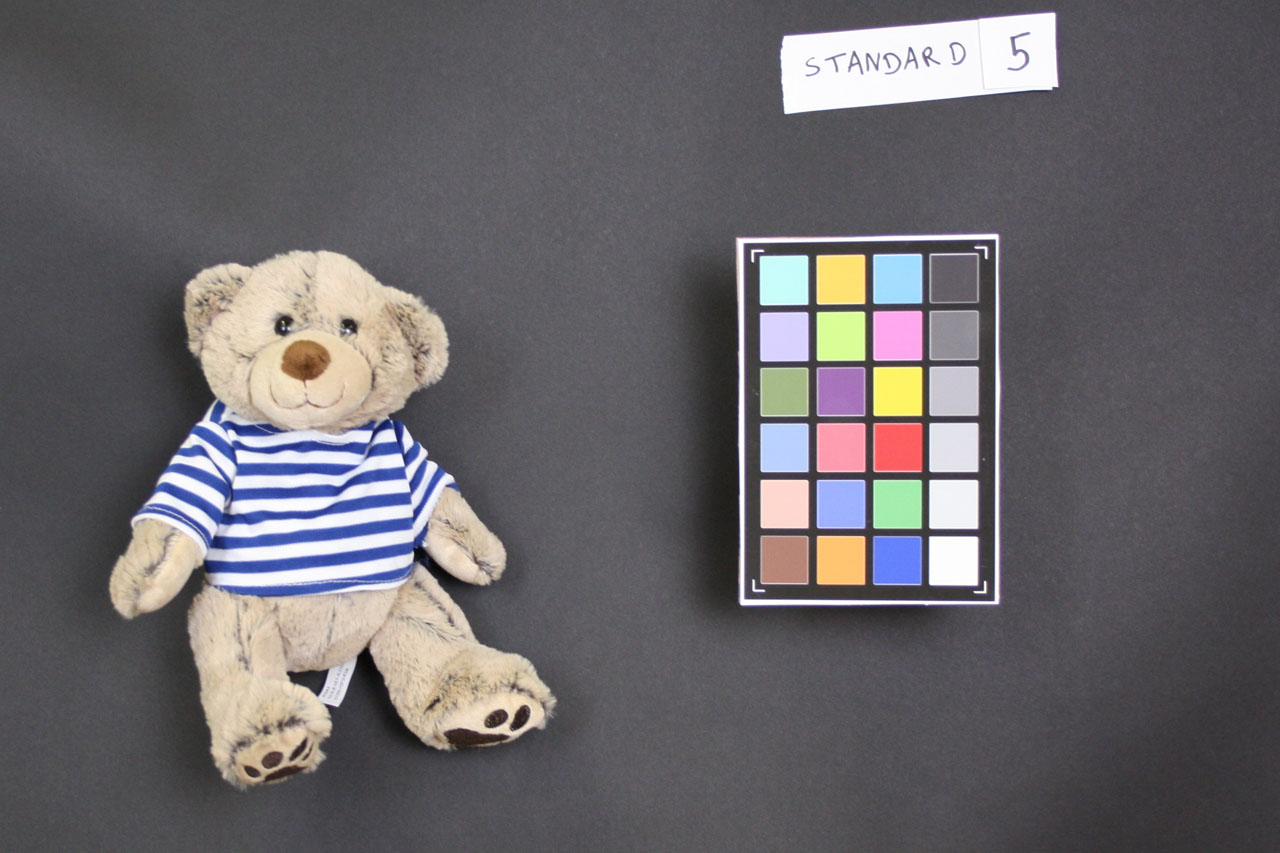
The individual is a teddy bear. He may be present in one of the twelve cities participating in Researchers’ Night on September 27. The public is advised to exercise the utmost caution: the suspect could be dangerously comforting. Since last April, nine scientists at the University of Montpellier have been working in the utmost secrecy to devise a foolproof plan to identify and expose the alleged culprit with the help of the general public.
Top Researchers Step Up to the Call
At the heart of it all is Thierry Brassac. A science communicator at the University of Montpellier, he organized his first exhibition on biodiversity in 2010, featuring stuffed animals. Fascinated by these little creatures, he became completely absorbed in them, even going so far as to teach this “gentle science” in the University of Montpellier’s master’s program in science communication.“Stuffed animal studies—you either love it or you don’t get it—but one thing is certain: scientifically speaking, it only works if you take it with the utmost seriousness,” he cautions. Now an expert in the art of classifying teddy bears, he serves as the coordinator of this project.
To track down the stuffed animal, Thierry Brassac assembled a multidisciplinary team.“At the time, Nicolas Mouquet was working on the aesthetics of fish; when I told him about the composite sketch, he suggested we classify the teddy bears based on morphological characteristics, following the model used in the natural sciences,” explains the mediator. Recognized for his work on the mechanisms underlying the emergence and maintenance of diversity, Nicolas Mouquet is also the scientific director of the Center for Synthesis and Analysis of Biodiversity in Montpellier (CESAB). Working alongside him, Anne-Sophie Tribot, an ecologist and biologist, oversaw the development of the protocol. Their goal: to identify the suspect’s morphological profile and its comforting power.
The third pillar of this elite team is Nathalie Blanc. As deputy director of the EPSYLON cognitive psychology laboratory, her in-depth knowledge of the development of emotional understanding in children will help shed light on the teddy bear’s modus operandi for luring its victims. Joining them are Michel Raymond, an evolutionary biologist atthe Montpellier Institute of Evolutionary Sciences (ISEM); François Guilhaumon, a research fellow atthe IRD; Nicolas Casajus, an eco-computer scientist at CESAB; Moad Essabbar, a doctoral student in electronics; and Christopher Sevin, a student in science communication at the University of Montpellier.
The Great Participatory Experiment
Selected last April by a jury composed of science communicators and researchers, this research project will be at the heart of the Great Participatory Experiment (GEP), which will take place on September 27 as part of the 15th Researchers’ Night. The public expected to attend in the 12 host cities is invited to participate by bringing their favorite stuffed bear. Throughout the evening, researchers will photograph the little stuffed animals and subject them to a series of tests to create a detailed profile. Participants need not worry about their precious stuffed animals:“They’ll be returned to their owners once the tests are complete. No harm will come to them,” explains Thierry Brassac.
Next, it will be their owner’s turn to answer a short series of questions developed by Nathalie Blanc. The goal: to study the subjective relationship we form with these objects, particularly the concept of comfort.“We ask participants to compare their teddy bear with eight other stuffed animals and tell us whether they find it more or less pleasing to look at, more or less soft…” explains the facilitator.
A protocol that's not "silly"
Although it may seem “silly” at first glance, setting up such an experimental protocol required meticulous preparation. It all started with choosing the relevant criteria: the size of the head, body, or eyes; roundness; the teddy bear’s posture; clothing accessories; internal mechanisms (lights, sound devices, etc.); the length and softness of the fur… Everything was taken into account! Other criteria, such as softness, had to be abandoned because they were too complicated to measure.
Another challenge is ensuring that observations are replicated under the same conditions everywhere. When it comes to color, for example, it’s difficult to settle for a simple description like “black,” “beige,” or “yellow,” as that could leave too much room for subjectivity. To quantify the shade as accurately as possible, Anne-Sophie Tribot teamed up with Montpellier-based biophysicist Frédéric Geniet to develop a colorimetric chart.“It took a tremendous amount of work not only to create it but also to print it, since we had to ensure that every city would be working with the same colors,” explains Thierry Brassac.
Putting together the control sample also posed a challenge for the team, which had to deal with purely practical constraints this time:“We had to find a supplier capable of delivering twelve of each teddy bear so that every participating city would have the same sample.” After numerous unsuccessful attempts with major retailers, it was ultimately the historic Montpellier toy store, Pomme de Reinette et Pomme d’Api, that was able to meet the researchers’ request.
The Bear: A Totem Animal
A major participatory experience that builds on the work carried out by the University of Montpellier’s Science Communication Department over many years, particularly the exhibition “From the Cave Bear to the Teddy Bear.”“What interests us is the entire imaginary aspect of the bear—its representation in our unconscious. The bear has held strong symbolic significance since prehistoric times; it is the quintessential totem animal of Western societies,” concludes Thierry Brassac.
Researchers still have a lot of work ahead of them to ensure everything is ready by September 27. A website, which will be accessible to the public afterward, will be dedicated to the data processing and analysis efforts. The result will be a carefully collected dataset that can be analyzed using bioinformatics tools, which will help create a profile of the most comforting teddy bear in France—and… perhaps even a scientific publication?
Researchers' Night, September 27, 2019
In Toulouse-Albi, Marseille, Bordeaux, Limoges, Saint-Étienne, Angers, Le Mans, Brest, Dijon, Besançon, Paris, and Saint-Denis de la Réunion