Mapping the Distribution of Migratory Seabirds to Better Protect Them
Migratory seabirds, which are particularly vulnerable, are important indicators of the ocean’s health. Drawing on more than four decades of monitoring studies of these species, Marie-Morgane Rouyer, then at the Center for Functional and Evolutionary Ecology (CEFE), and her co-authors have, for the first time, mapped the distribution of these highly mobile birds across the entire Atlantic Ocean by studying their distribution between national and international waters and their coverage by marine protected areas. The study, published on September 16, 2026, in *Conservation Letters*, provides a better understanding of these long-distance travelers and offers important insights for the strategic expansion of marine protected areas, thereby informing international biodiversity conservation goals.
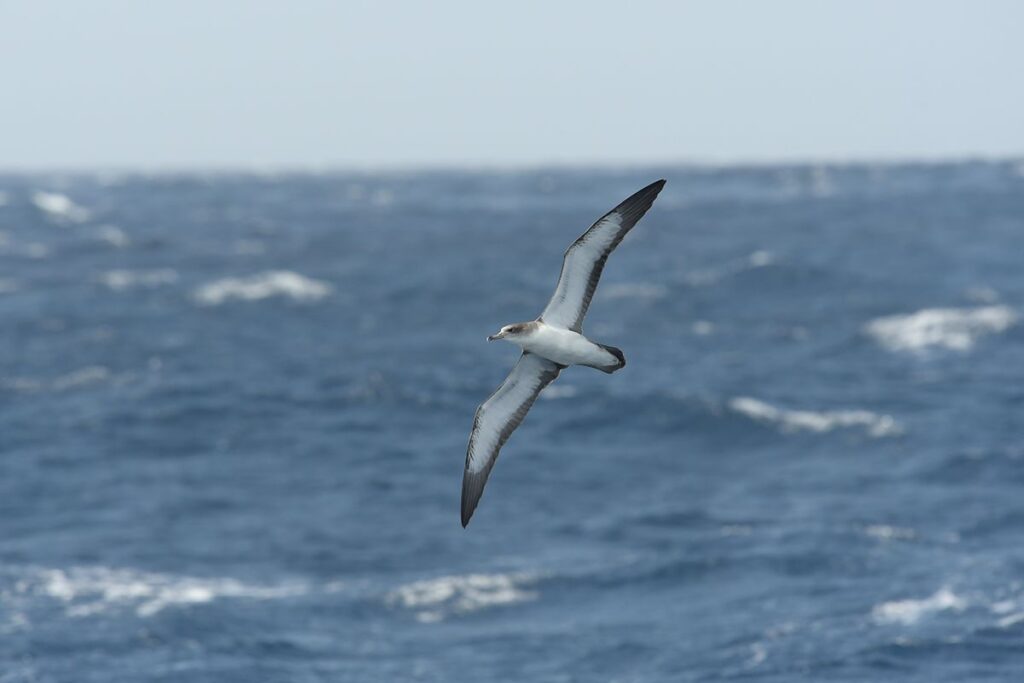
Countries around the world have committed to expanding the network of marine protected areas (MPAs)—areas of the ocean designated to protect biodiversity—to 30 percent of the ocean by 2030, more than triple the current coverage, by focusing on areas important for biodiversity. They have also committed to better protecting migratory species.
Seabirds are the most threatened group of birds, both on land—where they breed—and at sea—where they live and feed. Some species travel thousands of kilometers each year and serve as important indicators of the ocean’s health. Protecting them requires a better understanding of their distribution across the ocean and their presence within marine protected areas.
Drawing on a previously unpublished dataset comprising more than 13,000 seabirds belonging to 44 species of long-distance migrants, this new study maps the spatial and temporal distribution of these species across the entire Atlantic Ocean and its adjacent seas, from the Arctic to Antarctica. Certain areas stand out as being particularly important throughout the year, such as the Patagonian continental shelf (South Atlantic) or the Grand Banks of Newfoundland (North Atlantic). Other areas are seasonally important, such as the Mediterranean Sea or the Benguela Current off the coast of Namibia, where large numbers of birds congregate to feed or breed. These areas represent major opportunities for the conservation of marine biodiversity.
Birds Not Adequately Protected by Marine Protected Areas
The study also shows that these long-distance migrants are poorly covered by the current network of MPAs, with less than 14% of the density of monitored species found within MPAs, and only 7% of the Atlantic’s surface area covered by these areas. Strategically expanding the current network of MPAs could lead to better protection of seabirds, covering up to two-thirds of the density of the monitored species. Although international waters—beyond national jurisdiction—are just as important for the monitored birds as national waters, protection there remains particularly weak, with only 1.3% of the Atlantic’s international waters covered by marine protected areas.
This study is the first synthesis of distribution data for migratory seabirds across the entire Atlantic Ocean and provides important insights for better protecting these species. In particular, this knowledge can inform the strategic expansion of the network of marine protected areas (MPAs) to include areas critical for biodiversity, and also enable these highly mobile marine species to be better integrated into maritime spatial planning at the national, regional, and international levels. It thus contributes to the implementation of the targets of the UN Convention on Biological Diversity, informs the action plans of the UN Convention on Migratory Species, and supports the future establishment of MPAs on the high seas through the High Seas Treaty, which aims to better protect international waters. This work highlights the essential role of enhanced international cooperation and coordination in better protecting these species, uniting countries across an entire ocean.
Rouyer et al. Highly mobile seabirds reveal areas of conservation importance across the Atlantic Ocean. (2026). Conservation Letters. https://doi.org/10.1111/con4.70075