Heat, water, electricity: What if data center waste became a resource (or vice versa)?
Many data center projects are being launched or are under construction in France. Given their impact on the environment and local communities, their location warrants discussion, especially since some projects could be integrated into existing or developing networks: they would thus contribute to the sharing and reuse of resources such as heat, water, and electricity.
Michel Robert, University of Montpellier
Construction projects for data centers—critical infrastructure for digital technology and artificial intelligence (AI)—are on the rise in France. Such infrastructure has numerous impacts: land development, noise, the creation of heat islands, and air pollution (from diesel generators and refrigerant gases). But there are also economic and social impacts: a data center creates few direct local jobs, but contributes to the country’s overall attractiveness and innovation.
Unfortunately, current projects all too often overlook discussions with the affected communities, leading to conflicts over the use of water, energy, and land resources. The location of a data center therefore warrants discussion in a fully transparent manner.
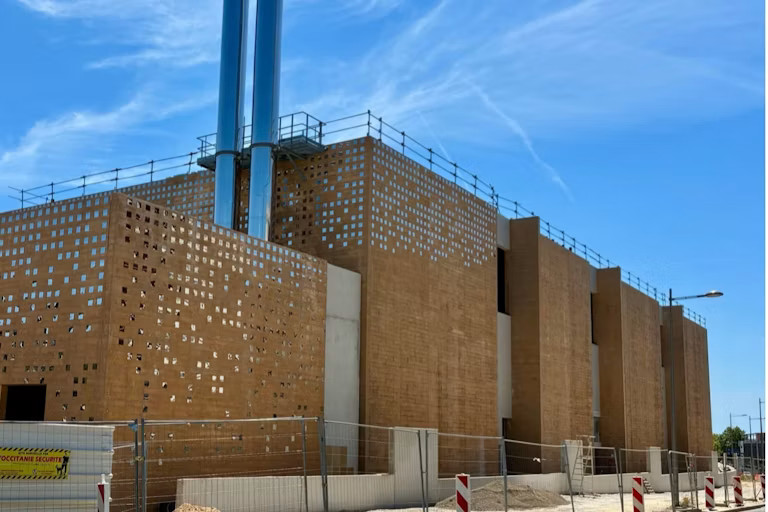
Especially since the issue is no longer just about building more energy-efficient data centers. It is also about how to integrate them into a circular economy capable of recovering waste from data centers and transforming it into useful resources for local communities, in order to better manage the commons. Following the example of a national data center based in Montpellier (Hérault), which will be connected to the city’s district heating network, a data center could become a hybrid infrastructure where data, heat, water, and energy circulate together to serve a single ecosystem.
In that case, the real challenge will no longer be solely digital: it will be territorial, energy-related, and industrial, while also raising questions about how we regulate our useful and frivolous uses.
Drawing on the expertise of public data centers
For half a century, scientists have been using shared high-performance computing centers. The National Computing Center for Higher Education (Cines) in Montpellier is a public-service data center of national interest. It houses servers and supercomputers cooled by warm water and experiments with all techniques for optimizing computations and the necessary resources.
With an installed electrical capacity of 2megawatts, its annual electricity consumption is 17 gigawatt-hours. More than two-thirds of this consumption is used by the digital infrastructure itself and by cooling systems.
To dissipate the heat generated by its equipment, Cines consumes approximately 7,000 cubic meters of water annually—enough to fill two Olympic-sized swimming pools three meters deep. The water is used to cool the machine rooms via adiabaticcooling towers: it circulates through closed loops without becoming contaminated and could be recycled.
If we extrapolate these figures to the impact of a 1-gigawatt data center (for example, the 1.4-gigawatt Campus IA project in the Île-de-France region)—which is 500 times the size of Cines—then electricity consumption would be on the order of 9 terawatt-hours per year, corresponding to the annual consumption of several million residents and the water equivalent of several hundred Olympic-sized swimming pools. Of course, these are merely orders of magnitude, as the actual impacts will depend on the equipment installed, its operating times, the services provided, and the location—but they give an idea of the scale of the problem.
Beyond these orders of magnitude, Cines is currently entering a new phase. It will be connected to the district heating network north of Montpellier (the Réseau de chaleur Nord Alco, or RCNA), which will reduce the energy and water resources needed to cool the servers and will enable the production of hot water and the heating of several dozen homes.
What is a district heating system?
- A district heating system is a network of technical equipment that generates heat and distributes it through underground pipes to buildings in a city or neighborhood. The heat is delivered to the base of each building via a substation that includes a heat exchanger, a control system, and an energy metering station.
- The heat is used for space heating and domestic hot water production. The building is heated by a so-called secondary circuit, through which water circulates in the radiators. Domestic hot water is produced centrally in the substation and distributed to the units alongside cold water.
By regulating the construction of data centers, we could transform these facilities into unexpected contributors to the environmental transition and a circular economy. They provide heat and water, which can be reused. Even their electricity consumption could play a role in balancing power grids connected to renewable energy sources.
Heating in the Data Center
Thermal energy generated from the conversion of electrical energy can power district heating networks and heat swimming pools or buildings. To achieve this, however, data centers must be designed from the outset to generate heat and be integrated into the urban fabric.
The real challenge lies in building infrastructure capable of recovering heat rather than releasing it into the atmosphere, and then distributing it. Because of heat losses during transport, the easiest solution is to be located near a district heating network and connect to it. This type of integration has already been achieved: for example , the Olympic swimming pool for the 2024 Paris Olympics (Saint-Denis, Seine-Saint-Denis) was partially heated using heat from a nearby data center.
For other uses of heat—whether industrial or agricultural—the facilities would need to be located nearby, and, above all, the data center project would need to be integrated with the agricultural or industrial project from the design phase onward. For example, industrial applications require a specific temperature.
A (hot) water supplier
Water management depends on the cooling systems installed and the environment. Modern servers use liquid cooling systems that come into direct contact with the electronic components, which are more efficient than traditional methods of cooling server rooms.
The goal is to significantly reduce the withdrawal of drinking water and to integrate data centers into local water reuse loops. Rather than competing directly with domestic or agricultural uses, data centers could become a link in industrial ecosystems where water circulates among multiple users before returning to the environment.
For this type of shared use, each loop may have its own specific characteristics. In the case of a closed-loop system connecting a data center to a district heating network, the water would return cooled from the district heating network. If, after a few cycles, its quality has deteriorated too much for the data center (where water quality is monitored), it can be discharged or, ideally, reused for other non-potable water applications (watering, irrigation, manufacturing, or integration with a wastewater treatment plant)—a strategy developed notably by Google.
Stabilizing the power grid
To support the energy transition, data processing within a data center can be adapted to accommodate intermittent renewable energy generation.
Certain computations could thus be accelerated at a given time to consume excess available electricity by operating at the maximum computing speed of all processors. Conversely, during periods of grid strain, some activities could be slowed down by lowering operating frequencies or even by suspending certain services.
A data center would thus become a tool for regulating electricity consumption, capable of supporting the development of renewable energy sources, whose output is inherently variable.
That is why Google is working with U.S. electricity providers to have data centers temporarily adjust their electricity consumption (an approach known as“demand response”) in order to relieve pressure on the grid during peak demand periods. This flexibility relies in particular on deferring or reducing certain non-urgent AI computing workloads, without impacting critical services. The goal is to accelerate the connection of new data centers, limit investment in new electrical infrastructure, and improve grid stability.
There are also innovative approaches at the intersection of computer science, embedded systems, and power electronics for building modular data centers powered by photovoltaic panel systems.What makesthis approach unique is the treatment of energy as a finite resource, just like storage or computing capacity. Energy is allocated and routed between modules based on processing needs, just as data is.
For larger facilities, alternatives will need to be found, such as data centers that are adapted to local energy capabilities. That is whatthe French Electricity Transmission Network (RTE) is currently working to achieve.
At this stage, integrating data center projects into a circular economy—one that involves local communities and makes use of energy, waste heat, and water—is no longer an option: it is essential for sustainable digital development.
Michel Robert, University Professor, University of Montpellier
This article is republished from The Conversation under a Creative Commons license. Readthe original article.