Chikungunya in Réunion: A Major Outbreak That Requires Increased Vigilance
A severe chikungunya outbreak has been raging in Réunion since the beginning of 2025. In early April, two people—aged 86 and 96, one of whom had underlying health conditions—died, and 14 newborns were in intensive care. Here is an update on this still-little-known disease and this unprecedented outbreak.
Yannick Simonin, University of Montpellier
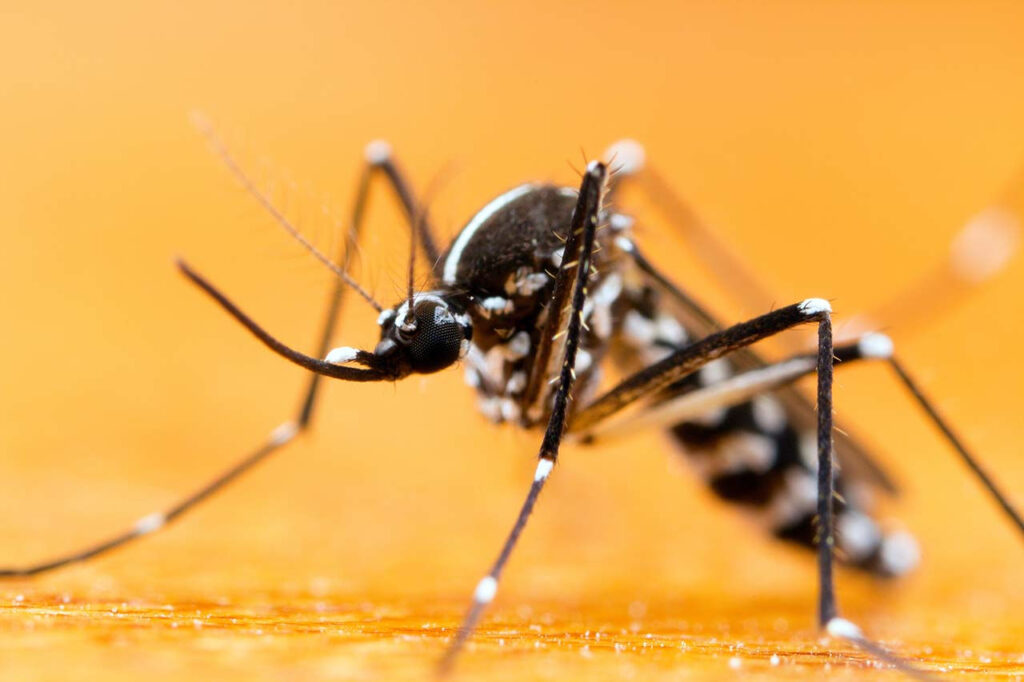
Chikungunya is a viral disease transmitted to humans through the bite of a mosquito that has previously been infected with the virus. Since early 2025, the island of Réunion has been experiencing a large-scale outbreak. The peak of the outbreak could occur in April or May.
Are chikungunya outbreaks common in Réunion?
The situation currently unfolding on Réunion is unusual. In fact, the last major chikungunya outbreak on Réunion occurred twenty years ago, in 2005–2006. Prior to that, only a few isolated cases of chikungunya had been reported on the island.
Before this first major outbreak, Réunion was not an area where the chikungunya virus circulated, because Aedes aegypti—the primary mosquito vector for this virus—is not established there. However, for many decades, the island had been home to another mosquito from the same family, Aedes albopictus, better known as the tiger mosquito. But at that time, the tiger mosquito was not known to transmit this virus.
Monday through Friday and on Sundays, get free analysis and insights from our experts for a fresh perspective on current events. Subscribe today!
However, in 2005–2006, much to the surprise of virologists, the first major chikungunya outbreak on Réunion was transmitted by the tiger mosquito. It was later discovered that the chikungunya virus had undergone a mutation on its surface, allowing it to adapt better to the tiger mosquito. The virus’s arrival on the island is thus a well-known and troubling example of a virus adapting to a new environment.
What factors contributed to the outbreak of the 2025 epidemic?
It is always very difficult to predict the outbreak of this type of epidemic. However, certain conditions contribute to their occurrence, starting with the large population of tiger mosquitoes on Réunion. The southern summer is hot and humid, creating an ideal environment for their reproduction.
Recent heavy rainfall has also contributed to standing water, which has increased the number of mosquito breeding sites. This phenomenon was likely exacerbated by Cyclone Garance, which brought heavy rains on February 19 and 20, 2025.
Furthermore, in heavily urbanized areas of Réunion, artificial breeding sites—such as buckets, used tires, flowerpots, cans, clogged gutters, and other objects left outdoors and filled with standing water—also contribute to egg-laying and egg development.
Finally, since the last major chikungunya outbreak occurred in 2005, the local population has very little immunity to this virus, which allows the pathogen to spread fairly easily, particularly among low-income populations living in unsanitary conditions that are conducive to mosquito breeding.
Where is chikungunya found in France and around the world?
The chikungunya virus is present in fairly large geographic areas where Aedes aegypti—the mosquito originally known to transmit this virus—is established, including Asia, Oceania, Africa, and the Americas. It is worth noting that the range ofAedes aegypti is expanding. Due to global changes—particularly climate change—there is a high probability that it will one day appear in Europe, along with the array of viruses it can transmit…
Thanks to a mutation that emerged twenty years ago —allowing the virus to adapt to the tiger mosquito (Aedes albopictus) found on Réunion—the range of the chikungunya virus has changed significantly. Now, several strains of the chikungunya virus are circulating, depending on whether they are adapted to Aedes aegypti or the tiger mosquito (Aedes albopictus).
In the case of France, there is a risk of chikungunya transmission both in areas where Aedes aegypti is established—for example, in the French West Indies (Guadeloupe, Martinique, Saint Martin, Saint Barthélemy), or in French Guiana, as well as in areas where the tiger mosquito (Aedes albopictus) is present, such as Réunion and mainland France.
Aedes albopictus is well established in many regions, particularly in the south but also in the Île-de-France region and as far east as the eastern part of the country. As of January 2024, it is believed to have established itself in 78 of France’s 96 departments.
It should be noted that the risk is high in Mayotte, which—largely due to its favorable humid tropical climate—is home to both species of mosquitoes.
Local cases of chikungunya—linked to infections occurring within the country rather than to travelers who were already infected upon arrival—have been reported in the past in mainland France. The first detection of this virus in the Île-de-France region in 2024 clearly demonstrates the possibility that it could become established in Europe, and not just in the Mediterranean regions.
Why do we hear more about dengue fever than about chikungunya?
The chikungunya virus, like the dengue virus (or the Zika virus), is primarily transmitted by two major categories of mosquitoes of the genus Aedes: the tiger mosquito (Aedes albopictus) and Aedes aegypti.
These viruses belong to a category of viruses called arboviruses, a term derived from the English phrase “arthropod-borne virus,” which means “viruses transmitted by arthropods.”The reason we hear more often about dengue fever is that it is the most widespread arbovirus worldwide, according to the World Health Organization (WHO).
This is also because the mortality rate associated with dengue is higher. Without appropriate treatment, it can reach as high as 10% or even 20% (mainly due to hemorrhagic symptoms), but it most often ranges between 0.3% and 2.5%, depending on the study and the country.
The case-fatality rate for chikungunya, on the other hand, is much lower, at around 0.1 percent. The public health concern associated with chikungunya stems from its ability to cause chronic, disabling joint damage in many patients.
The groups most at risk for severe forms of chikungunya—which can manifest asneurological disorders such as encephalitis—are the elderly, particularly those who already have other medical conditions, immunocompromised individuals, and pregnant women.
Why isn't chikungunya a minor illness?
Chikungunya causes joint pain that can affect the ankles, hips, shoulders, wrists, and other joints—and can persist for a very long time, even up to several years after infection, in nearly half of those infected. This condition can be highly debilitating in daily life for those affected.
In fact, “chikungunya” means “one who bends” or “one who walks bent over” in Makonde, a language spoken in Tanzania and Mozambique, where the disease was first described. This accurately describes the posture of patients with the disease, who may experience joint pain so severe that they are forced to adopt a hunched posture. Suffering from chronic pain and fatigue can be particularly debilitating, preventing people, for example, from carrying out their normal work activities.
It is important to emphasize that there are no specific treatments for chronic complications caused by chikungunya, complications that, moreover, remain poorly understood.
Is it due to the virus persisting in the body? Or is it caused by an immune dysregulation leading to prolonged inflammation? The question remains open, even as research in this area progresses.
Why isn't the new vaccine recommended for the entire population?
It is worth noting that we are fortunate to have a vaccine available, which is not the case for most mosquito-borne viruses. The chikungunya vaccine is very new, having received marketing authorization in the European Union as recently as June 2024 (the Ixchiq vaccine from Valneva).
In light of the outbreak in Réunion, France, the French National Authority for Health (HAS) has estimated that
"The available evidence is sufficient to recommend it for populations at risk of severe and/or chronic forms of the disease, for whom the expected benefit is significant."
In practice, the HAS prioritizes people aged 65 and older, particularly those with comorbidities (high blood pressure, diabetes, cardiovascular, respiratory, kidney, liver, and neurovascular diseases), as well as people aged 18 to 64 with comorbidities. At this stage, the HAS does not recommend the use of the vaccine for pregnant women. The vaccine is also recommended for healthcare professionals and vector control professionals (i.e., those specializing in mosquito control).
For now, the first people eligible for vaccination are the most vulnerable, since available doses are limited and there is not yet enough data to assess its overall effectiveness, even though the available data suggest it is expected to be sufficiently effective.
However, in the long term, the question may arise of expanding this vaccination effort in an attempt to curb the spread of the virus and protect the entire population of Réunion. It should be noted that other vaccines are also currently under development.
What are some ways to combat chikungunya, other than the vaccine?
To protect against chikungunya, teams of vector control experts, commissioned by the regional health agencies (ARS), are dispatched to the site as soon as a case of chikungunya is identified, in order to eliminate adult mosquitoes and larval breeding sites.
However, to limit the spread of mosquitoes at the source, it is important to educate the public so that they avoid creating artificial breeding sites—those pools of standing water that allow mosquitoes to lay their eggs and are the primary source of their proliferation.
Finally, it is important to reduce the risk of bites by using mosquito nets, repellents, and insecticides, and by wearing light-colored, loose-fitting clothing that covers the skin.
How can we assess the risk of a chikungunya outbreak in mainland France?
In the opinion issued by the French Agency for Food, Environmental and Occupational Health & Safety (ANSES), “The Tiger Mosquito in Metropolitan France: Risks and Impacts of an Arbovirus” from July 2024, the expert group of which I was a member clearly identified chikungunya as posing a potential epidemic risk in Metropolitan France in the medium term (along with dengue and Zika), as the majority of departments are now colonized by the tiger mosquito.
An outbreak of chikungunya, like those of other arboviruses, also depends on the overall dynamics of the virus’s circulation and air travel between countries where the virus is circulating.
Consequently, scheduled air travel between France and Réunion—as well as, more generally, with the overseas departments and regions (DROM) and areas where chikungunya is actively circulating—could facilitate the introduction of the virus into mainland France as early as the summer of 2025.
Yannick Simonin, virologist specializing in the surveillance and study of emerging viral diseases. University Professor, University of Montpellier
This article is republished from The Conversation under a Creative Commons license. Readthe original article.