How Can We Clean Up Brownfields in the Face of Residents' Skepticism?
Nearly eight out of ten French people live near a contaminated brownfield site. Despite cleanup efforts, redevelopment policies, and the “zero net land take” (ZAN) goal, several thousand sites remain abandoned. Amid technical uncertainties, hidden cleanup costs, and collective memory, it remains difficult to restore residents’ trust.
Cecile Bazart, University of Montpellier and Marjorie Tendero, ESSCA School of Management
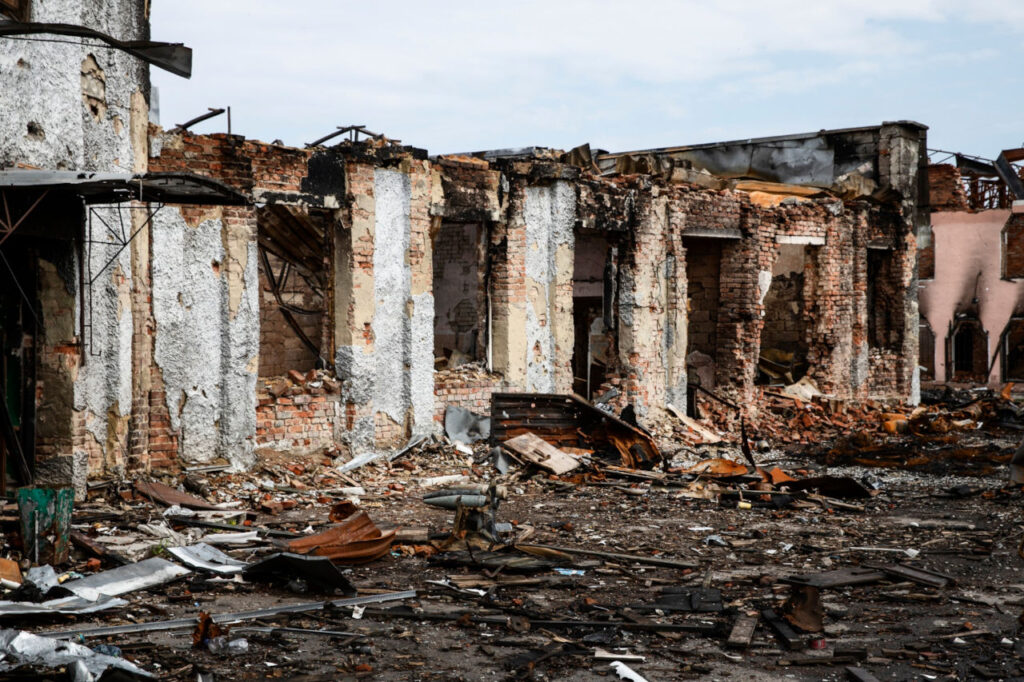
You may be living near a contaminated brownfield without even knowing it: this is the case for nearly eight out of ten French people. Despite the redevelopment policies implemented in recent years—particularly as part of the France Relance plan (2020–2022) and the initiatives launched by the French Agency for Ecological Transition (Ademe)—these brownfields still exist. According to data from the national Cartofriches inventory, more than 9,000 brownfields will still be awaiting redevelopment projects in France by 2026.
Former factories, landfills, military barracks, port or rail areas, as well as hospitals, schools, and public service facilities… Brownfield sites are, by their very nature, highly diverse. Most are legacies of our industrial past. But some are associated with current service-sector activities that were established on former industrial sites that were already contaminated, as illustrated by the former Kodak site in Vincennes (Val-de-Marne).

Beyond their physical footprint, some brownfield sites have left a lasting mark on their local areas and collective memory. Certain names are now associated with persistent pollution—or even social crises—such as Métaleurop, Péchiney, Florange, and AZF.
These abandoned sites—whether built-up or not, but requiring renovation before any reuse—are undergoing a variety of transformations: housing, gardens, offices, shopping centers, or cultural spaces, such as the Belle-de-Mai brownfield in Marseille’s 3rd arrondissement. At a time when France has committed to the goal of zero net land take (ZAN), the redevelopment of brownfields is a major challenge for local areas seeking to limit urban sprawl and enhance their appeal.
Yet, despite cleanup efforts, many sites struggle to be put to new use. Why? Because cleaning up the soil is not enough to erase the past or restore residents’ trust.
Remediation: An Essential but Complex Step
Before being redeveloped, a contaminated brownfield site undergoes soil assessments, which most often lead to the development of a management plan. This document outlines the measures needed to make the site suitable for its intended use: excavation of contaminated soil, containment under slabs or asphalt, water management, long-term monitoring, or restrictions on use.
Its content depends on the future use. Converting a brownfield site into a logistics warehouse does not entail the same requirements as building a school. The more “sensitive” the use, the higher the health requirements. In France, therefore, soil remediation does not aim to restore the soil to a state completely free of contamination. It is based on a balance between residual contamination, potential exposure, and future uses.
Added to this is a reality that is often underestimated: the cost of cleanup varies widely and is rarely known with precision from the outset.
Depending on the site’s characteristics, the pollutants, their depth, and the intended uses, costs can rise exponentially. In the event of unexpected discoveries (such as asbestos hidden in fill material or higher-than-expected concentrations of heavy metals), the management plan is modified. In other words, remediation is often simple on paper but much more uncertain in reality, with potentially hidden costs.
Stigma: The Blind Spot in Career Transition
This technical uncertainty has an impact on residents’ perceptions; as work progresses, they sometimes see traces of a past they thought they had brought under control resurfacing. Even after work is completed in accordance with standards, many brownfield sites struggle to attract residents, users, or investors.
This is what is knownas the “stigma effect.” A site remains associated with its past, with high-profile pollution incidents or health and social crises that have left a lasting impression.
In other words, the past continues to play out in the present. The soil has been remediated, but the collective memory has not. To extend the metaphor, the brownfield becomes an “imperfect present”: legally rehabilitated, but symbolically suspect. This stigma has concrete effects: prolonged vacancy or underutilization and local opposition, for example.
To objectively assess this mistrust, we conducted a survey of 803 residents living near a contaminated brownfield site, spread across 503 French municipalities. The results are clear: nearly 80% of those surveyed said they were dissatisfied with the way contaminated brownfield sites are managed and redeveloped in France.
This dissatisfaction is more pronounced among people who perceive the soil as heavily contaminated, who have previously experienced pollution, or who express little confidence in government actions. They also report being more reluctant to use or invest in the sites once they have been remediated.
A Discrepancy Between Technical Management and Perceptions
These findings reveal a disconnect between the technical management of brownfields and how residents perceive them. From a regulatory standpoint, a site may be deemed compatible with its intended use, but from a social standpoint, it may still be perceived as risky.
There are several factors that explain this discrepancy.
- The first reason has to do with the invisibility of soil contamination. Unlike a dilapidated building, decontaminated soil is not visible, which can fuel doubt.
- Collective memory also plays a central role. Contaminated brownfields are often associated with a troubled industrial past, sometimes marked by health scandals or social crises that leave lasting impressions on people’s perceptions.
- Finally, a lack of information can fuel suspicion. Concepts such as residual pollution or a management plan can indeed be difficult for non-specialists to grasp. However, when pollution has not been completely eliminated, the message may be misunderstood and perceived as a hidden danger.
Thus, even if the technical solutions are sound, the stigma persists. Yet without public trust, there can be no sustainable transition.
These results highlight a key point: the redevelopment of contaminated brownfields does not depend solely on the quality of the remediation work. It depends just as much on the ability to foster a climate of trust. This requires clear, transparent, and accessible information that explains not only what has been done, but also what remains in place and why. It involves engaging local residents in projects early on, so that they are not simply informed of the changes after decisions have already been made. Finally, it requires acknowledging the weight of the past and local history, rather than attempting to erase it.
In the context of zero net land take (ZAN), contaminated brownfields represent a land-use opportunity. However, without taking social and symbolic factors into account, technical solutions—no matter how effective they may be—are likely to remain insufficient. Remediating the soil is essential. Building or restoring residents’ trust is just as essential.
Cecile Bazart, Assistant Professor, University of Montpellier and Marjorie Tendero, Associate Professor of Economics, ESSCA School of Management
This article is republished from The Conversation under a Creative Commons license. Readthe original article.