How can we explain the success of food-waste-reduction apps?
10 million metric tons of food wasted each year—equivalent to approximately 16 billion euros and 3% of greenhouse gas emissions… Food waste thus represents a cost of more than 100 euros per person per year. This remains a significant figure, especially since 8 out of 10 French people reported having changed their eating habits due to inflation. According to a Harris Interactive poll conducted for Cetelem, 87% said they had reduced their food waste.
Béatrice Siadou-Martin, University of Montpellier and Jean-Marc Ferrandi, University of Nantes
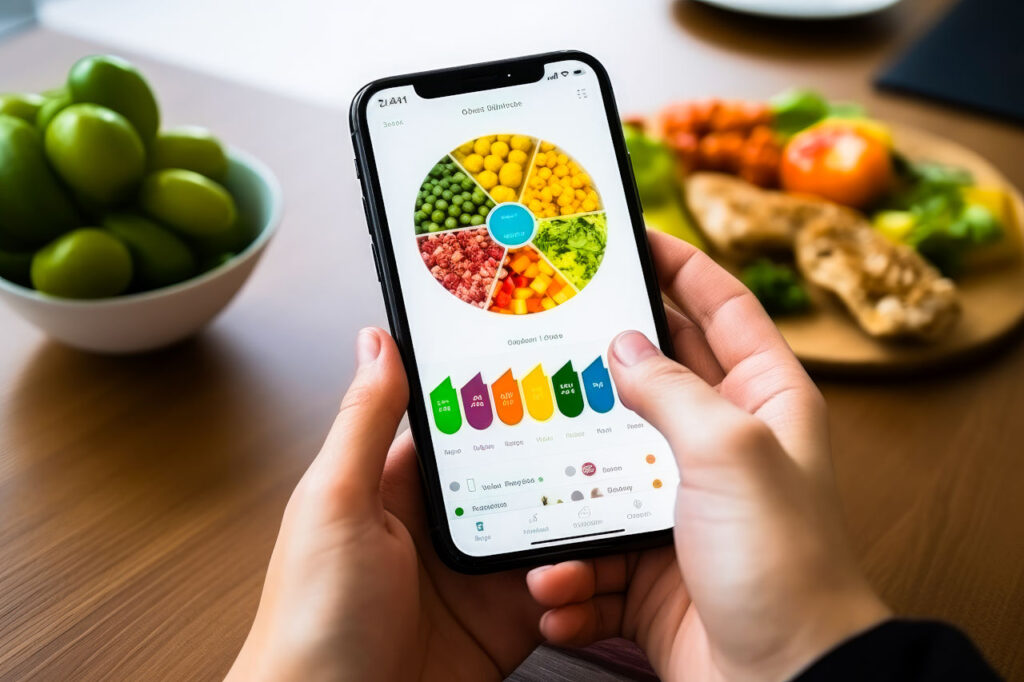
Several mobile apps that tackle this problem emerged less than ten years ago and are booming. They’re called Optimiam, Phenix, and Too Good to Go. In addition to reducing food waste at restaurants, local stores, and large retailers, these apps offer consumers a discount of at least 30 percent—or, in some cases, a donation to help the underprivileged. They come into play late in the consumption process, when the “use by” date is approaching or the “best before” date has passed.
Their use, which we have observed in our research, remains relatively simple—unlike many sustainable practices that can be difficult to implement or whose benefits seem too distant. The adoption rate of these digital tools continues to rise: 38% of French people (more than one in three) use these apps. Too Good to Go, the market leader, reports more than 15,300,000 users, with a 30% increase in that number between 2022 and 2023. This represents more than 55 million “saved” shopping carts. Phénix, with estimated revenue of around 18 million euros, reports a 30% increase in shopping baskets sold between 2021 and 2022 in the Île-de-France region. It has also seen a dramatic rise in its user base, from 2 million in January 2022 to 5 million today.
Planetary Alignment
Three components of this success can be derived from a theoretical model—the COM-B model —which attempts to explain behavioral changes. It highlights three categories of factors, as indicated by the acronym.
First is the “C,” standing for “individuals’ physical and psychological capabilities.” This first group of factors emphasizes individuals’ skills and knowledge. To leverage this factor, anti-waste mobile apps have developed educational content about food waste. Beyond overall statistics, they offer a concrete “translation” that’s rooted in consumers’ daily lives. For example, the Zéro-Gâchis app states that “1 baguette is equivalent to a bathtub full of water” and “1 kg of beef corresponds to 15,000 liters of water, or 10,000 1.5-liter bottles.” Similarly, the apps widely publicize the number of shopping baskets “saved” or meals “gained.”
The “O” stands for the physical and social opportunities offered by the context. Anti-waste mobile apps have clearly understood the need to increase consumption opportunities while minimizing the sacrifices consumers have to make. For example, the Phénix app offers filters that allow users not only to specify their dietary preferences but also to indicate the time they’d like to pick up their basket. This flexibility lets them accommodate their own constraints. Similarly, the loyalty program—which awards points with every order—encourages consumers to adopt “the habit of ordering” and “using the app.” Recently, Too Good To Go has even introduced new services: flash sales for restaurants, the option to have a package of unsold items—consisting of dry goods from major brands and organized by theme (such as an “Italian package,” a “snack package,” or an “appetizer package”)—delivered, or even having a friend pick up the order…
Finally, the “M” stands for “thoughtful and automatic motivations.” The success of anti-waste mobile apps can also be explained by an interesting alignment between the interests of the planet and individual interests driven by self-interested motivations centered on personal savings. Consumers are taking an action that’s “good” for the planet and “good” for their budget as well—especially during times of inflation. Some apps also tap into the hedonistic aspect by offering “surprise baskets” or into the social aspect of behavior by providing referral programs.
What is the value of food?
A particular behavior is likely to occur if and only if the person in question has the ability and opportunity to engage in that behavior and is more motivated to engage in it than in any other. This model provides a better understanding of the apparent paradoxes of consumer behavior: the delicate interplay between wanting and being able. Its key advantage is that it incorporates context in a very natural way to explain the behavior exhibited.
While initiatives to combat food waste are to be commended and encouraged—even if they sometimes result in a decrease in donations to humanitarian organizations—the effectiveness of price reductions, whether direct or indirect, raises the question of whether consumers will actually change their behavior in the long term… Must reducing food waste always involve offering products at steeply discounted prices, even though the production of these products has already required limited resources (water, farmland, etc.)?
In other words, couldn’t the fight against food waste explore ways to create value by repurposing food? This is the path opened up, for example, by upcycling—reclaiming products we no longer use and transforming them into materials with greater utility.
Béatrice Siadou-Martin, Full Professor of Management Sciences, University of Montpellier and Jean-Marc Ferrandi, Professor of Marketing and Innovation at Oniris, University of Nantes
This article is republished from The Conversation under a Creative Commons license. Readthe original article.