How do new species of frogs evolve?
How do similar animals evolve to the point of forming different species that are unable to interbreed? This question has puzzled evolutionary biologists ever since Darwin.
Christophe Dufresnes, Nanjing Forestry University and Pierre-André Crochet, University of Montpellier
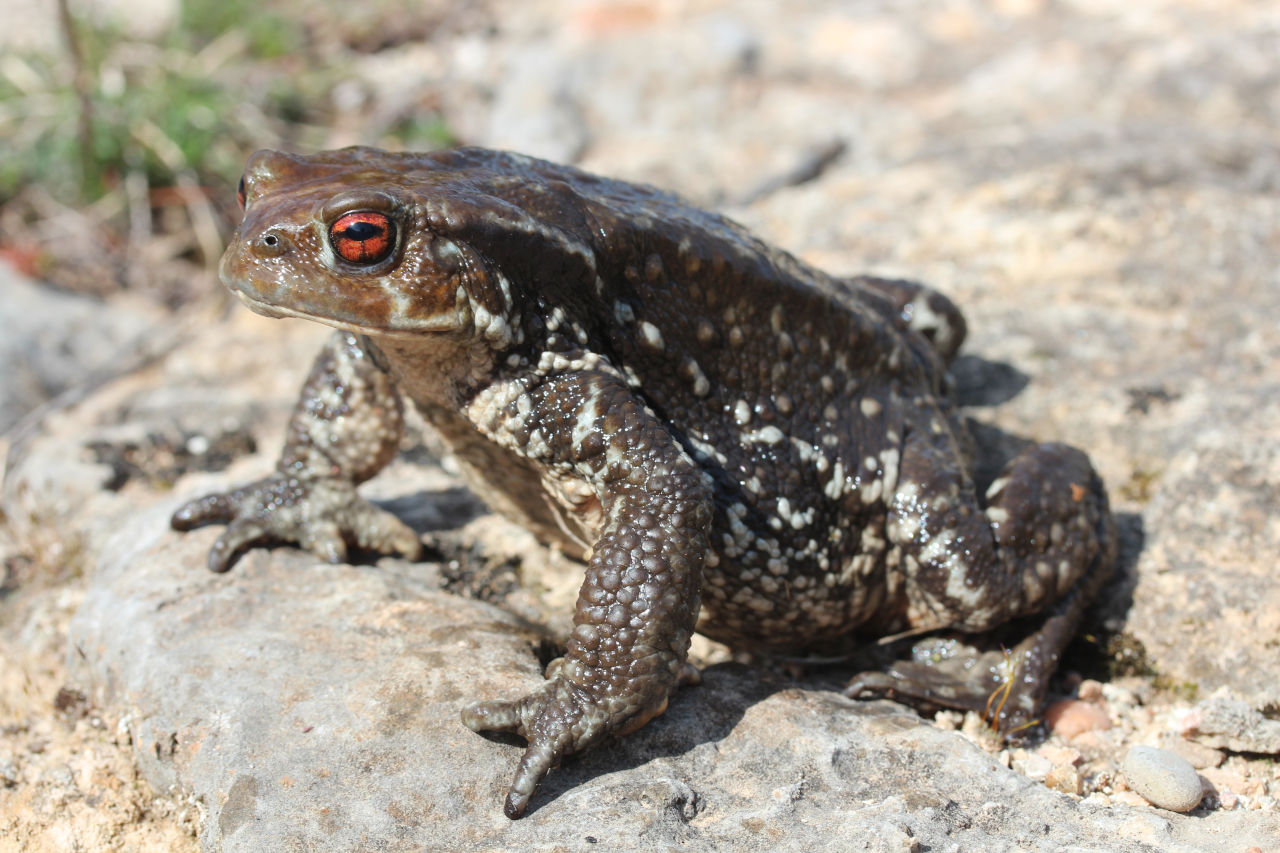
Some imagine a rapid process resulting from changes in a few key genes related to mate selection or ecology: interbreeding then becomes detrimental, because the offspring—even if viable—will be neither attractive nor well-adapted to their parents’ environments due to their intermediate traits.
Others see this instead as the result of gradual genomic differentiation: when populations remain isolated for millions of years, their gene pools diverge due to mutation and gradually become incompatible, leading to developmental and fertility problems in hybrids.
Hybrid Zones as Laboratories
To compare these two major hypotheses, we examined amphibian hybrid zones: geographic regions where genetic lineages of toads, frogs, or tree frogs—which have diverged to varying degrees—meet and interbreed if compatible. The idea is to measure the degree of divergence required to limit hybridization and the number of genes potentially responsible for it.
To do this, DNA had to be collected from natural populations, which required a considerable field effort involving numerous trips across Europe, North Africa, and the Middle East, with the assistance of close collaborators abroad over the course of nearly five years. These samples were then analyzed using tools known as “genomic” tools, which provide access to thousands of regions of the genome.
The rewards were significant: the analyses first led to the discovery of new species and shed light on many questions regarding the evolution of Europeanherpetofauna. In particular, the application of so-called “molecular clocks” to DNA sequences made it possible to date the time when the species first appeared—that is, the time when they diverged from their close relatives. In total, nearly forty natural geographic transitions were compared, representing all known genera on the Old Continent.
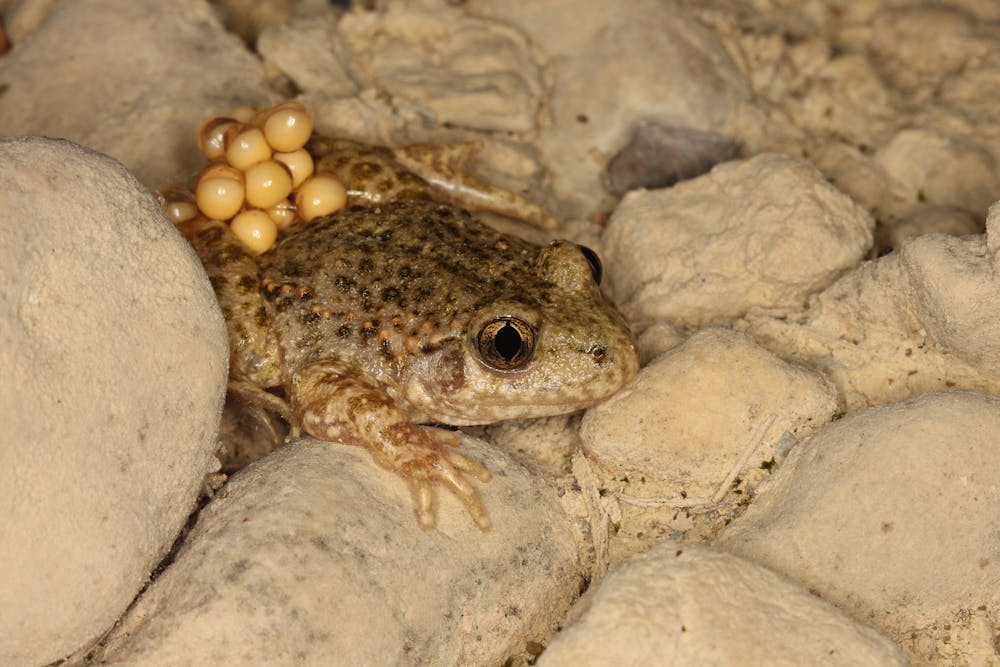
Christophe Dufresnes, Courtesy of the author
It takes time to make a new frog
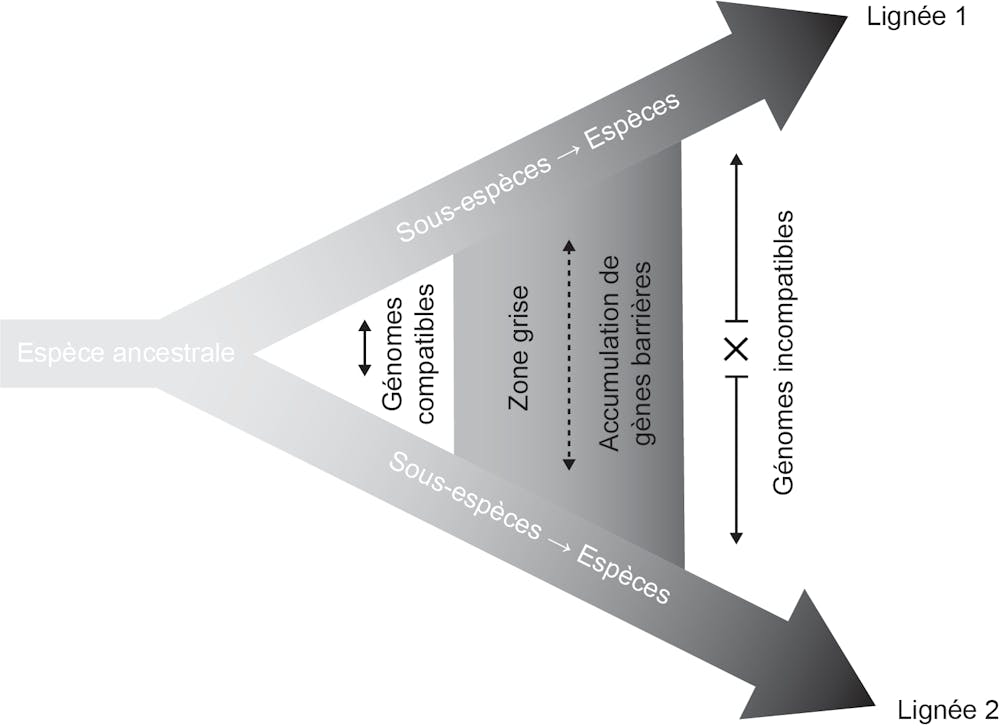
The results, published in PNAS, show that it is the entire genome—which, through millions of years of divergence, has gradually become incompatible between emerging species—and not just a few key genes. Older lineages therefore have more difficulty hybridizing than younger lineages, because a greater number of genes have lost their compatibility.
Thus, lineages that became isolated during the most recent ice ages are still able to hybridize without difficulty, and evidence of this can be found over hundreds of kilometers. This is a sign that their genomes, which are still very similar, have lost none of their compatibility. This is particularly evident in the Iberian and French forms of the spotted pelodyt, which hybridize throughout Catalonia (see figure).

Christophe Dufresnes, Courtesy of the author
Several million years later, however, genetic exchange is much more limited. For example, the alytes accoucheurs and almogavarre interbreed only over a few kilometers (see figure). This is because hundreds of genes have become incompatible, and together, they reduce the viability and fertility of hybrids. Researchers refer to these as “barrier genes” because they are the cause of reproductive barriers.
Christophe Dufresnes, Provided by the author
At first, we make mistakes
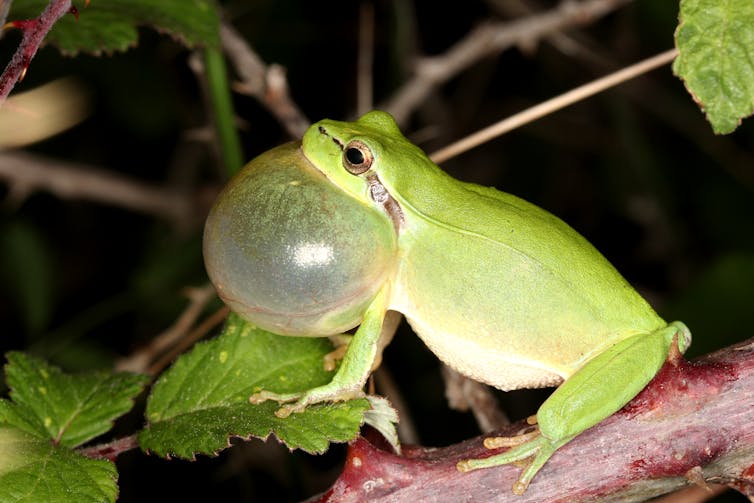
Since they are initially maintained by primarily genetic mechanisms (incompatibilities involving numerous genes) that take millions of years to develop, amphibian species therefore evolve relatively slowly. Otherwise, they remain identical to us: same ecology, same morphology, same mating calls. These are referred to as “cryptic” species, identifiable only through molecular tools.
But since they still look very much alike, these cryptic species continue to attempt to hybridize when they encounter one another—wrongly so. It will take more time for sufficiently distinct external differences to evolve, so that they can avoid mating with the wrong partner.
Christophe Dufresnes, Courtesy of the author
A New Approach to Classifying Biodiversity
By demonstrating that species formation is a gradual process that can be quantified at the genetic level, the study paves the way for new concepts for classifying evolutionary lineages into subspecies or species.
More specifically, when the divergence occurred less than two million years ago, frogs and toads remain interbreeding and therefore corresponded, at best, to subspecies. It is only when the divergence occurred more than five million years ago that we can be almost certain we are dealing with true species. In between, there is a “gray area,” where lineages can nevertheless be classified by examining the number of barrier genes already accumulated.
With hundreds of species being discovered each year around the world, this type of standardized approach should help establish more objective—and therefore more stable—taxonomic lists for amphibians, as well as for all animal groups, which is necessary for determining which species should be prioritized for protection.
Christophe Dufresnes, Professor of Zoology, Nanjing Forestry University and Pierre-André Crochet, Research Director, University of Montpellier
This article is republished from The Conversation under a Creative Commons license. Readthe original article.