On the Establishment of the Ombudsman of the Republic
The new plan to combat radicalization is expected to be unveiled next December. This announcement comes against a dual backdrop: the constant threat of jihadism and reports that radical far-right activists have turned to terrorism.
Nicolas Lebourg, University of Montpellier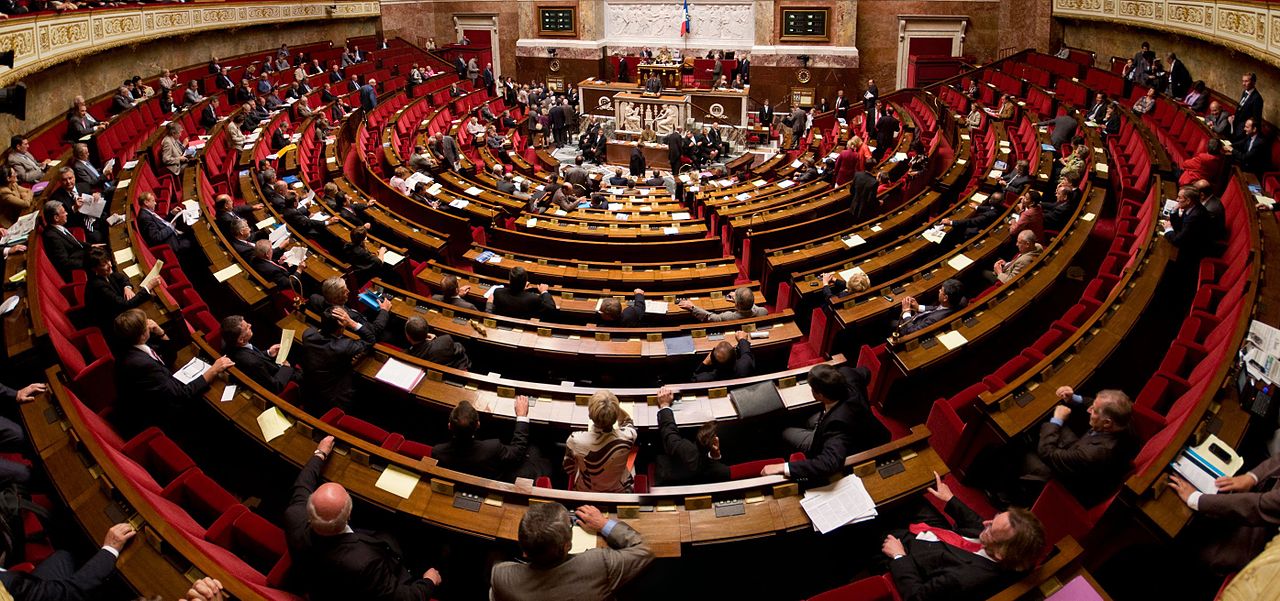
This innovation had the advantage of addressing a legal reality: in this area, the established penalties have long since shown their limitations, as the same offenders have been able to commit repeated offenses, or even incorporate into their communication strategy the the legal proceedings brought against them. Nevertheless, the system chosen by the legislature was not without flaws due to the lack of harmonization with previous systems, which could lead to serious democratic failures.
A few days ago, the Constitutional Council struck down this provision, arguing that it constituted an excessive restriction on freedom of expression—which sparked a strong protest from the International League Against Racism and Anti-Semitism (LICRA). There is, however, a way to resolve this situation in a positive manner—one that respects freedoms and strengthens public order, recognizing that between censorship and license lies the Republic.

The Example of the Defender of Rights
For the democratic problem created by the July law stems less from its principle than from its implementation. In particular, it should be noted that the Interministerial Delegation for the Fight Against Racism, Antisemitism, and Anti-LGBT Hate (Dilcrah), an agency reporting to the Prime Minister, has taken to referring cases to the courts on these grounds pursuant toArticle 40, paragraph 2, of the Code of Criminal Procedure. The risk is obvious: such referrals, given the text as it was passed, could have excluded convicted public figures from political life. These procedures would have been denounced ipso facto as an illiberal and illegitimate development in light of the separation of powers.
However, it turns out that not only can this problem be avoided—while preserving the intent of both Parliament and the Constitutional Council—but this correction can also be integrated into a framework that simplifies and streamlines various provisions that have accumulated without harmonization over the past few decades, all while contributing to the overhaul of oversight mechanisms targeting extremism. The proposal is to create a Defender of the Republic, to complement the Defender of Rights established in 2011.

Christophe Amet — Kiki Factory/Wikimedia, CC BY-SA

The establishment of the Defender of Rights has been unanimously praised. Not only has the new institution streamlined the various mechanisms it has brought together, but it has also created a tangible presence for the defense of citizens’ rights that now carries weight in the public sphere. This process should serve as a model for a new institution that, this time, would protect citizens’ duties toward the Republic and the Republic itself from subversive activities—particularly with regard to incitement to hatred and discrimination based on gender, sexual orientation, religion, or ethnicity.
Pitting the Republic against subversion means simultaneously advancing a constructive narrative of unity, defending social cohesion and secularism against identity-based rivalries, and establishing a concrete framework for responding to radical movements that have violated the law. Thus, this can be achieved without curtailing freedom of expression and while modernizing the state.
The Existing Legal Framework for Dealing with “Subversion”
The “definitive system of government in France,” as stated in the Constitutional Act of 1884, is certainly deeply rooted in French society. However, this Republic has never been merely an open political marketplace. Under French law, political parties are governed by the law of July 1, 1901, which stipulates that associations may not have “as their purpose the undermining of the integrity of the national territory or the republican form of government.”
Their role is recognized under theFifth Republic byArticle IV of the Constitution, which states:
“Political parties and groups contribute to the exercise of the right to vote. They are formed and operate freely. They must respect the principles of national sovereignty and democracy.”
The law of January 10, 1936—which has been amended several times and whose provisions are now set forth inArticle L.212-1 of the Internal Security Code—establishes the limits of what is permissible by stipulating the grounds that may justify dissolution by decree.
These established grounds make it possible to standardize and objectify “political radicalism”—intention to use force; an attack on the republican form of government; an attack on the integrity of the territory; ties to the Collaboration or attempts to rehabilitate it; incitement to hatred, discrimination, or violence—as well as “political violence”—armed demonstrations; paramilitary nature; terrorism; serious breaches of public order. Taken together, these can therefore be considered to constitute “subversion.”
The Defender of the Republic would be tasked with addressing these issues at the appropriate level, with independent authority. On a different scale, it would complement the anti-discrimination efforts of the Defender of Rights, to whom citizens can turn individually.
New Forms of “Subversion”
The philosophical principle underlying the office of the Defender of the Republic is to defend popular sovereignty by protecting the Republic from subversion. This contrast between the two terms was widely used during General de Gaulle’s first presidential term. However, the concept of subversion is not limited to the years of the Algerian War.
While the term “subversion” is absent from contemporary political dictionaries, Book IV of Aristotle’s Politics is devoted to it, with the term here encompassing the ideas of sedition and revolution. However, it is true that, in recent decades, the state itself has struggled to clearly grasp the need to understand subversive phenomena and to interpret intelligence reports on the matter, as well as the need to allocate additional intelligence resources to this effort as part of a coordinated process.
Today, subversion encompasses phenomena that are by no means comparable to one another but can be analyzed jointly, in accordance with the aforementioned legal principles. First and foremost is Islamism, whose massacres have placed the country under a state of emergency since November 2015. We should also mention the far left, which has established strongholds in “Zones to Defend” where the rule of law is suspended, and which has proven capable of mobilizing to commit acts of violence against property and law enforcement during social movements.
The far right, in its electoral form, has certainly come to accept the republican government, but with the aim of steering it toward forms of illiberal democracy by undermining the values of egalitarian humanism upon which the institutional system is founded—and whose radical and activist ranks have, on several occasions, promptedpublic concern from the Director General of Internal Security.
In terms of public safety, the fact that right-wing and left-wing radicals operate through like-minded networks currently sets them apart from Islamists as an organized threat. Furthermore, the presence of extremist political forces in French political life is historically structural and allows for the integration of social groups into a political system thus stabilized.
By not creating any new offenses and separating the executive branch from the judicial branch, the creation of the Defender of the Republic would therefore in no way constitute a democratic setback for citizens, but would ensure their freedom of expression within the framework of legal norms established by consensus over decades, while adapting institutions to the unrest of recent years.
Partial and uncoordinated probe methods
With regard to subversive groups, the government has limited and uncoordinated investigative resources, as these brief examples illustrate. The decree dissolvingthe white supremacist organization Unité radicale on August 8, 2002, was based on its incitement to hatred and discrimination. The radical right-wing base had, in fact, realigned itself around Islamophobic themes between the Kosovo War (1999) and the aftermath of September 11.
Nevertheless, it was not until 2015 that the National Consultative Commission on Human Rights (CNCDH), which reports to the Prime Minister, decided to fully integrate this issue into its agenda, while the DILCRAH, meanwhile, categorically rejected even the use of the term. Similarly, the decree dissolvingthe black supremacist organization Tribu Ka on July 28, 2006, asserted that the group incited hatred and discrimination “against people who are not black.”
But 12 years later, here too, the state and society have remained mired in a semantic dispute over the expression “anti-White racism.” Yet the goal must be to move beyond a culture of discourse about discourse in favor of coordinated action that puts an end to the perennial suspicions of “double standards.”
An independent and effective administrative authority
To fulfill its mission, the independent administrative authority thus created would bring together several institutions that have demonstrated their strengths but would thereby be in a position to achieve even greater results. The reason for bringing them together lies not in their diverse natures and histories, but in their intellectual and practical complementarity:
- the National Consultative Commission on Human Rights (CNCDH);
- the Interministerial Delegation for the Fight Against Racism, Antisemitism, and Anti-LGBT Hatred (Dilcrah);
- the Interministerial Mission for Vigilance and Combating Sectarian Aberrations (Miviludes);
- the Observatory on Secularism;
- the High Council for Gender Equality;
- the Interministerial Delegation Responsible for Assistance to Victims of Terrorist Attacks.
The Defender of the Republic would retain their advisory and informational functions for the benefit of society and the State. It would assume their respective roles in coordinating public action, but in a unified manner. He or she would assume the role of referring matters to the courts—a function traditionally carried out by the DILCRAH—while ensuring the nonpartisan nature of such actions, grounding them in a comprehensive analysis, and formally incorporating into his or her official duties the monitoring of and referral to the courts regarding violations of the Republic’s fundamental principles. Finally, he or she would ensure the long-term and structural nature of assistance to victims of terrorist attacks.
 To ensure the authority of the new institution, a statesperson—who could, for example, be chosen from among former presidents of the Republic, presidents of the Constitutional Council, prime ministers, or ministers of justice—would help demonstrate how important it is to move beyond partisan squabbles and formal appeals to values, and instead show in practice how these values shape the State’s actions and mold everyone’s daily life under equal authority.
Nicolas Lebourg, Research Associate at the CEPEL (Center for Political Studies of Latin Europe), University of Montpellier
The original version of this article was published on The Conversation.