Debate: School in Nature: An Alternative to Be Built
The enthusiasm for outdoor learning is very real. Over the past year, there has been a growing chorus of voices encouraging teachers to take their classes out into nature. Pediatricians and doctors have highlighted the benefits of this movement for children’s health, and the Ministry of Education has followed suit by supporting the local initiatives that are springing up everywhere.
Sylvain Wagnon, University of Montpellier
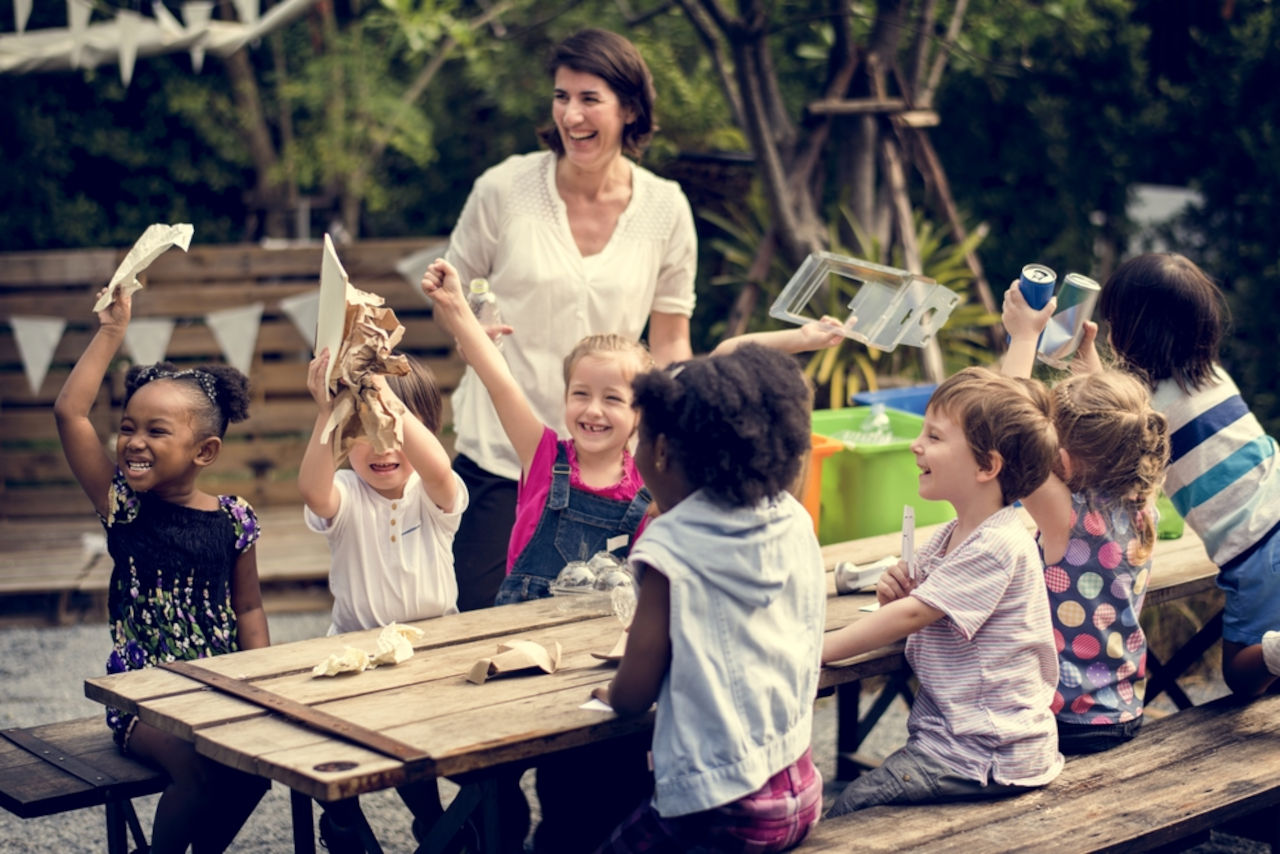
But behind this apparent consensus, we need to consider how to sustain this growth and engage in a genuine reflection on outdoor education, so that this enthusiasm is not just a passing fad but truly another way of teaching.
Integrating Learning
This trend of taking schooling outdoors did not begin with the health crisis; it has a history, as well as a wide variety of principles and practices, each with different objectives. Internationally, the Forest Schools and “outdoor schools” movement offers a genuine educational alternative. This is still far from being the case in France.
Similarly, education for sustainable development—driven by the nonprofit sector—is at the heart of a new synergy: a partnership between environmental education organizations and schools to support projects.
Beyond the desire to take the class on an outing into nature and to “spend a morning outdoors” with the children, it is important to approach this form of learning as an integral part of the curriculum by combining the acquisition of formal and informal knowledge, and by linking learning that takes place outside the classroom with more conceptual learning that occurs inside the classroom.
While the benefits for well-being and health are clear, what about learning? Whether it involves subject-specific or cross-curricular learning, the possibilities are numerous, regardless of the students’ age.
As for non-formal learning—related to values such as cooperation, mutual support, and the development of critical thinking—there are, once again, numerous opportunities to work on these with students. Understanding teachers’ expectations and supporting them in this process is a major undertaking for the school system.
The Eco-Educational Challenge
Outdoor learning is not justified solely by its impact on academic achievement and children’s well-being. Doesn’t learning outside the school setting imply a new pedagogical relationship between teachers and students, as well as a redefinition of what school is?
The eco-educational challenge proposed by “L’école en dehors” aims to transform educational practices by drawing on our cultural representations. It is an invitation to implement an education centered on the common good—as proposed by educational land-based programs—which would allow us to reexamine humanity’s place in ecosystems.
How can we develop an alternative approach to regular instruction—regardless of the weather—in a setting outside the classroom? The goal is to create a complementary relationship between classroom instruction and instruction outside the classroom.
As early as the beginning of the20th century, the Belgian educator Ovide Decroly emphasized that, in his view, “the classroom was for when it rained.” This was his way of saying that while the classroom has its place in learning, hands-on learning connected to the environment should be a priority.
See also:
Learning Outdoors: Exposure to Nature Isn’t Everything!
In 2021, the goal is also to rethink education in both rural and urban areas. Initiatives in Paris clearly demonstrate that this is possible. The possibilities are numerous and complementary: reimagining school spaces, connections to the environment, as well as both academic and non-academic learning.
Fun Approaches
Outdoor learning also involves fostering a connection with nature right within the school itself. The Ministry of National Education, through its E3D school certification program, appears committed to promoting teachers’ projects and initiatives in this area.
For their part, mayors are stepping up efforts to introduce greenery into school grounds, giving concrete expression to this movement. It is a fundamental shift in which France must catch up with other countries, such as Canada.
A recent study clearly highlights the close link between academic success and contact with nature. Outdoors, an active teaching approach is essential to foster intellectual and motor skills through hands-on learning.
Play also plays a central role in nature-based education. Children explore the natural world freely; it is an environment rich in opportunities for creativity and reflection (they observe and categorize the elements around them: trees, rocks, leaves, etc.). We must seize the opportunities that arise to form hypotheses, discuss them, ask questions, and turn them into learning experiences…
Little by little, the teacher learns to set aside what he or she had planned in order to listen to a bird sing, watch a bicycle go by, or feel the wind ruffling their hair. This is how students learn to let go and live in the moment. Through children’s literature, it’s easy to bring what the children have discovered in the forest or on the beach back into the classroom, all while enriching their knowledge.
Child Development
In nature, it is also possible to engage in more formal learning—such as in mathematics—where we can apply geometric and arithmetic concepts while studying the growth of a tree.
The current rise in outdoor education allows us to observe the initial results in France of a sensory and cognitive approach that takes children’s development into account and promotes hands-on experiences. This teaching method gives meaning to children’s learning and enables students with special needs—whether they have learning disabilities or are gifted—to learn just like their peers.
See also:
The Body in School: A Forgotten Dimension
Bringing together local initiatives and evaluating the results of outdoor education in France are becoming key challenges for the sustainable integration of outdoor education into the French public school system. Teaching outdoors can foster this new connection with nature and, by becoming part of a broader discussion on teaching methods and educational goals, could become the educational revolution ofthe 21st century.
This article was co-authored with Corine Martel, who holds a Ph.D. in ecology, serves as an educational advisor for science and Environmental Education (EDD) in the Hérault department, and is the director of the EducNatu’RE resource center.
Sylvain Wagnon, Full Professor of Education, School of Education, University of Montpellier
This article is republished from The Conversation under a Creative Commons license. Readthe original article.