Robots at Your Fingertips
In Montpellier, surgeons and robotics engineers are collaborating to develop tools to minimize surgical trauma: a form of “minimally invasive surgery” that brings together centers of expertise.
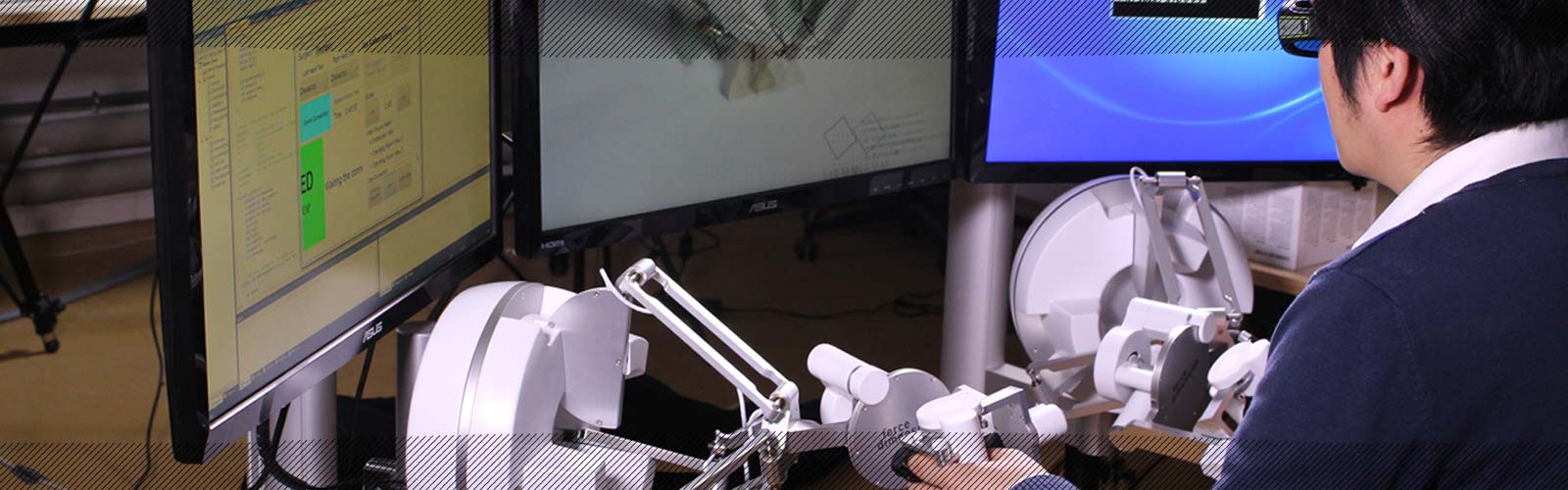 It’s every surgeon’s dream: to perform surgery with minimal physical impact on the patient. Today, that dream is becoming a reality in the form of robots equipped with multiple arms. The most famous of these, called “da Vinci,” has three. “ This interface between the doctor and the patient enables less invasive microsurgical procedures " explains one of the surgeons who uses this technique at the University Hospital, Renaud Garrel, head of the oncology and laryngology medical teams and professor at the University of Montpellier.
Minimize the impact of interventions
Tiny incisions—or even no incisions at all—is what the robot makes possible, as it uses natural passages and arteries to access internal organs. “No scars, less pain and fewer complications, and a shorter hospital stay—the benefits are numerous, ” summarizes Renaud Garrel.
Especially since robotic assistance also offers radically new capabilities.“This electronic interface can integrate various types of information—such as CT scan images or navigation data—creating a virtual or augmented reality that provides the surgeon with valuable decision-support tools.”
Training Tomorrow's Surgeons
To improve these assistive systems, Renaud Garrel has been working for several years with Philippe Poignet, head of the robotics department at the Montpellier Laboratory of Computer Science, Robotics, and Microelectronics (LIRMM) and a professor at theUM. This collaboration recently took the form of a 6-month internship offered to three master’s students in Information and Communication Technology (ICT) and Health.
These young surgeons are hosted at LIRMM to conduct experiments on the Raven system, a robot funded by the CNRS and the regional government, which offers the advantage of being fully customizable—unlike the da Vinci system. Their mission: “ to test the system’s limits in order to devise improvements and alternatives,” explains Philippe Poignet. “They bring us their knowledge of surgical techniques; it’s up to us to invent the robotic translation of those techniques… That is to say, cutting-edge tools whose design must, in particular, incorporate requirements for absolute operational safety.”
By assessing practitioners’ expectations, the robotics engineers at LIRMM will thus be able to help design the robots of tomorrow—and also train future surgeons. This collaboration will soon become part of Montpellier’s future medical school: the construction project, currently underway, plans to house an LIRMM team within the future medical education training platform.