Where does tap water come from? How is its quality ensured?
In France, turning on a faucet to get drinking water is an incredibly simple everyday task that gives us access to water of very high microbiological quality—which can be quite useful, especially during the summer heat… Yet, in 2020, one in three French people continued to drink bottled water rather than tap water, even though plastic waste is harmful to health and the environment, bottled water is more expensive… and its quality isn’t always flawless. Let’s take a look at where tap water comes from and what makes it safe to drink.
Alice Schmitt, University of Montpellier and Julie Mendret, University of Montpellier
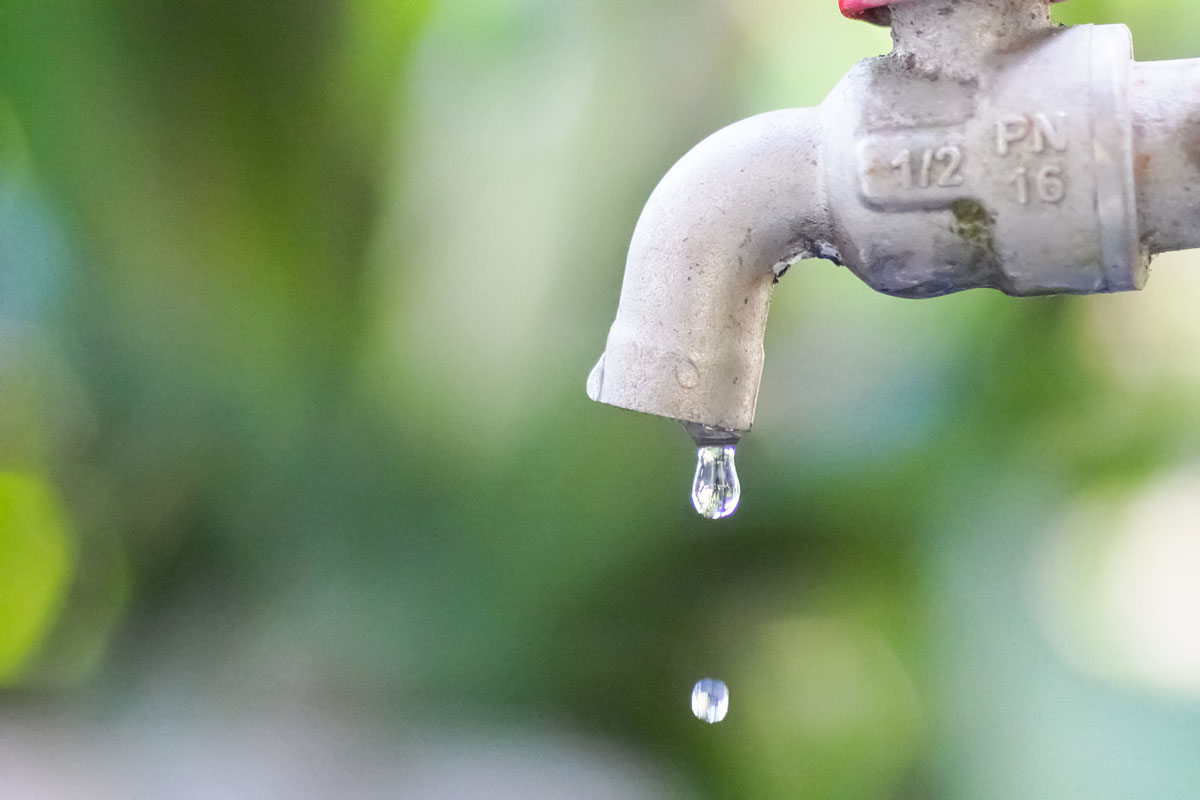
Where does tap water come from, and how does it become safe to drink?
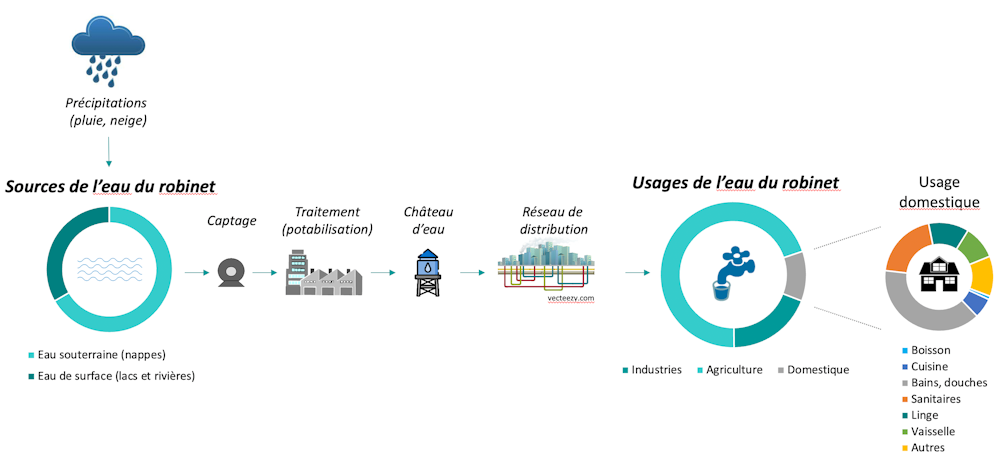
Two-thirds ofthe drinking water produced is drawn from groundwater (aquifers), while the remaining third comes from surface water (rivers, lakes, and reservoirs). Aquifers and rivers are replenished by precipitation in the form of snow and rain, as well as by the resulting runoff and infiltration.
Human activities such as agriculture and livestock farming—and their consequences, including deforestation, the destruction of wetlands, and climate change—are causing significant changes in this cycle, particularly in the flow of water.
Alice Schmitt and Julie Mendret, Courtesy of the author
Once collected, the water is transported to a water treatment plant for treatment. The treatment applied depends on the initial quality of the collected water. For groundwater, in three-quarters of cases, simple physical treatment (filtration and settling) and disinfection are sufficient.
For surface water, more extensive physical and chemical treatments are required —the specific treatments are determined based on the quality of the water to be treated. In some cases, additional advanced treatment using ozonation, activated carbon, and/or membrane filtration is applied to remove as much of the remaining dissolved organic matter and micropollutants (such as pesticides) as possible.
Disinfection then always takes place during the final treatment stage, most often by adding chlorine, which has a long-lasting disinfecting effect that helps maintain excellent water quality during storage in reservoirs and through distribution.
In France, average per capita drinking water consumption is estimated at about 150 liters per day, of which 93% is used for hygiene (including 20% for sanitation) and 7% for food. This domestic use accounts for 20% of total consumption: 35% of drinking water is used for industry and electricity generation, and 45% for agriculture, although it is not necessarily required to use drinking water for these purposes. The reuse of treated wastewater is still very limited in France due to strict regulations and remains a minority practice for these uses.
Strictly Regulated Water Distribution
Once treated, the distributed water must meet certain health standards defined by the Public Health Code, and its quality is regularly monitored starting from the point it leaves the water treatment plants, through the water towers where it is stored, and throughout the entire distribution network.
[Nearly 70,000 readers rely on The Conversation's newsletter to better understand the world's major issues. Subscribe today]
In total, about 60 parameters are monitored through limits and standards for bacteriological, physicochemical, organoleptic, and radiological quality, making tap waterthe most strictly regulated food product in France.
Overall, the quality of tap water in cities is excellent in France, where nearly 100% of municipalities with more than 50,000 residents and 98% of the total population consumed water of very good microbiological quality throughout 2020.
mrjn Photography/Unsplash, CC BY
With regard to pesticides, which primarily originate from runoff and seepage into the soil, 94% of the French population consumed water that met regulatory limits throughout 2020. However, since the detected exceedances were limited in both concentration and duration, it was almost never necessary to impose restrictions on tap water consumption.
The long-term health risks associated with low-dose pesticide exposure are still not well understood but are highly likely, particularly for vulnerable populations such as children and pregnant women.
Occasional problems may arise in very small municipalities (fewer than 500 residents); in rural areas with intensive agriculture, such as monoculture or vineyards that use pesticides; in areas near livestock farms, where nitrates may be present in significant quantities; or in areas near certain industrial facilities.
If the standards are exceeded, it is the responsibility of the person in charge of production or distribution to take the necessary corrective measures to restore water quality.
Exceptional exemptions may be granted (provided there is no health risk and the requirement for prompt restoration of compliance is met), or strict measures may be implemented very quickly if necessary by the prefect, followingthe recommendation of the relevant Regional Health Agency —for example , a restriction on use or even a temporary ban on consumption, as occurred in Châteauroux in June.
A water safety management plan—outlining the measures to be taken in the event of a problem—will be mandatory by 2027 as a result of the recast of the “Drinking Water” Directive of December 16, 2020.
Why use tap water instead of bottled water?
France consumes a great deal of bottled water, a result of lobbying by brands that have convinced the French that bottled water is better than tap water.
Erica Ashleson, Flickr, CC BY
First and foremost, it is about protecting the environment, since so-called “mineral” water requires the use of plastic bottles and caps as containers. The majority of this waste (87%) ends up in the natural environment and becomes plastic pollution, which has a significant impact on aquatic flora and fauna. Sorting this waste at appropriate facilities does not solve the problem entirely, since only one-quarter of plastic waste is actually recycled globally. A life-cycle analysis of bottled water has shown that its environmental impact is sometimes 1,000 times greater than that of tap water.
But it is also a public health issue linked to the presence of microplastics in water. These microplastics are primarily caused by the breakdown of larger plastic items, such as bottles. Every week, we ingest the equivalent of a plastic credit card, mainly through the water we drink— both tap water and bottled water —but also, to a lesser extent, through the food we eat, particularly shellfish, and even the air we breathe (this is a global estimate, not limited to France).
Reducing or even eliminating the use of plastic—particularly by stopping the consumption of bottled water—would help reduce the presence of microplastics in the oceans.
In addition, certain highly mineralized bottled waters should be consumed only occasionally, and daily consumption is not recommended. To neutralize the potentially unpleasant taste of tap water caused by chlorine—which in no way affects its sanitary quality—a very simple solution is to let it “breathe” by leaving it in the refrigerator for a few hours before drinking it.
It is also important to note that bottled water, which is drawn from underground sources, also contains trace amounts of pollutants such as pesticides and medications.
Finally, drinking bottled water (1.5 liters per day per person) costs at least 100 times more than drinking tap water.
We’re lucky in France to have high-quality tap water, so let’s drink it—whether for the planet or for our health! You can find the average water quality in your municipality on your annual bill or at the view online at any time.
Alice Schmitt, Postdoctoral Researcher in Process Engineering, European Membrane Institute, University of Montpellier and Julie Mendret, Associate Professor, HDR, University of Montpellier
This article is republished from The Conversation under a Creative Commons license. Readthe original article.