Teaching the Theory of Evolution in France: Moving Beyond Wishful Thinking
At 1.5 km, Rue Lamarck is one of the longest streets in the 18th arrondissement; the neighboring Rue Darwin is only… 86 meters long. This contrast symbolizes France’s special connection to evolution.
Marc-André SELOSSE, National Museum of Natural History (MNHN) – Sorbonne Universities and Bernard GODELLE, University of Montpellier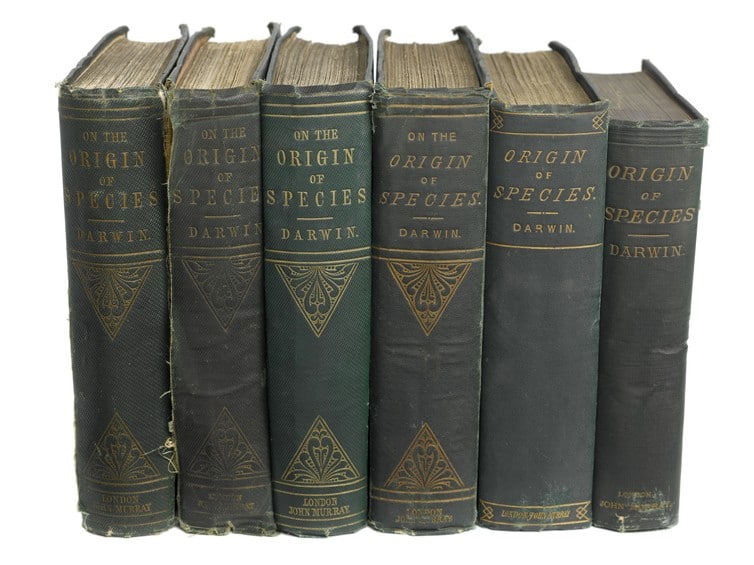
An early adherent of the evolutionist’s theories Lamarck (the inventor of the concept of transformism, which posits that the biological world has changed), our country has been reluctant at first, and then slow, to embrace the mechanisms underlying this biological change: natural selection, proposed by Darwin. Other mechanisms related to evolution will be discovered later.
At the end of the 19th century, the weight of a Pastor diminishes Darwin’s impact: Taken to the extreme, Darwin’s theory suggests that, in the beginning, an “initial” spontaneous generation may have given rise to life. This idea of life arising without a creator upset quite a few churches. Pasteur, a conservative and a clergyman, had asserted that spontaneous generation did not exist: he had little regard for Darwinism and never mentioned Darwin in his writings. Pasteur accepted a created world, since life cannot arise spontaneously. Thus, a French biology free of Darwinism began to take shape.


Wellcome Images/Wikimedia, CC BY

Throughout the 20th century, biology education thus “told” stories of evolution (such as that of humans, or that of fish emerging from the water during the Paleozoic era), supported by paleontological examples; however, the underlying mechanisms were either absent or even presented incorrectly. Between 1950 and 1980, academia was dominated by “general biology,” as embodied by the academician Pierre-Paul Grassé: this approach to living organisms reveals remarkable relationships between structures and the functions they perform within organisms. However, it ignores the mechanisms of evolution and reduces life to a series of organisms linked by a chain of innovations constituting progress. Darwinism, neglected as it was, was considered a clumsy and reductive explanation.
Have we, then, moved beyond that era today, in which France believes in evolution (80% of French people in 2005) but without knowing how it works? The answer is yes… sort of.
Evolutionary Biology, French Style
The 1980s saw the emergence of a French school of evolutionary biology, particularly within agricultural colleges and the Écoles Normales Supérieures. University programs were established; accessible popular science books were published; and, gradually, this school gained worldwide recognition. But its ideas were slow to take hold in secondary education, where change did not begin until the late 1990s. Evolutionary biologists, including ourselves, participated in the reform of teacher certification exams (agrégation and CAPES); others wrote educational textbooks; and some were invited to help develop school curricula. The final step was the introduction of evolution as a course in 2013 into the curricula of preparatory programs for agronomy and veterinary medicine.
However, the teaching of evolution still faces challenges, primarily linked to the fact that teachers are trained in “general biology,” which they still tend to pass on to their students in an overly simplistic manner. The curricula are, in reality, little more than wishful thinking, and continuing education has not been sufficient to change these perspectives. During the reform of the preparatory program curricula, a teacher asked on a discussion forum, “What possible use could evolution have for future agronomists?” Excellent question! But asking it speaks volumes about the prevailing ignorance: it’s a bit like a physics teacher asking why we should teach gravity to astronomers.
Genetic drift
Can we expect such a teacher to convey the evolution and power of these applications without specific training? Some new elements in the curriculum pose a problem: the introduction of the concept of genetic drift posed challenges for teachers, who were ill-prepared to come up with simple examples and approaches. Drift refers to the fact that traits (genetic variants) can appear or disappear by chance, regardless of their value for natural selection, particularly when a population becomes small. This explains many observations, such as the prevalence of certain diseases in human populations founded by small groups, in Finland for example. Despite the commendable efforts of school inspectors, there are too few resources and opportunities to bring teachers together to train them on evolution, as well as on other new curriculum topics.
 Today, we are concerned about initial teacher training: its duration and nature changed at the start of the current five-year term. Ten years ago, a student took the CAPES exam after completing a master’s degree (Master 1 level) followed by a year of training. Today, the master’s year serves as the training period, including a one-month field internship and courses in pedagogy and didactics. While this latter aspect is an interesting innovation, the reduction in the total duration of subject-specific training (by one year and 30% during the M1) clearly undermines the quality of education. Furthermore, the transfer of this training to the Higher Schools of Teaching and Education (ESPE) has, in some centers, been accompanied by the exclusion of science departments, which raises concerns about the ability to provide biology education based on recent findings—particularly in the field of evolution—across all institutions.
Marc-André SELOSSE, Professor at the National Museum of Natural History, Visiting Professor at the Universities of Gdańsk (Poland) and Viçosa (Brazil), National Museum of Natural History (MNHN) – Sorbonne Universities and Bernard GODELLE, Professor of Human Evolutionary Biology, University of Montpellier
The original version This article was published on The Conversation.