Homeschooling: What Is It All About?
On October 2, during his speech outlining the measures of the action plan to combat separatism, French President Emmanuel Macron announced that, starting in the 2021 school year, school attendance will be mandatory for all children ages 3 and up, and that homeschooling will be limited to cases where it is medically necessary.
Sylvain Wagnon, University of Montpellier
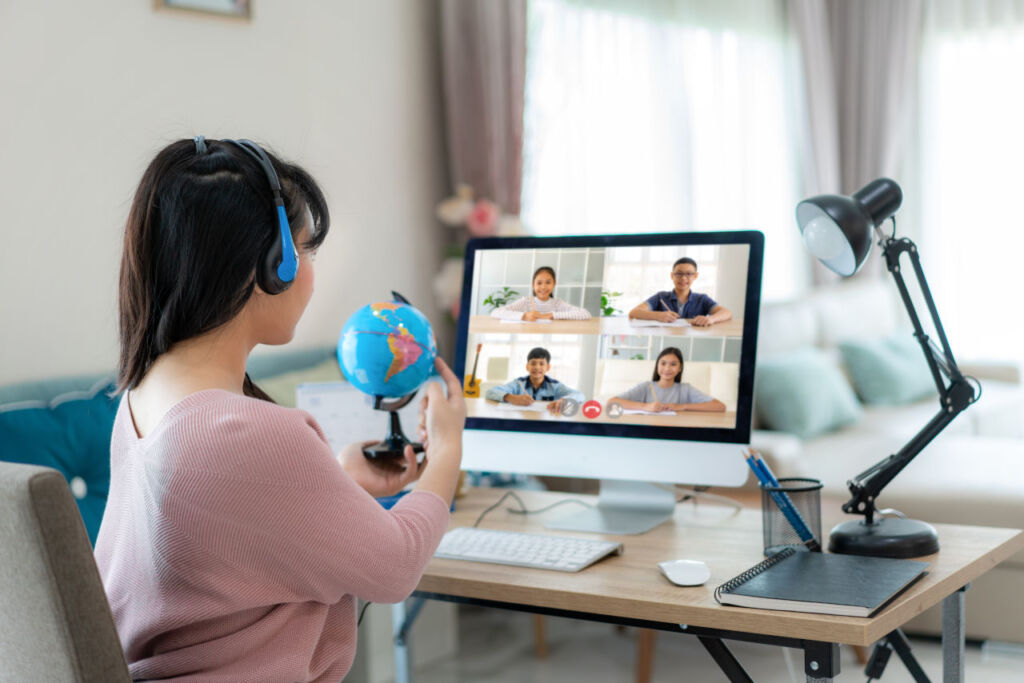
Homeschooling, an alternative form of education, is thus in the spotlight. How can we define this approach to learning, which—while still quite niche—has been on the rise for several years? How will the current measures change things for families?
An ancient and legal form of education
The Ferry Act of March 28, 1882, established compulsory education, which takes place in public or private schools or within families. This provision remains in effect today under Article L.131-2 of the Education Code.
This choice underscores that it is education that is mandatory—not school—but also that, from a historical perspective, the education of children is the prerogative of parents. By establishing a public school system for all since the19th century, the state has marginalized this form of parental education, while maintaining its legal status in France in the name of freedom of education.
In this regard, by restricting homeschooling “notably to health-related reasons,” the President of the Republic stated that he had made “a decision that is undoubtedly one of the most radical since the laws of 1882 and those ensuring coeducation between boys and girls in 1969.”
However, this is not a ban but a strict limitation on the freedom to provide home education, which will prevent challenges on the grounds of unconstitutionality.
A Growing Alternative
In his remarks, the President of the Republic emphasized the “necessity” of such a measure due to the risks posed by the rise of this form of education. More than 50,000 children are estimated to be homeschooled in 2020. This represents an increase from the reported figure of 41,000 at the start of the 2019 school year and 35,000 in 2018.
However, this alternative educational movement remains very marginal, accounting for less than 0.5% of school-age children. Nevertheless, this represents a notable increase, especially since the nature of this emerging movement—which has recently become the subject of study and research —is still little known.
Not enrolling children in school appears to be a rejection of the school as an institution in and of itself, whether public or private. However, these decisions to keep children out of school are linked to a variety of family choices—whether medical, educational, personal, environmental, dietary, or, although no figures are provided, religious.
Current legislation defines two cases of non-enrollment in school. First, homeschooling as a “choice” made by the family, in which education may be provided by the parents or any other person of their choosing, with no degree required. It is this first case that is being called into question in the presidential plan of October 2, 2020.
Next, there are cases where a child cannot attend school for a variety of reasons, particularly medical ones. In such cases, the regional education office issues a favorable recommendation for enrollment in the National Center for Distance Education (CNED). Through this program, children who are not attending school have the opportunity to receive an education that includes academic guidance from a teacher and a transcript of grades.
Currently, after a family reports that an investigation has been opened, two investigations are conducted by government agencies:
- First, a social investigation to verify that education is provided under conditions consistent with the child’s health and the family’s lifestyle.
- In addition, an educational investigation to ensure that the instruction provided is consistent with the child’s right to an education.
An annual assessment is conducted to evaluate the child’s progress in the curriculum implemented by the guardians based on their educational choices.
Increasingly Strict Controls
The President of the Republic condemned the fact that children are “being taken out of school because their parents no longer want them to attend public schools.” This situation reflects the increasingly close scrutiny of “alternative” forms of education.
Governments around the world view homeschooling with suspicion. While in some countries, such as Germany, homeschooling is already limited to exceptional cases, restrictions and oversight are becoming increasingly strict in countries like Spain and Greece, where this form of education is still legal.
Since April 2018, the Gatel Act has strengthened oversight of non-contract schools. Also in 2018, the national plan to prevent radicalization aimed to improve the organization and implementation of oversight of families who do not enroll their children in school.
In 2019, Article 19 of the July 26, 2019, law—known as the “School of Trust” Act—specifies the need to strengthen oversight of education in the very interest of ensuring the right to education for all.
Homeschooling and Non-Accredited Schools
The October 2 speech established a direct link between separatism, homeschooling, and non-contract schools—which are the actual targets of measures against religious separatism. There is overlap between families who choose not to send their children to school and certain non-contract schools. These schools, which receive no public funding, may not follow the standard curriculum but are nonetheless subject to the common core of knowledge, which ensures that learning is monitored.
See also:
Separatism: Is a Law Really Necessary?
Some of these schools accommodate families who want their children to develop a social life during part of the school day. But clearly, conflating these two forms of education is detrimental to families who have made educational choices based on considerations other than religion or doctrine. Furthermore, of the 1,700 private schools not under contract with the government, only one-third are religious schools; the rest are secular and alternative schools that use teaching methods such as the Montessori approach.
Emmanuel Macron spoke of illegal schools that have been shut down, often run by religious extremists. Since 2018, about ten non-contract schools have been suspected of religious indoctrination. Minister of National Education Jean-Michel Blanquer emphasizes that this law against separatism will strengthen the legal framework to protect children from any form of indoctrination. Questions remain regarding the specific provisions of this new law.
The announced measures came as a shock to parents who homeschool their children. The action plan detailed on October 2 aims to ensure “school for all.” Clearly, there will be greater suspicion toward this form of education, and the enhanced oversight will be stricter.
This reminder that schools are the guarantors of a shared education by enabling all children to come together makes schools a cornerstone of our democracy, as Philippe Meirieu points out. Public schools remain the primary setting for social diversity, interaction, and learning—but they must be given the resources to fulfill this role.
What choices will families who currently homeschool make in the future? Will we see “attractive” policies from private schools aimed at drawing in these families? Conversely, public schools will need to set an example by being inclusive and attentive to all parents concerned about their children’s well-being. Living up to its commitments is the only way for public schools to be schools for everyone.
Sylvain Wagnon, Full Professor of Education, School of Education, University of Montpellier
This article is republished from The Conversation under a Creative Commons license. Readthe original article.