[LUM#12] Diversity as a Means of Adaptation
Genetic diversity reduces the risk of population extinction in the face of global warming. This was demonstrated by a team of researchers who studied the bat genome to better predict the bats’ future as temperatures rise. These findings open up new avenues for better species conservation.
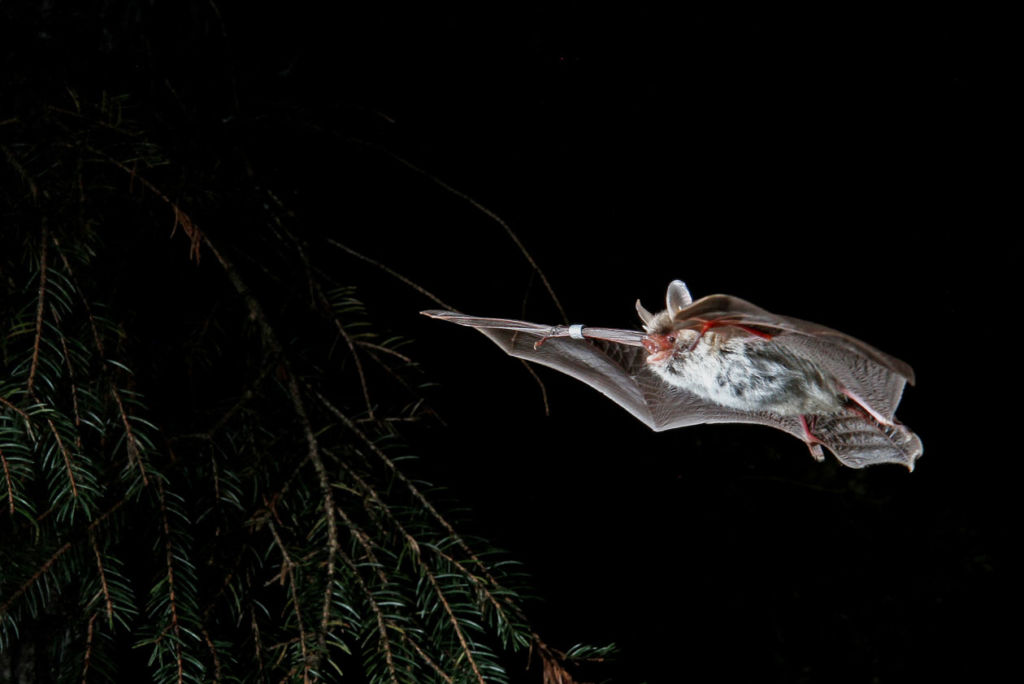
How will different animal species react to climate change? “Some scenarios suggest that animals will simply migrate northward as the climate warms, in search of temperatures that suit them,” explains Sébastien Puechmaille. A model described as “naive” by the chiropterologist fromthe Montpellier Institute of Evolutionary Sciences (ISEM).
“It’s not that simple; many animals actually move very little. This is the case, for example, with the lesser horseshoe bat, a species of bat that has been shown to move more slowly than global warming.” As for those that manage to keep up, their destination must still meet their needs—particularly in terms of food. “Many bats are insectivorous; if the prey they feed on hasn’t followed this new distribution, then the conditions for their survival aren’t met—this is what’s called a mismatch .”
Staying Cool in the Heat
“If we want to model how populations will change in the face of global warming, we can’t just take temperature and humidity into account—there are actually many parameters to consider.” One of these , which until now has been the subject of few studies, is genetic diversity. “It’s about considering the variability of populations within a single species, ” explains the chiropterologist. For example, within a single bat population, some individuals are genetically better adapted to withstand heat or cold.
To understand this factor, Sébastien Puechmaille and his colleagues have developed a new approach: they incorporate genetic adaptation potential into models that predict changes in a species’ range in response to climate change. To do this, the researchers analyzed genomic data from two species of bats native to the Mediterranean, a region particularly affected by rising temperatures.
Forest corridors
“DNA analysis of 278 bats made it possible to identify and distinguish between individuals adapted to thrive in hot, dry habitats and those adapted to cooler, more humid habitats,” explains the researcher.
This significant diversity is important to consider because this potential for genetic adaptation gives these individuals a better chance of survival during periods of rising temperatures or drought. Indeed, if temperatures rise, populations of individuals adapted to cooler, wetter habitats will decline unless they receive individuals from populations adapted to hot, dry habitats, who will bring with them the genetic diversity necessary for adaptation, thereby reducing the risk of extinction.
But the bats from different habitats still need to be able to reach each other… “These are species that live in forests, and they need forest corridors to move from one area to another,” explains Sébastien Puechmaille. “If the forest cover is conducive to bat movement, there is good connectivity between populations, which maximizes the arrival of adapted individuals and promotes population survival compared to what classical models—which do not incorporate this parameter—predict.”
Preserving the Habitat
These findings may lead to more accurate predictions of the effects of global warming, but they also encourage a more thoughtful approach to conservation strategies. “In addition to the fact that there are geographical barriers limiting movement, such as the Pyrenees and the Alps, policymakers have so far very rarely taken into account the importance of these forest corridors on a national or even continental scale. The habitat of these species is therefore generally fragmented, which hinders the movement of individual animals, ” explains the researcher. “It is essential to preserve habitat to ensure the survival of species in the face of climate change, and to do so, we must think on a large scale; what is needed isnot just local management, but international management.”
A key challenge for the future of these small flying mammals, whose populations have already declined drastically since World War II, “presumably largely due to the use of pesticides and changes in agricultural practices.” There are currently 1,400 species of bats worldwide, and some species are already considered extinct.
Check out theUM podcasts, now available on your favorite platform (Spotify, Deezer, Apple Podcasts, Amazon Music, etc.).