Chlorothalonil Contamination: A Challenge for Drinking Water Treatment
Water is a vital resource for any society. However, in a context where environmental pollution is on the rise and threatens water quality, it is a limited resource. Pollution from chlorothalonil (a fungicide used in agriculture) and its metabolites (resulting from its degradation in the environment), which have recently been in the news, provides a telling example of this.
Benoit Teychene, University of Poitiers and Julie Mendret, University of Montpellier
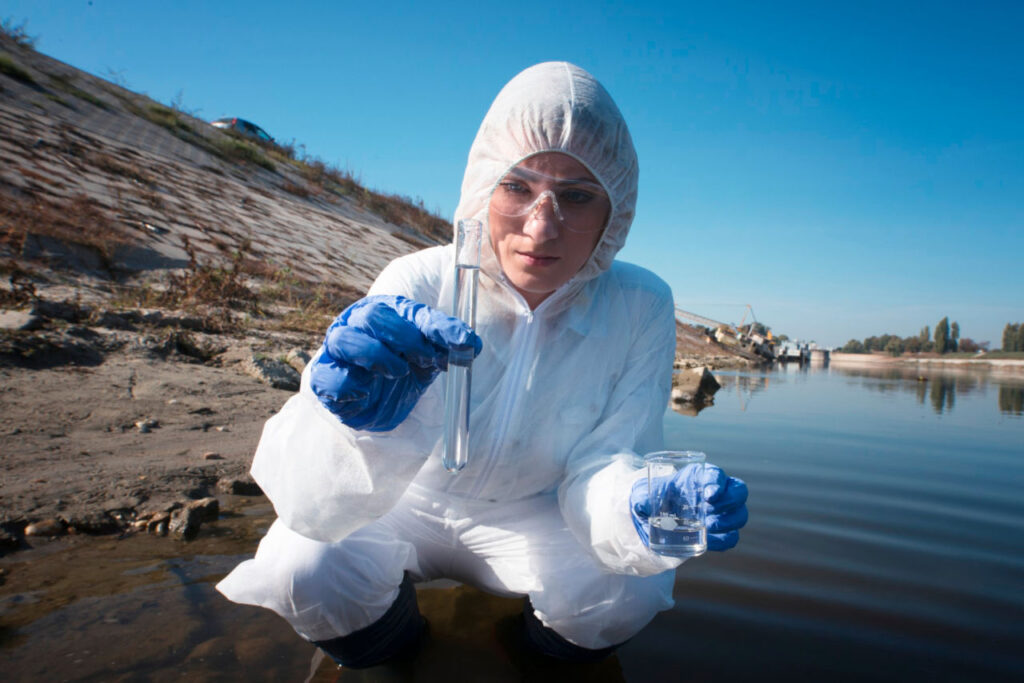
The metabolite R471811, in particular, has recently sparked debate. A large-scale national exploratory campaign conducted between 2020 and 2022 by ANSES, which was the subject of a report in March 2023, indicated that it was found above the authorized limit in more than one-third of the samples of water intended for drinking analyzed. In a new opinion published in April 2024, ANSES ultimately decided to downgrade its assessment of the level of risk posed by this metabolite.
As a direct result, the concentrations deemed “acceptable” in drinking water have increased tenfold, leading to the reopening of water intake points that had been closed in the meantime. However, this type of pollution poses a very real problem for the treatment of water intended for human consumption (EDCH).
The Chlorothalonil Pollution in Question
As a reminder, chlorothalonil, marketed by Syngenta, has long been used as a fungicide, primarily on cereal crops. It was banned by the European Union in 2019 due to its classification as a probable carcinogen: the European Food Safety Authority (EFSA) has classified it as a Group 1B carcinogen, a category reserved for substances with suspected carcinogenic potential. France had granted a grace period until May 2020 before the ban took effect, to allow existing stocks of the product to be sold off.
Where does the problem lie? After being used in agriculture, pesticides end up in the environment (air, water, soil, etc.), where they can break down into new molecules with different properties: these are called metabolites. In 2019, Swiss researchers published the first study to reveal the presence of chlorothalonil metabolites in Swiss groundwater, raising concerns about drinking water contamination. The results highlighted the presence of eight compounds derived from chlorothalonil, six of which were identified for the first time.
Chlorothalonil (R471811) was thus detected in 31 Swiss groundwater sources at concentrations of concern, reaching up to 2.7 µg/L. This value exceeds the maximum limit set for drinking water by health authorities in both Switzerland and France, and requires additional treatment to make the water safe for consumption. In France, if the concentration of any single substance exceeds 2 µg/L (or 5 µg/L for the total concentration of all substances) in raw water, the water is not considered suitable for drinking, and the intake point must be closed.
[There are already more than 120,000 subscribers to The Conversation’s newsletters. What about you? Subscribe today to gain a better understanding of the world’s major issues.]
The relevant regulatory standards
To understand the quality standards that apply to drinking water, it is first necessary to understand that ANSES distinguishes between two regulatory categories for pesticides and their metabolites:
- "Relevant" metabolites that may pose a risk to human health, the concentration of which must not exceed 0.1 µg/l in tap water (and 0.5 µg/l for their total concentration), in accordance with the ANSES opinion dated January 30, 2019.
- For “irrelevant” metabolites (i.e., those less likely to pose a risk to human health), the limit is set at 0.9 µg/l (warning threshold).
Given the toxicity of chlorothalonil, ANSES initially classified the chlorothalonil metabolite R471811 as “relevant.” However,ANSES’s April 2024 opinion revisited this classification, ultimately concluding that it is an “irrelevant” metabolite in water intended for human consumption. In reaching this conclusion, the agency relied on data from the European assessment report, new information provided by the registrant (Syngenta), and additional literature review. In the same opinion, the agency classified another metabolite of chlorothalonil, R417888, as “relevant.”
As a result, the vigilance threshold for R471811 has been set at 0.9 µg/l, and that for R417888 at 0.1 µg/L. Following this revision of the classification, public drinking water utilities have a maximum of six years to reduce the concentration of these pollutants below the compliance threshold.
This vigilance threshold value should not be confused with the maximum health threshold, known as Vmax. This is the limit beyond which exposure to the compound is considered potentially hazardous to human health. It is derived from toxicological reference values and is based on the threshold of toxicological concern applicable to metabolites and pesticides, with the aim of protecting consumers by taking into account tap water ingested over the course of a lifetime.
When ANSES has not yet established a Vmax—particularly due to a lack of scientific data—usage restrictions are imposed, and the interim health-based limit of 3 µg/L—set by the Ministry of Health—is applied. This serves as the Vmax until ANSES establishes a definitive Vmax.
Compliance with this interim health standard therefore allows for the distribution of water, even when it exceeds the limit of 0.1 µg/L. However, this management value (interim health standard) is used only for a limited period of time; therefore, exceeding the Vmax leads to immediate restrictions on tap water consumption.
Drinking Water Collection Points Under Pressure
In France, drinking water withdrawals are managed by watershed. Combating pollution (nitrates, phosphates, pesticides, etc.) is one of the key objectives of this crucial legislation enacted in 1964 to protect human health and the environment—including both flora and fauna. It was at that time that the “polluter pays” principle was introduced.
The challenges have since multiplied, as climate change is placing additional pressure on the quantity and quality of available water resources, making this approach to management increasingly difficult. Water management stakeholders face a complex challenge:
- On the one hand, they need to use water sparingly, which is necessary to preserve the resource (for example, by limiting leaks in the distribution networks),
- On the other hand, they need to improve water treatment systems to provide high-quality tap water despite rising pollution levels and the considerable investments—which local governments are struggling to cover —that this entails.
A striking example of this deterioration is the abandonment of numerous water intake facilities and related equipment—12,600 in total—between 1980 and 2021. For approximately 33% of the closed water intake facilities, the main cause of their decommissioning was the deterioration in water quality. Among these facilities closed for quality-related reasons, 40.7% were shut down due to excessive levels of nitrates and/or pesticides.
Can we eliminate chlorothalonil pollution?
Despite ANSES’s new advisory, the current situation remains complex. While technologies exist to remove these metabolites, this remains a challenge for water treatment operators.
Initial studies indicate that activated carbon adsorption and membrane processes (reverse osmosis, nanofiltration) are the most effective technologies. Due to its physicochemical properties, the metabolite R417888 is easier to remove by adsorption than R471811.
In the Île-de-France region, the water treatment plant in Méry-sur-Oise uses membranes that achieve good results in filtering out chlorothalonil and its metabolites (90 to 95 percent retention of the R471811 metabolite).
However, these processes are costly. Adsorption requires frequent replacement of the activated carbon, which negatively impacts treatment costs. Similarly, the use of membrane processes can significantly increase the energy consumption of treatment units and raises the issue of concentrate management.
Toward Rising Water Treatment Costs
We are therefore seeing a trend toward rising operating costs for treatment plants, which will inevitably lead to higher water prices for consumers. One key issue is the difficulty in meeting the 0.9 µg/L action level for the metabolite R471811, which, as noted above, is the most difficult to remove using conventional treatment processes. Furthermore, there is significant disparity among different local governments and water authorities. Large urban areas typically have much more efficient treatment systems than rural areas. This situation may exacerbate existing tensions.
If this threshold is reached, an overall improvement in the quality of the treated water (with respect to other pesticides and pollutants that would then also be removed) is expected. Provided, of course, that other threats to drinking water quality—such as per- and polyfluoroalkyl substances (PFAS) and other problematic metabolites (such as flufenacet ESA)—and their potential “cocktail effects” are also under control.
Consumers’ increasing use of bottled water or point-of-use water treatment devices (filter pitchers, reverse osmosis systems, charcoal sticks, clay beads, atmospheric water generators, etc.) may seem reasonable. However, these systems require regular maintenance to prevent bacterial growth: the cure can end up being worse than the disease! Furthermore, certain solutions, such as reverse osmosis systems or bottled water, have a disastrous environmental impact.
The only viable option, therefore, is to provide unwavering protection for water resources used to produce drinking water. This requires in-depth research to improve our understanding of the extent of contamination in these resources, the implementation of appropriate and environmentally friendly treatment processes, and the promotion of agricultural practices that reduce the intensive use of pesticides.
Benoit Teychene, Associate Professor, University of Poitiers and Julie Mendret, Associate Professor, HDR, University of Montpellier
This article is republished from The Conversation under a Creative Commons license. Readthe original article.