The Physical Reality of the Digital World
In his novel *The Name of the Rose*, Umberto Eco describes the organization, preservation, and access to knowledge seven centuries ago in an abbey library, which would eventually burn down, destroying the work of the monk scribes—the first practitioners of redundancy before the invention of the printing press and, later, computing.
Michel Robert, University of Montpellier
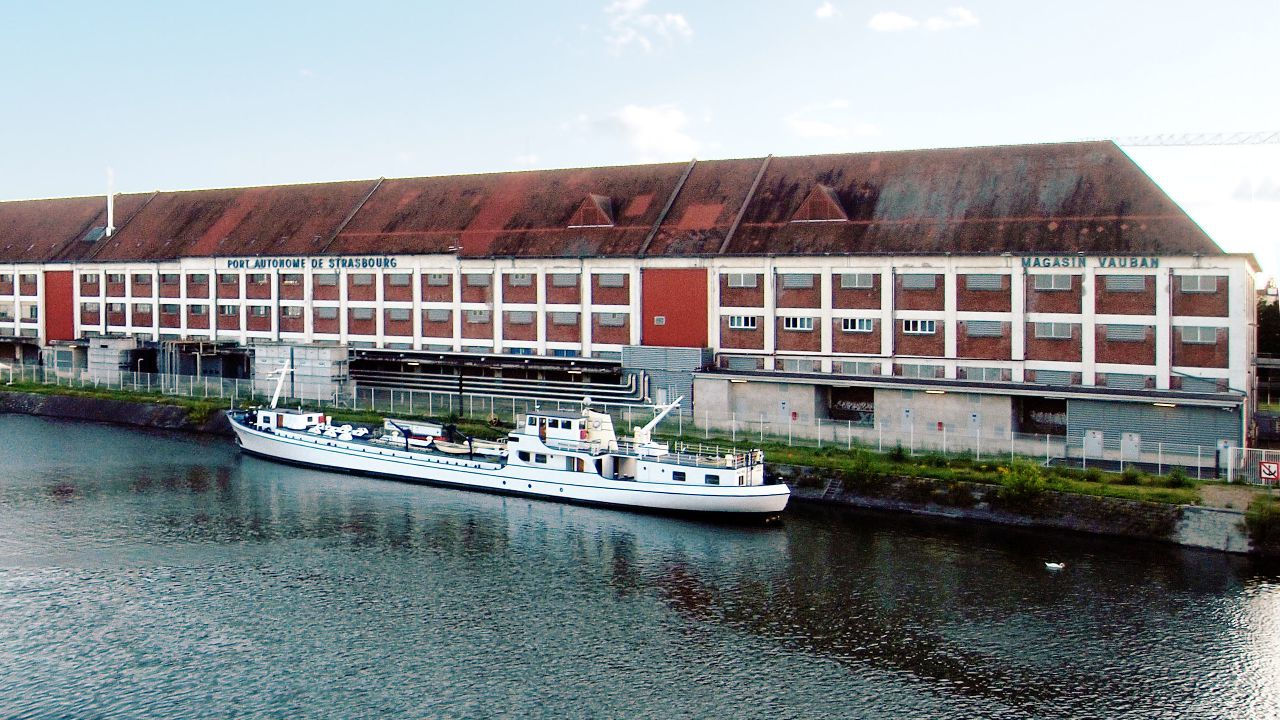
Michael Kauffmann, Wikipedia, CC BY

This type of event has recurred throughout history, each time resulting in a loss of knowledge. The most recent incident in our era of digitization was the spectacular fire in Strasbourg on March 10, 2021, at a “data center” —that is, a facility for storing and processing data—which had significant consequences for users. This incident highlights the fragility of digital infrastructure (computers, servers, storage racks, communication networks, power supplies, air conditioning, etc.), which can lead to sometimes irreversible data loss and service disruptions (information systems, computer applications, email, websites, etc.).
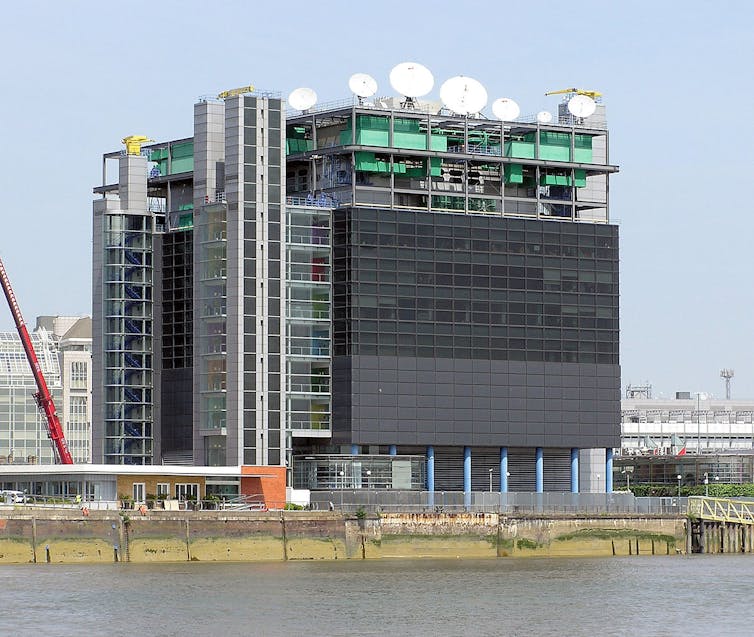
An industrial accident of this kind actually forces us to confront the physical reality of the digital world. Over the past forty years or so, this world has been built around computer systems concentrated in networks of data centers that make up the digital cloud. This “cloud,” which appears intangible, is in fact based on distributed and interconnected infrastructure on a global scale. To date, there are nearly 5,000 dedicated or shared data centers spread across 127 countries worldwide, some of which can house tens of thousands of servers.
The history of computing has been marked by shifts from the local to the global, alternating between centralized and distributed infrastructures: centralized in the last century around a single computer, then distributed with the advent of mobile computing (PCs, tablets, smartphones, connected devices…), and now a hybrid model, with services increasingly outsourced to specialized companies (such as GAFAM) for data storage and processing, communication via social media, or remote work through videoconferencing and shared documents.
How is data stored securely today?
If we look at individual use, 30 years ago data was stored on floppy disks with a capacity of 1 megabyte (10⁶ bytes), then on CDs, USB drives, and so on… Today, a personal magnetic hard drive with a capacity of 1 terabyte (1,012 bytes, or one thousand billion)—which is about the size of a smartphone—holds the equivalent of one million floppy disks at a cost of just a few dozen euros. Long-term data backup has been a given since the dawn of computing, when hardware and software were initially unreliable.
Today, we are witnessing an explosion of data related to our daily activities—for example, the instant backup to the cloud of photos and videos taken on a smartphone. We are also facing all known forms of hacking and cybercrime. Backing up your data requires taking precautions, such as storing it in secure locations.
In the professional sphere, many users and companies cannot afford to maintain a standalone, robust IT infrastructure, given the costs of acquisition, maintenance, security, updates, and the associated human resources. They therefore turn to specialized companies that offer expertise in data security—whether in terms of confidentiality, protection of intellectual property, or privacy. It should also be noted that issues of national sovereignty regarding access to data are crucial. The global distribution of data and its processing—and, one day, from space, with clusters of satellites establishing communications between servers—offers numerous advantages, provided there is a clear understanding of the physical limitations of the infrastructure used, particularly in the event of an accident.
It is therefore essential to take a critical look at current offerings: Where is my data stored? How is it protected, secured, and backed up? What is the carbon footprint of my digital activities?
What are the costs associated with virtualizing our IT systems?
Some providers offer turnkey services that meet these requirements. Others offer access to equipment at lower costs, leaving customers responsible for their own choices—for example, regarding backup management—with the details of such arrangements governed by contracts between the parties. The concept of quality of service is therefore essential.
Clear communication about the technologies used—and their limitations, which can sometimes be difficult for users to grasp—is essential: What levels of data protection are included in the contract I’ve signed? How often are backups performed, and how? The CNIL specifically highlights the notification requirements in the event of unavailability or, in the worst-case scenario, the destruction of personal data stored in a data center.
Adrian Pingstone/Wikipedia

The physical reality of the digital world also raises the question of the energy resources required for this infrastructure and for our most energy-intensive uses (streaming video, virtual currency management, such as Bitcoin). The environmental footprint of our connected digital devices and communications, computing, and storage infrastructure cannot be ignored: the overall share of “digital” activities in greenhouse gas emissions is increasing every year and will soon exceed 5 percent, with energy consumption of 2,000 terawatt-hours—equivalent to 10 percent of global electricity demand.
Technical Solutions
Scientific and technological solutions are emerging to ensure the reliability of —and support —the digital and energy transitions, which are inextricably linked.
This could, for example, lead to “short digital loops” for reliability and backup, associated with each data center and making use of older generations of computer systems that run exclusively on green energy. These machines could be distributed across a region, which would limit the impact of an industrial accident at a given site by leveraging machine redundancy to ensure data backups.
In fact, a service based on redundant computing resources is always far better in the event of an accident than an irreversible loss of digital data, whether for personal or professional use. For many applications that do not require high-performance computing, or for the local management of data and services provided to users at the level of a territory or a smart city, it is possible to integrate data production and storage with green energy in a “digital short circuit,” whether in terms of heat recovery or the production ofelectricity from renewable sources.
Michel Robert, Professor of Microelectronics, University of Montpellier
This article is republished from The Conversation under a Creative Commons license. Readthe original article.