[LUM#17] The Terahertz Wave Revolution
Seeing through matter… science fiction? Yet it’s a reality made possible by terahertz waves. This technology opens the door to numerous applications developed by the company Terakalis, which, for example, makes it possible to verify that airplane wings are intact. That’s certainly reassuring.
Frédéric Teppe has a superpower. He can literally see through matter. A superhero? “More like a sociologist of electrons,” as the physicist describes himself. Together with his colleagues at the Charles Coulomb Laboratory*, he has been studying the behavior of these elementary particles for years. “Plasma oscillations, or electron waves, can propagate through transistors to generate or detect electromagnetic waves at terahertz frequencies, ” explains the specialist. These terahertz waves lie in the electromagnetic spectrum between microwaves and infrared. While humanity has long been “completely blind to this frequency range, ” researchers working with terahertz waves have shed light on their extraordinary properties…
See through
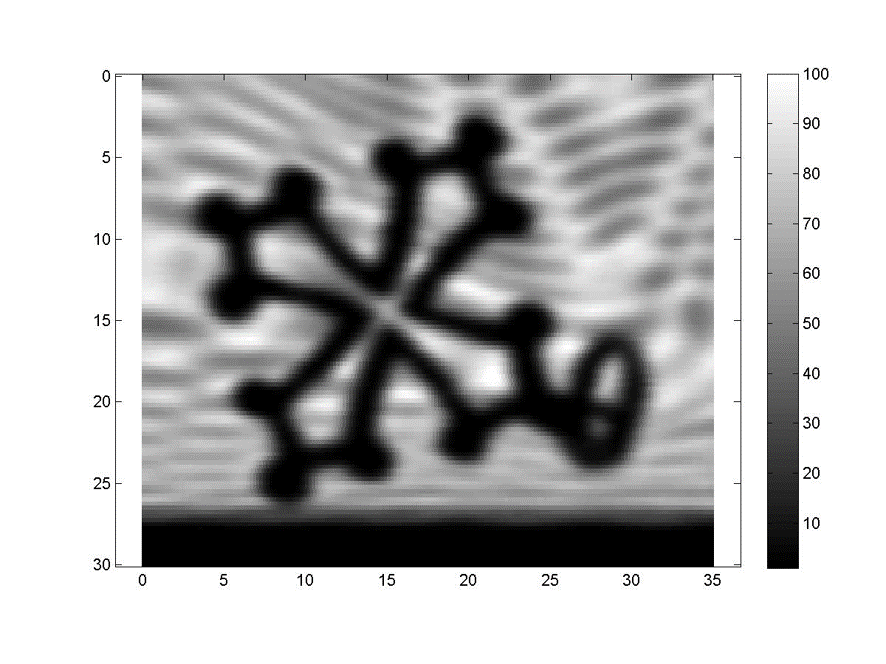
“These are non-ionizing waves, which are therefore safe for human health and have a high penetrating power that allows them to pass through various types of materials—including fabric, plastic, and composite materials—and provide a much higher contrast than X-rays. ” Frédéric Teppe and his colleagues Wojciech Knap, Nina Dyakonova, and Pierre Solignac decided to capitalize on these properties by founding the startup T-Waves Technologies in 2013—now known as Terakalis—which has won no fewer than four innovation awards. The company has attracted even more attention because “it’s quite rare to see applications emerge from a fundamental physics laboratory, ” notes Frédéric Teppe.
And to make it a success, we had to convince manufacturers of the full potential of terahertz waves. While some were hesitant at first, they quickly realized that this ability to probe deep into materials could prove very useful. “During one of our first presentations, one of our colleagues took off her pendant and placed it in an envelope. We then demonstrated that our device literally allowed us to see the pendant through the envelope, ” recalls Frédéric Teppe.
Non-Destructive Testing
The company, which now has 20 employees, is leveraging this technology to enter the field of non-destructive testing and evaluation of materials for the scientific and industrial sectors. “Until now, to verify that a part was free of defects, it had to be destroyed so its interior could be examined; thanks to terahertz waves, we can now very precisely assess the quality of materials while leaving them intact. ” The technology thus holds a prominent place in the aerospace and automotive sectors, which are major users of plastics and composites—materials that terahertz waves pass through easily. “For example, we can inspect the wings of an airplane or the fuselage of a helicopter for potential defects, ” explains the physicist. Ensuring transportation safety is one of the many ‘superpowers’ of terahertz waves.
From Wheat to Luxury
Terahertz waves are set to become a part of our daily lives, and their applications are multiplying. A revolution is on the horizon in the field of agronomy, where they will make it possible to assess plants’ water stress in order to better tailor irrigation. In the parcel delivery chain, they can be used to detect potentially hazardous contents. In medical imaging, they could, for example, detect the subcutaneous spread of melanoma through the skin. In telecommunications, they could enable unprecedented data speeds. But also in the luxury goods sector: “For example, we can look through a tube of lipstick to check for bubbles in the formula and ensure the product’s quality,” explains Frédéric Teppe. Is the sky the limit?
Check out theUM podcasts, now available on your favorite platform (Spotify, Deezer, Apple Podcasts, Amazon Music, etc.).
*L2C (CNRS, UM)