[LUM#20] The City Caught in Its Own Game
Preferring public spaces to skateparks, urban skateboarders are taking over the city by repurposing street furniture to suit their tricks. The city stands to gain from this experience that celebrates the body in an urban setting.
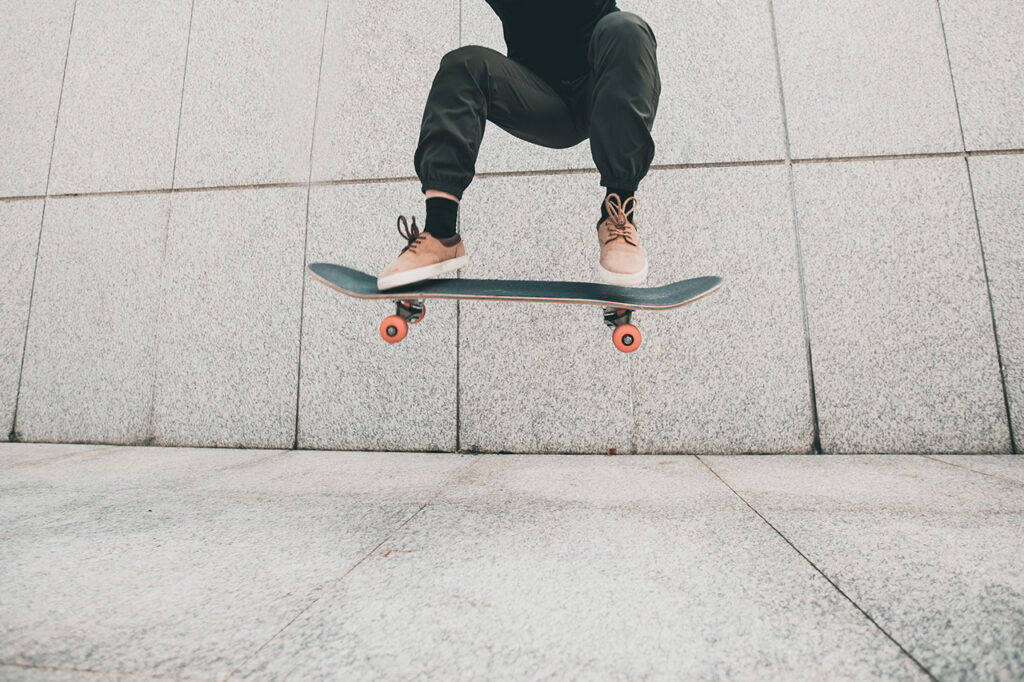
Skateparks haven't made a difference. Skateboarders and BMX riders continue to ride along benches or on stair railings. “The government’s attempt, starting in the 1990s, to confine these activities to designated areas—as is the case with all sports (stadiums, swimming pools)—has never stopped riders from continuing to practice in public spaces. This stems from a failure to understand the importance of the urban experience in this activity, ” explains Thomas Riffaud, a sociologist at the Santesih laboratory1 at the University of Montpellier. “Repurposing street furniture, performing tricks in spaces not intended for us, playing with the gaze of passersby—all of this contributes to the adventure of urban skating, ” says the man who has long skated on sidewalks.
"This practice helps you reconnect with the city"
Turning the city into a playground is also an act of resistance against the norm of urban management that focuses on the efficiency of traffic flow. Riders disrupt the planning of people’s movements and public transportation. By claiming public spaces for the duration of a ride, they even challenge the French idea of public space as belonging to no one, according to Thomas Riffaud: “The skateboarder, on the contrary, explains to us that public space belongs to everyone, including him. This vision breathes new life into public spaces that are increasingly deserted today, precisely because fewer and fewer people are claiming them as their own.” This approach is also evident among graffiti artists.
“When it comes to the body, this practice reconnects people to the city because it involves a very precise understanding of the urban environment,” emphasizes the researcher, who claims he can recognize Montpellier’s Albert 1er and Comédie squares just by ear—based on the distinct sounds skateboards make in those two spaces. His sociological studies of skateboarders show how all the senses come into play when they choose a spot: sight for the shape and potential of tricks, but also touch for the glide, and even smell—for example, to assess whether the experience is worth putting up with the stench… “Adapting to an urban environment that can sometimes be hostile fosters an intimate connection with the city—a genuine affection for the place where one lives,” he comments.
History Proves the Skateboarders Right
Rather than a political claim to public space, Thomas Riffaud prefers to use the term “intuition” to describe skaters’ opposition to the established urban order. “The point is also to take a positive view of the conflicts between skaters and other residents: diversity in public space creates friction, but that’s precisely where we learn to live together. ” And history proves the skaters right. More and more municipalities—so- called “skate-friendly cities”—are using these activities to revitalize deserted public spaces. While this movement is most visible in Northern Europe and Australia, it’s gradually taking hold in France. In Bordeaux, in particular, where—after negotiations with local residents—downtown squares are open to skaters during designated hours. “Specifications for street furniture are starting to incorporate this aspect: benches must not only accommodate passersby but also be sturdy enough to support skateboarding!” the enthusiast notes with delight. He points out that some municipalities continue to ban skateboarders through fines or deliberately hostile urban infrastructure: spikes and ridges installed along surfaces suitable for skating.
“In a country that encourages people to be more active than ever, and at a time when the population has never been more urban, it makes perfect sense to make room for physical activities in the city,” concludes Thomas Riffaud, who also points out that skateboarders help promote a positive image of the city: “The perfect shot—a great trick in a beautiful setting—is the prize skateboarders strive for. And with the rise of social media, they play a major role in promoting a positive image of the body in urban spaces.”
Check out theUM podcasts, now available on your favorite platform (Spotify, Deezer, Apple Podcasts, Amazon Music, etc.).
- Santesih (UM)
↩︎