"The research landscape is rapidly changing"
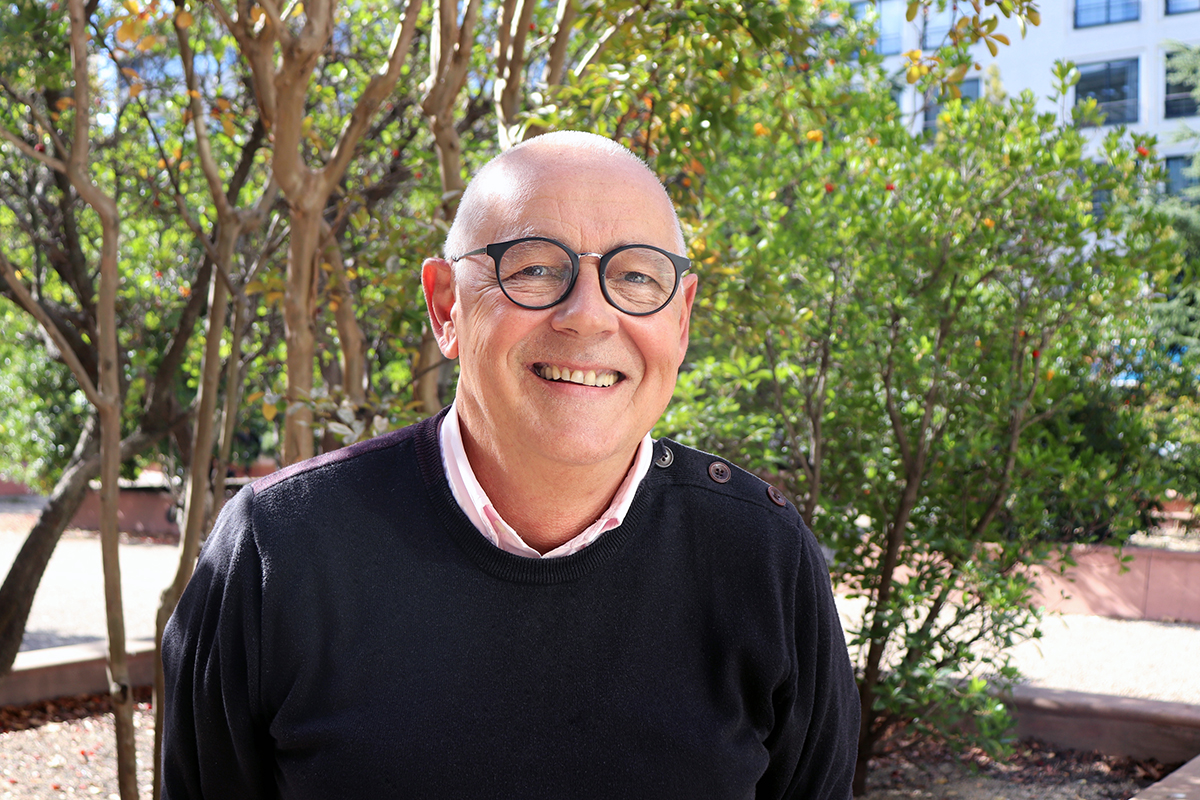
On August 30 and 31, the University of Montpellier hosted the annual conference of vice presidents in charge of research and innovation at French universities. The 2022 conference, focused on the theme of transitions, brought together more than 180 participants. We look back on this event with Jacques Mercier, vice president for research at theUM.
What is the purpose of this annual conference?
For the past seven or eight years now, all vice presidents of research and innovation have been invited to meet to review the year’s events. It is an opportunity to discuss ongoing reforms and exchange views on current research developments—not only among ourselves but also with representatives from major research organizations.
How many people are attending this event?
We had more than 180 participants, which was a real success. We welcomed vice presidents from all over France, including Réunion and French Polynesia. The CEOs of the leading research organizations1 were also in attendance, as was Manuel Tunon de Lara, the president of France Université (formerly the Conference of University Presidents).
The R3SUP network held its conference the day before. Who does it bring together?
The R3SUP network brings together administrative managers in research. They are the counterparts of Anne Bancel, who heads the Department of Research and Doctoral Studies (DRED) at theUM . This network typically meets one day before or one day after the conference and also participates in the conference for vice presidents of research and innovation.
The host city changes with each edition—why was it appealing for the University of Montpellier to host it this year?
We’ve already been to Toulouse, Bordeaux, Lille, and Paris, so it made sense for Montpellier to join the ranks of these major university cities. This underscores our appeal, our dynamism, and our visibility in a year in which the “UM ” has set in motion major changes. We also took this opportunity to highlight themes that are unique to us.
In fact, the theme chosen for this edition was “French Research on Transitions.” So “transitions” can refer to many things—starting with the ecological transition, I suppose?
Since the University of Montpellier is highly regarded in the field of ecology, we couldn’t overlook this aspect. Research must continue its efforts to integrate this transition into its day-to-day operations, whether it involves waste management, consumables, or fluids; the use of plastics; recycling; and so on.
You were talking about current events—what’s new for the 2021–2022 school year?
The research landscape is undergoing significant changes. The research programming law enacted by the previous government, under Frédérique Vidal’s leadership, is bringing about significant changes through the allocation of new resources for research. Discussions are underway regarding the role universities should play alongside research organizations; reforms are being implemented, particularly concerning doctoral programs; and junior professorial chairs are being introduced…
What does the doctoral program reform entail?
First, there was an increase in the compensation for doctoral contracts, and more recently, a new decree was issued almost at the time of the conference, which calls for the introduction of a private-law doctoral contract. In other words, it will now be possible to pursue a doctorate at private companies. It’s still a little early to discuss the details, but we’re working on it.
And what exactly are junior professorships?
These are new contracts that allow for the hiring of a Professor r a female teacher-researcher for a term of 3 to 6 years; following an evaluation, the individual may be appointed as a professor. This is a very attractive career opportunity, especially since they also receive a budget of 120,000 euros to set up a research laboratory.
Transition research also represents a shift toward greater interdisciplinarity. Is this a new way of working for researchers?
Yes, undoubtedly, and it is an extremely interesting development that gives rise to new themes and fields. Nevertheless, this must not come at the expense of purely basic research. We must find a way to balance the two and must not ignore the new questions raised by this interdisciplinary research.
What do you mean?
An interdisciplinary approach can sometimes make the execution of certain projects—and especially their evaluation—a bit more complex. It must therefore be carefully structured so that it can be carried out without compromising the quality of the research.
Do you think that civil society expects science today to be more applied, to take on more challenges—particularly those related to the ecological crisis?
Yes, there’s actually a lot of talk about citizen science. Research and science must be connected to society: it’s an absolute necessity, and in fact, researchers have long been working to find solutions. But again, this shouldn’t come at the expense of purely basic research, which must always exist for the advancement of knowledge.
During this conference, you also mentioned research focused on the Global South. Why?
We are fortunate to have the IRD and CIRAD in Montpellier and to be able, together with them, to establish a strong presence in collaborative research with the Global South. We really wanted to take advantage of this conference—and the visibility it provides—to reaffirm our commitment in this area.
The president also discussed the institutional transition involving the conversion of the “UM ” into an experimental public institution (EPE). How does this affect research?
This obviously changes a lot of things. The continuation of I-SITE Muse and its integration into the experimental public institution has helped strengthen ties between the University and research organizations and, at the same time, brought the research communities closer together. As a former vice president, I can say this: the I-SITE and its transformation into an EPE have fostered a much more intense dialogue in Montpellier between research organizations and researchers.
What is the significance of such a conference for the University of Montpellier?
As I mentioned, a conference like this helps reinforce our appeal and visibility, but that’s not the main purpose of this event. We vice presidents don’t often have the chance to interact with one another so easily, and it’s not every day that we bring together the president of France Université and the presidents and CEOs of research organizations around the same table. This leads to extremely fruitful discussions on how research and universities operate. But while people certainly come for the program, they also come to enjoy a wonderful time together; fostering informal exchanges is essential as well.
- Antoine Petit of the CNRS, Gilles Bloch of Inserm, Valérie Verdier and Elisabeth Clavery de Saint Martin of the IRD and CIRAD, Philippe Mauguin of INRAE, and Bruno Sportisse of INRIA. ↩︎