"Mosquito-repellent clothing": myth or reality?
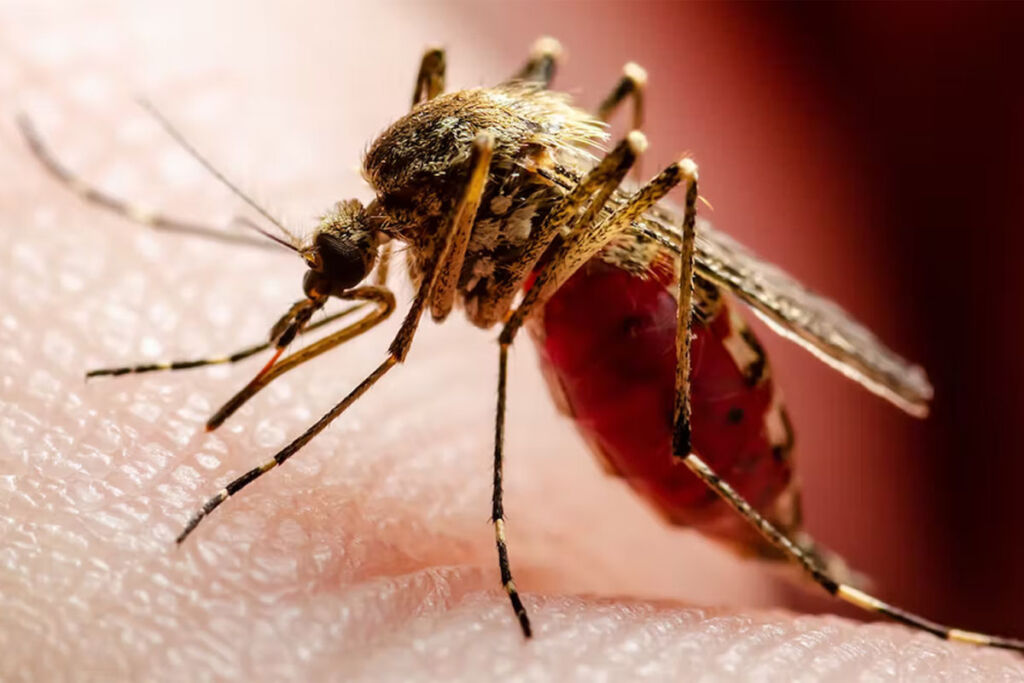
With summer comes their return—insatiable biters, as elusive as a summer breeze, masters of evasion… You’ve obviously recognized our tiny winged foes, those annoying mosquitoes, which can turn our vacations into an itchy nightmare and our nights into a real ordeal!
Yannick Simonin, University of Montpellier
Whether it’s drinks on a patio, a picnic in the great outdoors, or a family meal in the shade of a trellis, we’ve all heard colleagues, friends, or loved ones claim that they consistently attract mosquitoes and get devoured by them, while the other guests barely even notice the presence of these biting, acrobatic flying insects.
So, mosquito-repellent clothing: a misleading impression or scientific fact?
A Misconception: “Sweet” Blood, a Mosquito Magnet
According to a popular belief, the main explanation for repeated mosquito bites lies in blood composition: people with “sweet blood” are said to be more prone to attracting mosquitoes than others. But as widespread as this belief may be, it is not based on any scientific evidence.
In fact, mosquitoes have no way of knowing the composition of our blood, since they don’t “taste” it before biting us. So its sugar content is completely irrelevant!
Similarly, we sometimes hear that eating garlic, bananas, or vitamin B keeps mosquitoes away. These are all beliefs that are more a matter of folklore than science, since no serious study has yet confirmed these effects.
Let’s be clear: mosquitoes are not, in fact, attracted to all skin types in the same way. We are therefore not all equally at risk of being bitten by mosquitoes. But the reasons behind these differences are far more complex and fascinating than a simple matter of blood composition.
To understand them, we need to look at the—particularly sophisticated—way in which mosquitoes choose their targets by detecting many different signals from a distance, both physical and chemical. Some of these signals even depend on the microbes that live on the surface of our skin!
State-of-the-art detection equipment
We know that mosquitoes have a substantial toolkit at their disposal for biting us, consisting of several piercing blades.
In addition to this miniature microsurgery kit that helps them penetrate our skin discreetly, they are also particularly well-equipped to detect us.
Their tracking system works like a series of complementary radars that take turns activating as the insect approaches its target:
carbon dioxide (CO2), a signal that can be detected from several tens of meters away:
Mosquitoes can detect us through the carbon dioxide (CO2) we exhale with every breath. This gas, which is invisible and odorless to humans, forms a distinct plume around us that the insect can follow, much like a scent trail. ThisCO2 level isn’t constant: in a pregnant woman, whose metabolism speeds up; in an athlete in the middle of exercise; or even after consuming alcohol, this level can vary enough to make us more or less attractive depending on our activities or our current physiological state. So, over the course of a single day, mosquitoes may find us more or less attractive, simply depending on what we’re doing or what we’re eating!
silhouette, colors, and body heat; close-range detection:
When near their target, mosquitoes refine their approach by focusing on our silhouette and the colors of our clothing. Their eyes aren’t very sensitive to detail, so they can more easily distinguish dark colors, which contrast more sharply with the surroundings and are therefore easier to spot. Light-colored clothing, on the other hand, tends to blend into the background and be less visible to the insect. This is, in fact, one of the reasons why wearing light-colored clothing is often recommended in areas with the highest risk of bites!
At close range, the mosquito no longer relies solely on detecting a shape. It further refines its path using the heat emitted by our bodies, which it detects through heat-sensitive receptors located on its antennae. This heat can vary from person to person and depending on the time of day by about one degree (from 36.5 to 37.5 °C), which is enough to make us more or less easily detectable by mosquitoes! The warmest areas of the body, such as the neck or ankles, then become prime targets for the final landing and the fateful bite.
The scent of our skin, a unique chemical signature:
Other factors also play an important role in detection. These include certain volatile compounds emitted by the skin, as well as other chemical signals unique to each of us. Among these are compounds called carboxylic acids. Produced in our sebum and then transformed by the bacteria that naturally colonize our skin, they give off a distinctive odor that mosquitoes detect with remarkable precision, even at very low concentrations, thanks to extremely sensitive olfactory receptors distributed across their antennae.
Acetoin, another compound produced by certain bacteria on our skin, further reinforces this individual scent signature and helps guide the insect during the final centimeters of its approach.
Depending on the composition of our skin microbiome (the community of bacteria that lives on the surface of our skin, which varies from person to person), we produce these compounds in varying amounts, which directly affects how attractive our skin is to mosquitoes.
Two people sitting side by side can thus be perceived very differently by the same mosquito!
The Possible Role of Blood Type
Various studies show that other factors also come into play in this equation.
Among these factors, blood type appears to play a significant role: people with blood type O emit specific chemical markers on the surface of their skin that seem to be particularly detectable and attractive to certain species of mosquitoes.
These molecules, which are released through sweat or are present in the skin’s lipid barrier, create an olfactory signature that is slightly different from that of blood groups A, B, or AB, which could explain why individuals with blood group O are stung more frequently in experimental studies conducted in the laboratory.
Our skin’s reaction to a sting: it varies greatly from person to person
Beyond these issues of attractiveness, another factor explains why some of us seem to be “more affected” by mosquitoes than others: the reaction to the bite itself.
In fact, when a mosquito bites, it injects a small amount of its saliva, which contains anticoagulant proteins designed to thin the blood and thus make it easier for the mosquito to feed.
However, our immune system reacts to these foreign proteins by releasing, among other things, histamine—a protein that mobilizes our immune defenses. This release of histamine is responsible for the swelling, redness, and, above all, the itching that is so characteristic of the bite.
This immune response varies considerably from person to person , with no correlation whatsoever to the actual number of bites: some people develop large welts and an intense urge to scratch after just a single bite, while others hardly notice anything at all, with no correlation whatsoever to the actual number of bites they’ve received.
Furthermore, this sensitivity changes over time. Through repeated exposure to bites, the body can develop a form of tolerance and react less and less—a phenomenon well known to those who grew up in regions with high mosquito populations, such as the south of France.
Conversely, children, whose immune systems have not yet been exposed to these salivary proteins, are often the most severely affected: their reactions can be more pronounced, with larger and more persistent rashes than those seen in adults.
Thus, two people who are stung the same number of times during a meal may experience radically different symptoms: one may suffer from itching for several days, while the other may be completely spared from any discomfort (the latter may not even notice that they were stung!).
Fortunately, to thwart mosquitoes and protect ourselves from their bites, preventive measures work regardless of our skin type: window screens to keep them out of our homes, repellents to disrupt their perception of our scent, and loose-fitting clothing to prevent them from reaching our skin…
And let's not forget to keep the mosquito population in check—which involves, in particular, getting rid of standing water, which is essential for them to lay their eggs!
Yannick Simonin, virologist specializing in the surveillance and study of emerging viral diseases. University Professor, University of Montpellier
This article is republished from The Conversation under a Creative Commons license. Readthe original article.