Artificial Intelligence and the Dugong
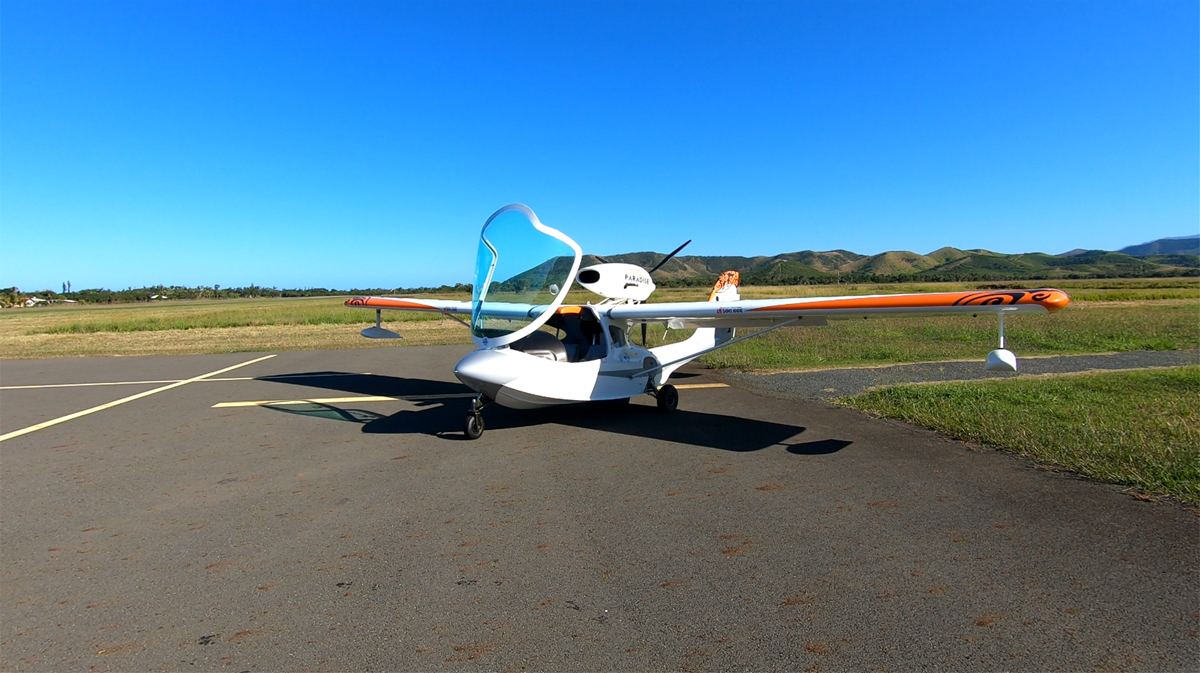
The goal of Laura Mannocci’s work in New Caledonia is to better protect marine megafauna using social media and artificial intelligence. It’s a project that involves taking to the skies… in a microlight.
Dugongs, rays, sharks, sea turtles… these major representatives of what is known as marine megafauna are particularly vulnerable. “These are animals that reproduce late in life and have few offspring, which makes them fragile species that require special protection,” explains Laura Mannocci, a marine biologist at the Marbec laboratory. Fewer than 1,000 dugongs—these large marine herbivores—are believed to still inhabit the waters of New Caledonia.
To better protect these majestic animals, we must first improve our ability to monitor their populations. This is the task that researchers at Marbec, Entropie, and Lirmm have set out to accomplish by deploying an innovative method that involves the use of artificial intelligence— “tools that ecologists are increasingly adopting,” explains Laura Mannocci.
Aerial Survey
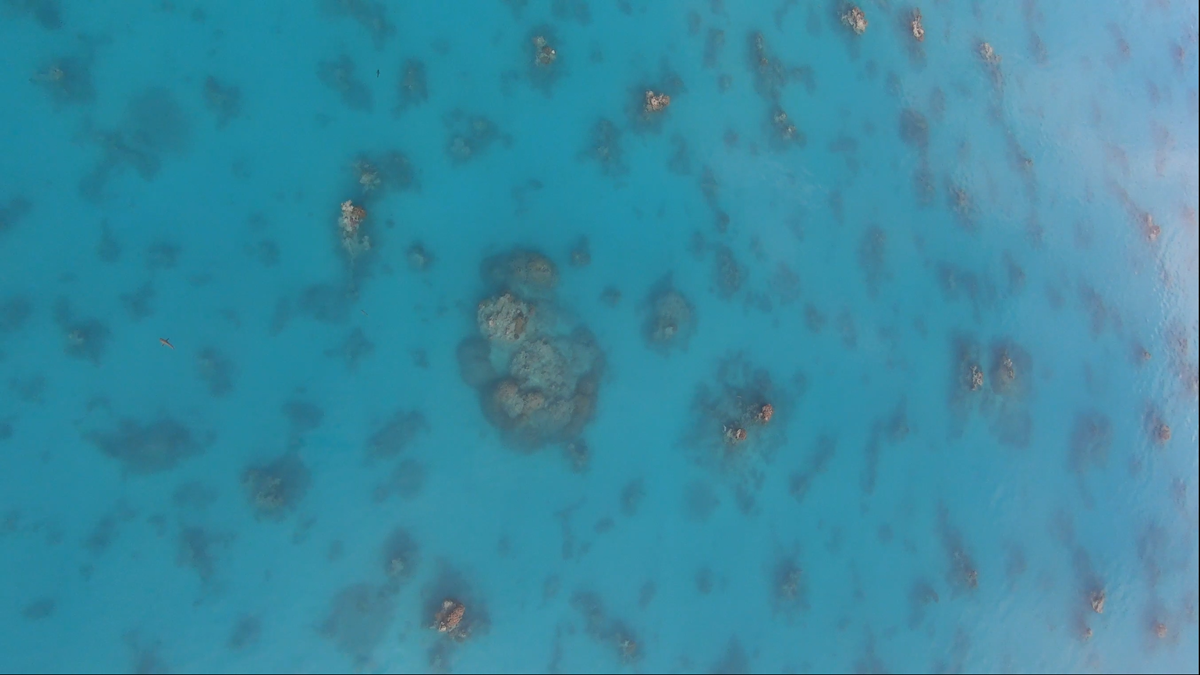
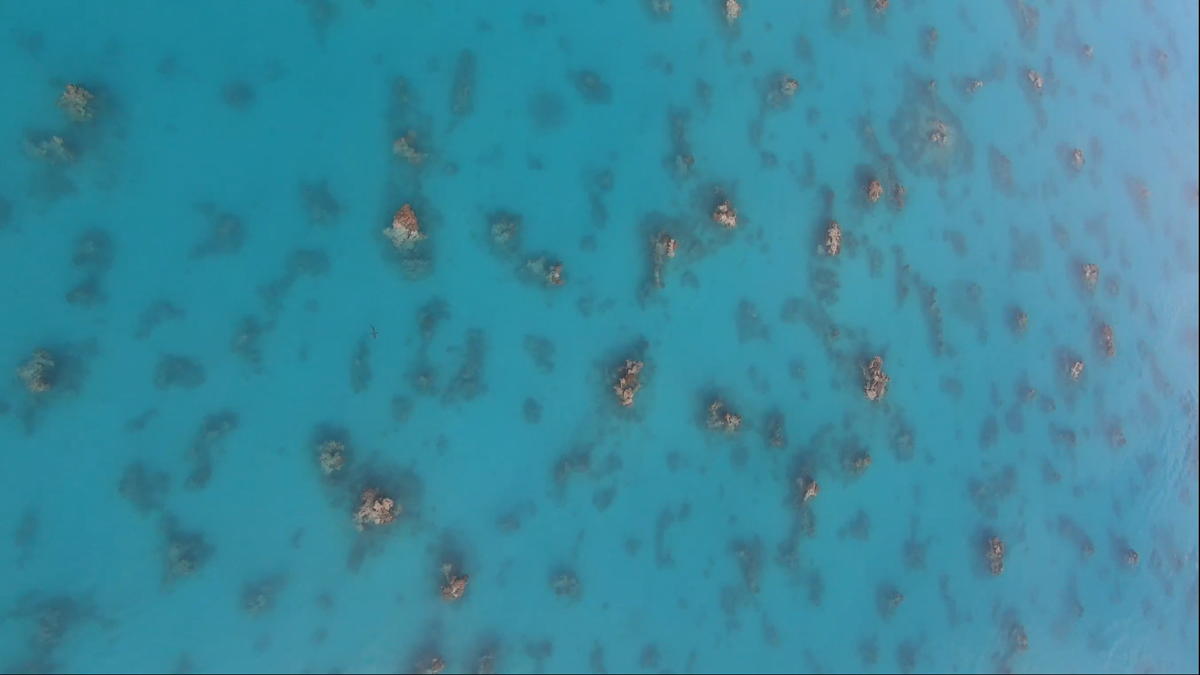
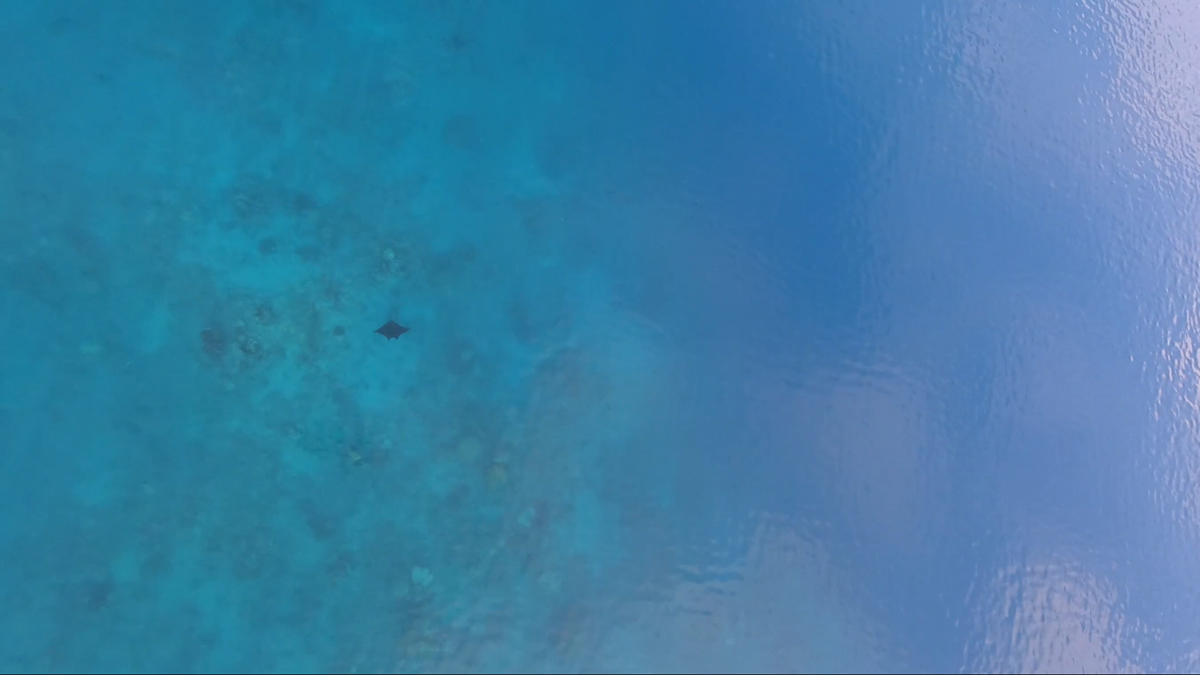
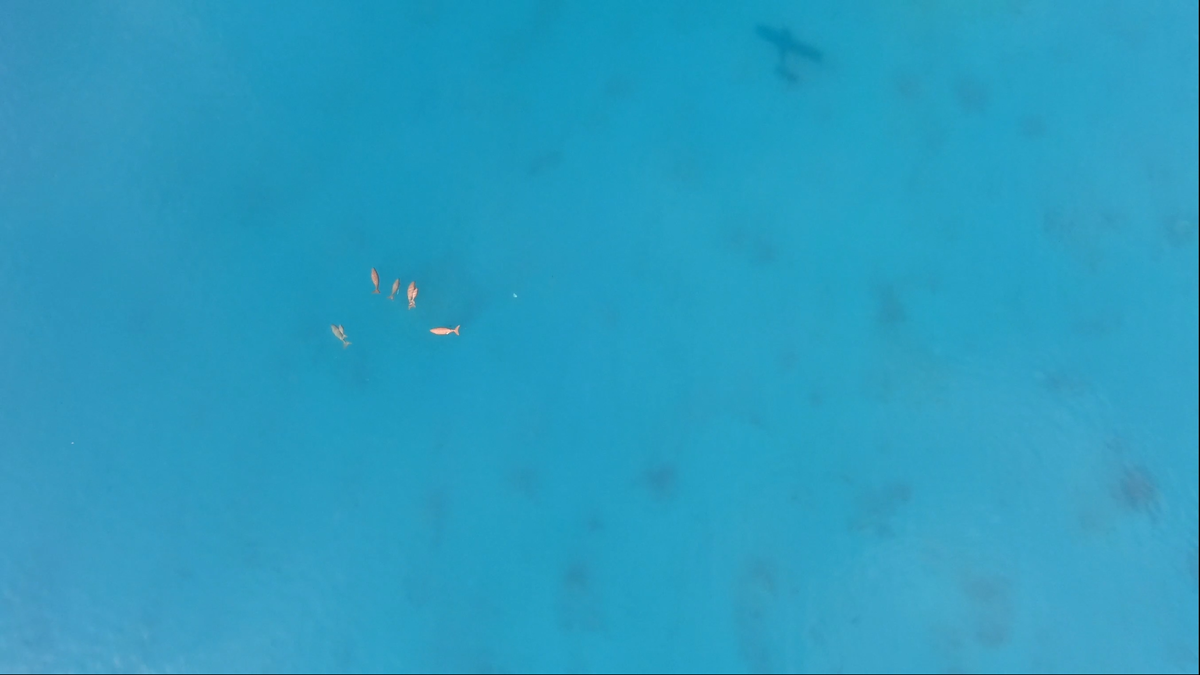
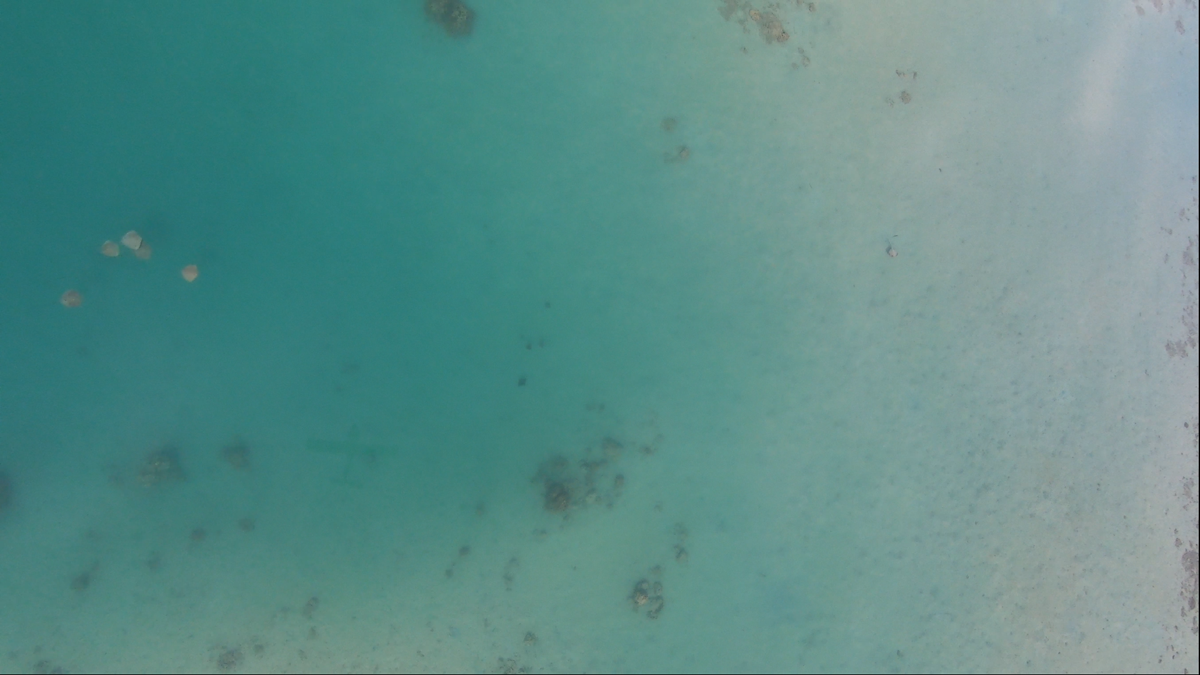
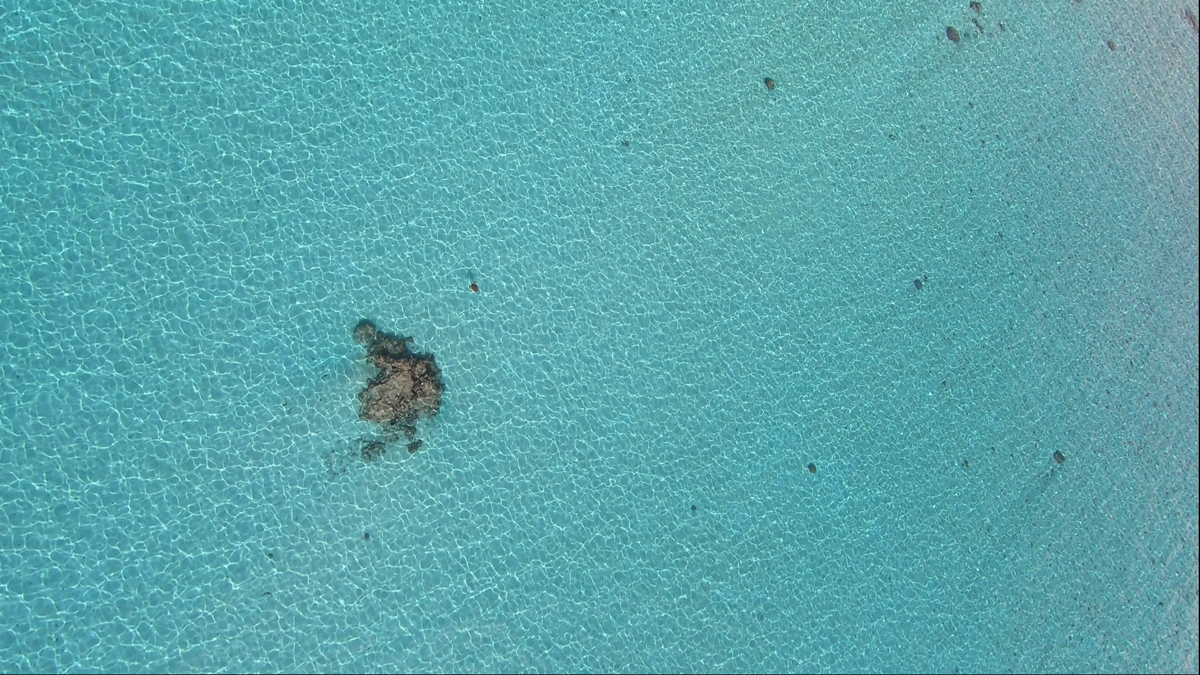
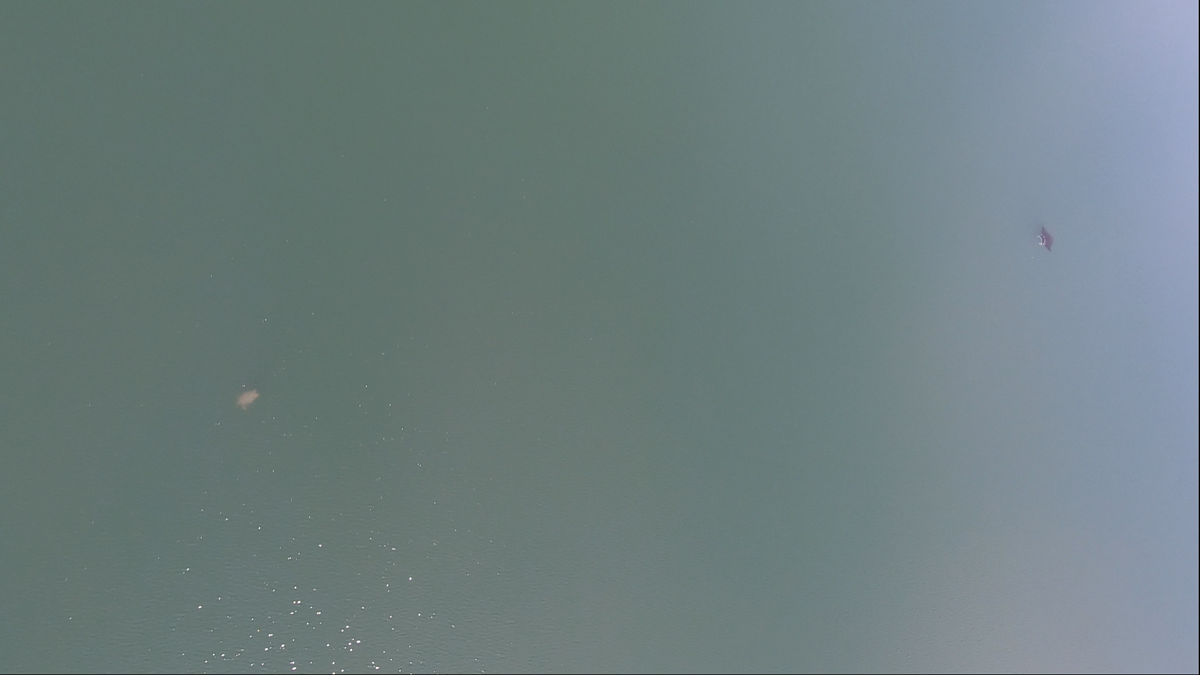
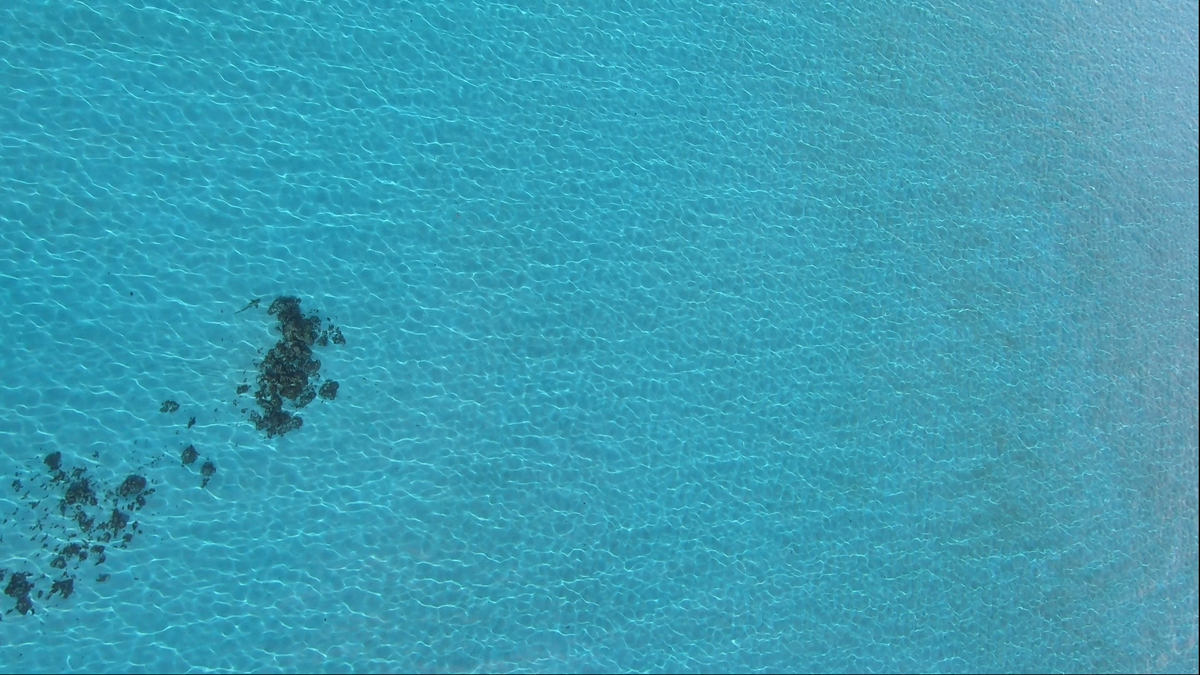
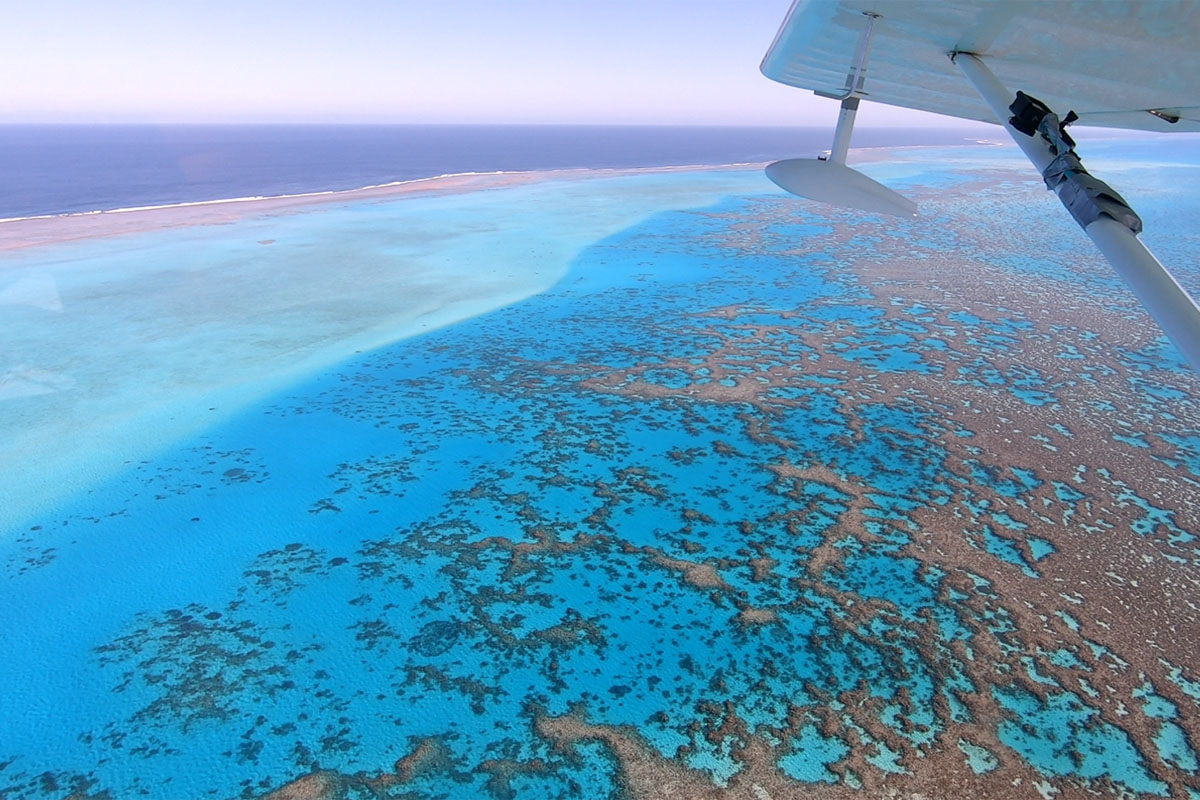
Whereas surveys are traditionally conducted below sea level, Laura Mannocci chose to take to the skies—50 to 60 meters, to be exact—the altitude at which her ultralight aircraft flew over a section of New Caledonia’s Western Lagoon.“These waters are very shallow—2 meters at most—so you can see marine animals even at this altitude,”explains Laura Mannocci. To make sure she didn’t miss a thing, the researcher mounted a camera beneath the microlight to capture the ballet of the stingrays and the passage of the sea turtles.
Filming is one thing, but identifying what’s in the footage is another… And that’s where algorithms come into play.“We used what’s called deep learning —artificial intelligence applied to pattern recognition,” explains the biologist. The researchers thus developed an“intelligent”program designed to analyze the footage captured during the flight over the lagoon and identify, for example, a school of rays here or a dugong hidden next to a coral head there.
Social Media
To identify these animals, the recognition algorithm—which“learns how to learn”—must first have seen many of them.“We needed images taken from multiple angles and in various habitats,” the biologist explains. How do you collect so many images of an elusive animal like a shark or a rare one like a dugong, for example? To overcome this obstacle, the scientists turned to… social media.“The dugong is such an iconic animal that we figured that when people were lucky enough to film it, they’d probably post the footage on social media,” explains Laura Mannocci.
After searching Facebook, Instagram, and YouTube, the scientists identified 20 videos of dugongs, which they used to “train” the algorithm to recognize the animal. The result: thanks to deep learning, the program is able to detect and identify 80% ofthe animals in the videos.“This method thus offers a new and effective way to count and map dugongs as well as other charismatic marine species with the goal of better protecting them. These surveys could, in particular, lead to recommendations to designate certain areas as strict reserves if necessary,” explains Laura Mannocci.