[LUM#10] A Revolution in Contraception
Nine students from Montpellier are working on a revolutionary form of contraception: a genetically modified vaginal bacterium. Dubbed “Vagineering,” the innovation won an award at the prestigious “International Genetically Engineered Machine Competition” (IGEM).
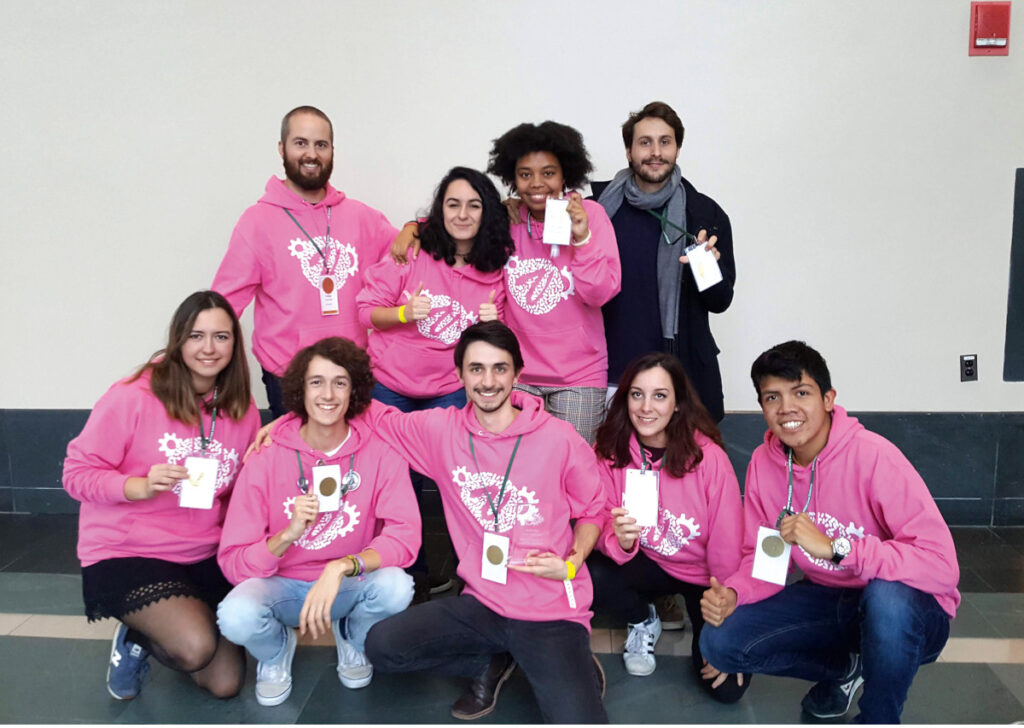
“Despite the immense progress made since the invention of contraception, there is currently no method that could be considered perfect,” explains Léo Carrillo, a biology student. Developing an innovative form of contraception is the goal of this young man and his eight teammates, who participated in the IGEM competition in Boston with a groundbreaking concept: bacterial contraception.
“We wondered if synthetic biology could help improve contraceptive options,” explains Léo Carrillo. That’s when the golden idea was born: to genetically modify a bacterium in the vaginal microbiome so that it could serve as a contraceptive.
Contraceptive bacteria
First step: identify the bacterium that would be the best candidate. “The vaginal flora isn’t universal—it varies from woman to woman—so we looked for the bacterium that is most common across all populations,” the student explains. In the end, Lactobacillus jensenii emerged as the winner of this selection process.
To turn this bacterium into a form of contraception, the students propose genetically modifying Lactobacillus jensenii so that it produces molecules that prevent sperm from moving, thereby making fertilization impossible. “To do this, we would need to insert a gene into the bacterium that encodes a spermicidal molecule, ” explains the student.
An innovation that would be a revolution for thousands of women dissatisfied with current contraceptive options: “No side effects, no need to remember to take a pill every day—a single injection into the vaginal microbiota would ensure long-term, effective contraception, ” explains Léo Carrillo.
Gold Medal
And what if a woman wants to get pregnant? “This bacterial contraception must be reversible, so we’ve designed a ‘switch’ system that would allow us to stop the bacteria from working.” The project won over the jury at the MIT international competition, where the students from Montpellier took home the gold medal and the Grand Prize. “The project is completely innovative; nothing like this has ever been implemented, ” emphasizes Léo Carrillo, who is now pursuing a master’s degree in cellular and molecular biology at the Sorbonne. Genetically modifying vaginal bacteria could even have other benefits. “It’s entirely conceivable that we could implement other modifications to treat vaginal infections—microbiome engineering is still in its infancy!”
Check out theUM podcasts, now available on your favorite platform (Spotify, Deezer, Apple Podcasts, Amazon Music, etc.).