[LUM#23] Dry-farmed vineyards
Struggling vineyards, a market losing confidence… The wine industry is facing a crisis that makes it particularly vulnerable to climate change. Faced with this situation, there is only one solution: adaptation. Economist Jean-Marc Touzard from the Innovation research unit explains.
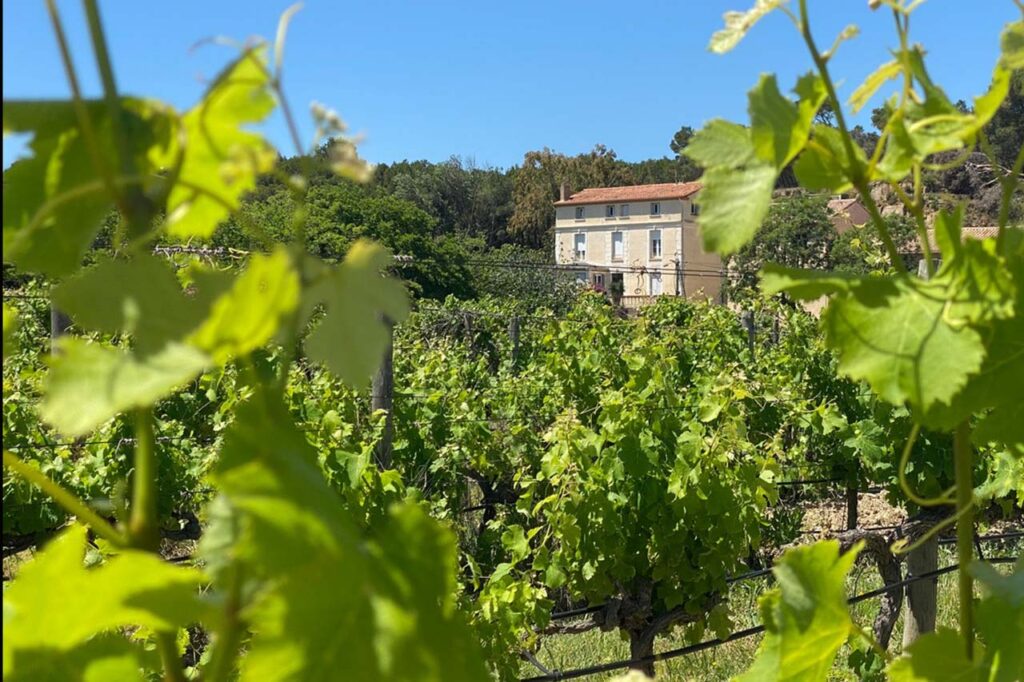
In late August 2025, schoolchildren haven’t even had a chance to use their new backpacks yet, and already the clipping of pruning shears echoes through the rows of vines. Grape pickers are hard at work
at the foot of the vines as soon as dawn breaks, to avoid the still-intense heat. “Today, the harvest begins three weeks earlier than it did in the 1980s,” explains Jean-Marc Touzard, a researcher at the Innovation Research Unit. The cause, unsurprisingly, is global warming. “Rising temperatures affect the plant’s physiology; the buds burst open earlier, and the fruit ripens faster, ” explains the wine industry specialist.
And this is far from the only impact of climate change on vineyards, which are also suffering from recurring droughts: “A water deficit leads to smaller grapes, which reduces yields, ” explains the co-author of the book *Vines, Wine, and Climate Change*. At 36 million hectoliters, wine production in 2025 will have been the lowest in France in over a century.
Wines with higher alcohol content
While the quantity of wine is declining, its quality is also changing. “The grapes, which are smaller due to a lack of water, also have a higher sugar concentration, which means the wine will have a higher alcohol content, ” explains Jean-Marc Touzard. The alcohol content of wines, which averaged 11.5 in the 1980s, has been steadily rising, exceeding 14 degrees for several years now for red wines from the Languedoc region (France Bleu, June 8, 2025).
These wines are more full-bodied and also exhibit a different aromatic profile. “Temperature affects the biochemical composition of the grapes, altering the balance between ethanol, acids, polyphenols, anthocyanins, and aroma precursors, ” explains the researcher. Once bottled, this combination results in wines with more concentrated aromas; in reds, these express notes of cooked fruit, jam, or spices. “This isn’t necessarily a bad quality in itself, but it’s a style of wine that doesn’t align with changing consumer demand, ” notes Jean Marc Touzard.
Socio-economic crisis
This poses an additional challenge for the wine industry, which is in the midst of a market crisis and facing a sharp decline in wine consumption, particularly of red wine (Les Échos, April 16, 2025). “If we add rising costs and export difficulties—particularly due to Trump’s tariffs—we have a full-blown socio-economic crisis in the wine industry, ” warns the director of the innovation lab.
To make matters worse, global warming is causing a string of increasingly frequent extreme events: torrential rains that wash away topsoil, hail that ruins crops, heat waves that scorch the most exposed plots, and wildfires that destroy vineyard landscapes and can wipe out an entire vineyard… All of these factors are undermining a sector that is already struggling.
“The socioeconomic impact of these cumulative crises is clearly evident, and winegrowers are already seeing a decline in their incomes. But beyond that, it is their very professional identity that is being called into question,” explains Jean-Marc Touzard, who has been working for years with all stakeholders in the wine industry.
Adaptation Strategies
The researcher and his colleagues draw on their in-depth knowledge of the sector to identify adaptation strategies through a participatory approach. First and for
: changing grape varieties. “Some are more drought-tolerant and ripen later, while others produce less sugar and retain their acidity better. Diversifying grape varieties reduces vulnerability, and some winegrowers are already experimenting with this.”
Winegrowers are also being encouraged to change their practices in the vineyards, for example by adopting pruning methods that better protect the grapes from the sun or by improving soil management through the addition of organic matter. “We even need to consider a spatial reorganization, by planting vines on different types of soil—less exposed to the sun, at higher altitudes—or by creating new vineyards further north, in Brittany for example, which, according to our simulations, could become a new wine-growing region by the end of the century,” adds Jean-Marc Touzard (France Bleu, September 30, 2024).
Stabilize the climate
Winemaking techniques offer another way to counteract the effects of
climate change—by reducing the alcohol content of wines, for example. “This approach is limited
by consumer acceptance—as some may feel that the wine is being denatured
—but demand for ‘nolow’ wines, with little or no alcohol, is rising sharply
” ( Reporterre, March 11, 2025), notes the researcher, who points to another path: institutional changes. “Modifying appellation specifications, improving risk and crisis management, and creating new narratives and connections with consumers. There are many avenues to explore. Adapting isn’t just about working on these different levers; we need to work together to build strategies that combine them, with approaches tailored to each region,” insists Jean-Marc Touzard.
Check out theUM podcasts, now available on your favorite platform (Spotify, Deezer, Apple Podcasts, Amazon Music, etc.).