[LUM#3] The Light and Shadow of Consciousness
What’s going on in our brains? Even today, it’s still hard to say. Among the mysteries that remain, there is one Holy Grail: the enigma of consciousness…
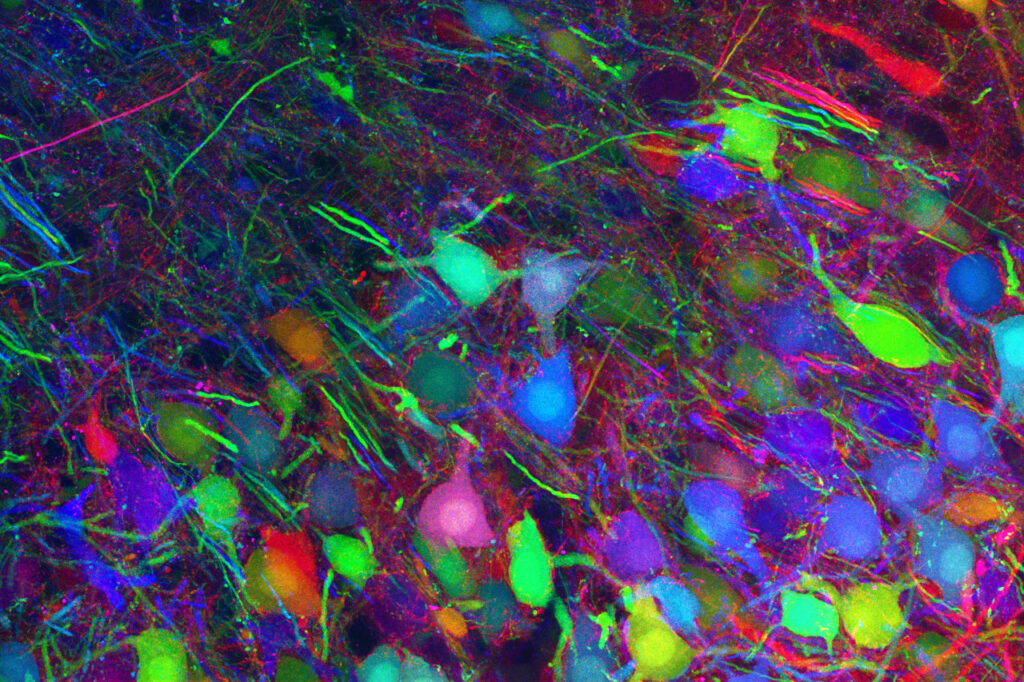
For a long time, it was a complete mystery. Shrouded in its inscrutability, the brain was described only from the outside. How do we behave? How do we speak? How do these insights shed light on brain mechanisms? Over the past few decades, technological advances—particularly medical imaging—have begun to shed light on the interior of this “black box.” But the mystery persists…
Just another organ?
“We have a general understanding of how the liver and kidneys work; even though there is still much to learn, the basic concepts are there. We have a general grasp of how the musculoskeletal, circulatory, and digestive systems function.”“Ageneral grasp,” says Joël Bockaert, a neurobiologist and founder of the Institute of Functional Genomics. Complete understanding often remains a shore that keeps receding the closer we get to it.
Understanding the brain? Wouldn’t that mean, among other things, understanding how the immaterial is created from the material—how consciousness and thought arise from nerve cells? For the brain is indeed an organ. And as such, it is subject to metabolic and genetic influences:“Autism and schizophrenia do indeed appear to have a strong genetic component,” the neurobiologist continues.
But it is an organ of staggering complexity. As proof, when it comes to repairing this delicate mechanism, we turn out to be very poor watchmakers…“Even today, when faced with virtually all brain diseases, we as practitioners remain largely helpless. We can relieve patients’ symptoms, but we cannot cure them,” says Gina Devau.
Eternal Impermanence
This neurobiologist, who specializes in Alzheimer’s disease, has some excellent news, however:“Your brain is aging well!” she says. It does, in fact, possess remarkable plasticity and incredible resilience. In the event of damage, it can reorganize itself to recover all or part of the lost functions.
And for it to develop, all it takes is to keep it active. Because our brain structures deteriorate especially if we don’t use them.“The brain is constantly changing and reshaping itself throughout life. It is capable of creating new connections when challenged,” says Gina Devau. If there’s one thing that defines our brain, it’s its impermanence. Every second transforms it. So much so, according to scientists, that you won’t be the same person after reading this article…
But then, what is the basis of my identity? Far from the unconscious intuitively described by Freud, scientific advances now allow us to imagine an unconscious that is perhaps even more pervasive than the father of psychoanalysis ever imagined.“This is a major discovery of recent decades: the brain functions largely unconsciously,” states Joël Bockaert…
Who am I?
And scientists describe a brain that doesn’t need us to perform the vast majority of the tasks it’s responsible for. Managing physiological functions—breathing and heart rate, for example—and juggling motor and sensory coordination, like when riding a bike or playing the guitar: my brain handles these complex tasks all on its own. That is to say, without me.
“It’s an organ that functions at an extremely fast pace: on the order of milliseconds. This process therefore escapes the consciousness, for which the basic tempo is more on the order of seconds,” says Gina Devau. The same is true of speech:“When we speak, it’s at such a speed that our speech clearly doesn’t have time to pass through the filter of consciousness,” confirms Joël Bockaert. But then, who is this “I” that speaks?“I is another,” said Rimbaud: poets—those inventors of the unknown—were the first to express this sense of wonder at the mystery of consciousness.
Consciousness, then, is merely the tip of the iceberg, in the depths of which most decisions are made without our knowledge. What happens when it emerges? This fireworks display can be described, but not explained.“Everything lights up and synchronizes in the prefrontal cortex. This is the main seat of consciousness: it is the prefrontal cortex that begins to activate and manage most of the brain’s functions,” explains Joël Bockaert. This state, which allows us to focus our attention on a single, specific event, does not last. The brain then takes back the reins, like a discreet despot…
The Traces That Shape Us
If there’s one thing I rely on, it’s undoubtedly my memory—that cornerstone of identity formation.“Our memories open a window not only to the past but also to the future. They are what allow us to move forward,” says Gina Devau. It is our knowledge of places, past situations, and existing relationships that allows us to adapt in advance to what we envision for the future.“There is no imagination without memory: the same regions of the brain are involved,” explains Joël Bockaert.
We have some insight into how memory works.“When a memory is formed, the connections between certain neurons strengthen to create a pattern , a specific form.” Networks are created; they will strengthen or disappear depending on whether or not they are activated. Memories are thus literally imprinted within us. They are physical traces: this begins to unravel the central mystery of “how can the immaterial be created from the material?”…..and vice versa. As the American neurologist Antonio Damasio writes, Spinoza may well have been right: for the philosopher,“the body and the mind are one and the same thing, viewed from two different angles.”
These physical traces that populate our memory are themselves subject to the law of impermanence. For our memories are constantly changing. The patterns of the neural networks that compose them will evolve and reconstruct themselves. Today, we have come to realize just how fragile memory is. We know that it deceives us: the brain reconstructs memories, recoding them differently each time it brings them to consciousness, subjecting them to multiple factors that alter them.
The brain can be incredibly deceiving
Memory is thus influenced by emotions. Neurobiologist Isabelle Chaudieu studies post-traumatic stress disorder. Under normal circumstances, our memory is consolidated during sleep, when the hippocampus redistributes memories to various areas of the brain where they will be stored long-term. In cases of extreme stress, the hippocampus can no longer do its job.“The prefrontal cortex, which is supposed to regulate emotions, is overloaded. It can no longer fulfill its role.”
At that point, a rapid-response system takes over: it’s called the subthalamic system. A state in which emotions take over the rational brain…“Keeping emotions under control is one of the major functions of the brain’s higher systems. Virtually all psychiatric disorders are linked to an underlying imbalance in the prefrontal cortex,” explains Isabelle Chaudieu.
But even when it’s functioning perfectly, our brain frequently deceives us. This enchanter is a master of the art of phantasmagoria. Optical illusions, for example, are proof of this.“The brain erases, creates, reconstructs, recomposes, and invents shapes. It can even fabricate fictional memories,” summarizes Joël Bockaert.
It is an enigma that will be long and arduous to unravel through the lens of science. To understand it even a little, there is a long road ahead, and it will require the combined efforts of many disciplines, explains Gina Devau.“Clinical studies, behavioral studies, medical imaging, computer simulation, genetics… Each discipline offers a small window into the picture. The picture is still too vast for us to take in at a single glance.”
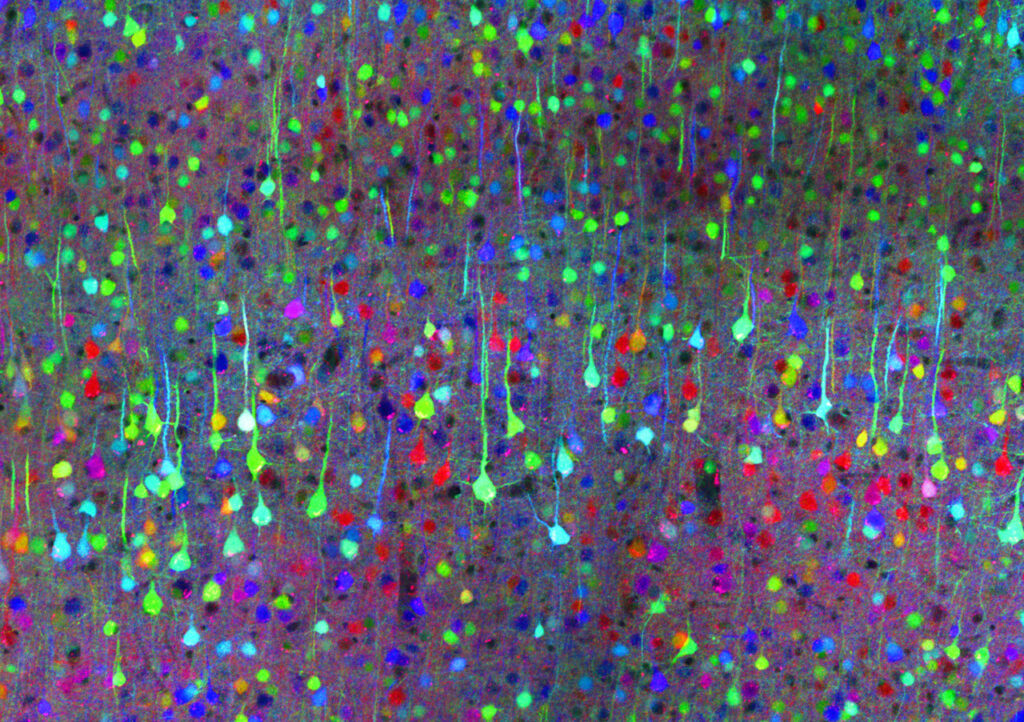
" using the Brainbow technique.
© Inserm/Fouquet, Stéphane
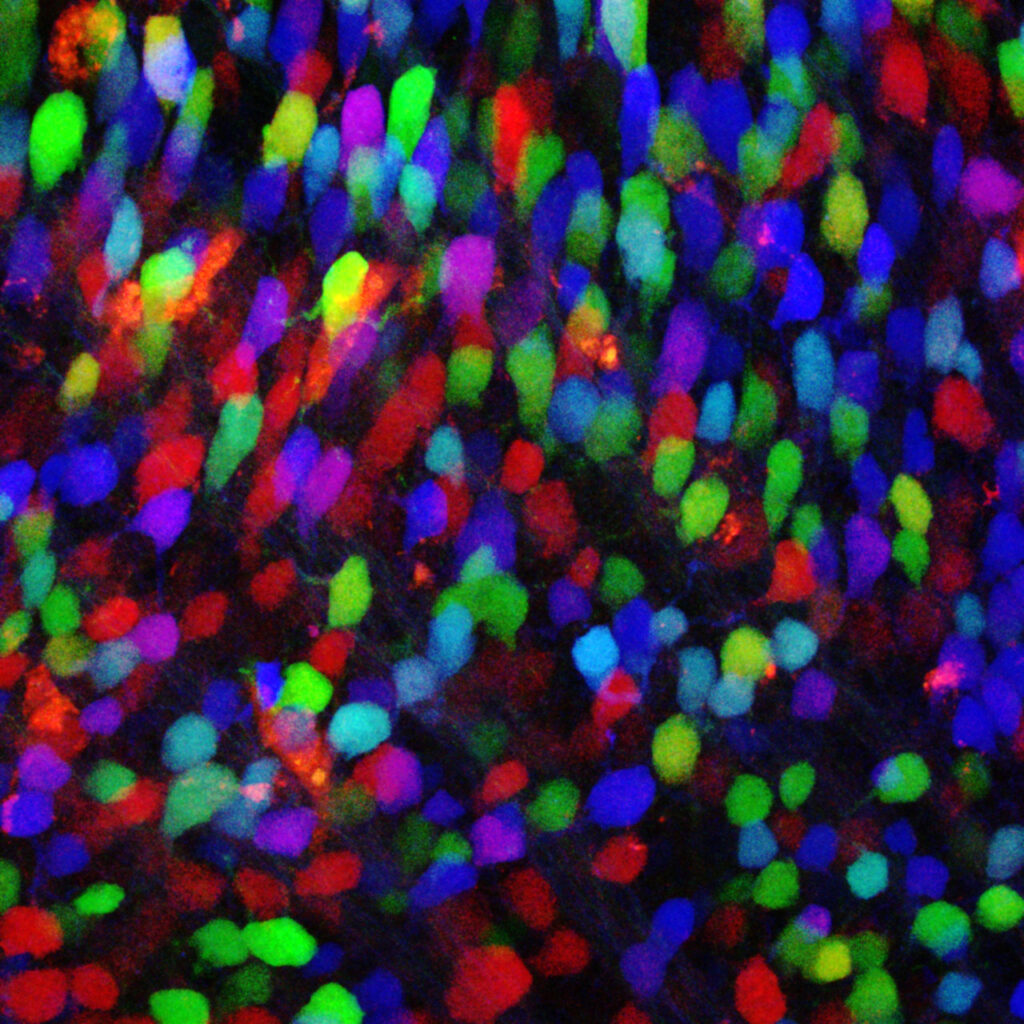
-labeled mouse retina using the Brainbow technique.
© Inserm/Loulier, Karine
Check out theUM podcasts, now available on your favorite platform (Spotify, Deezer, Apple Podcasts, Amazon Music, etc.).