[LUM#6] Flowers at the Planet's Bedside
To remediate contaminated soil and polluted water, Claude Grison and his laboratory ChimEco are harnessing the power of nature. Healing the planet with plants: the idea is in full bloom.
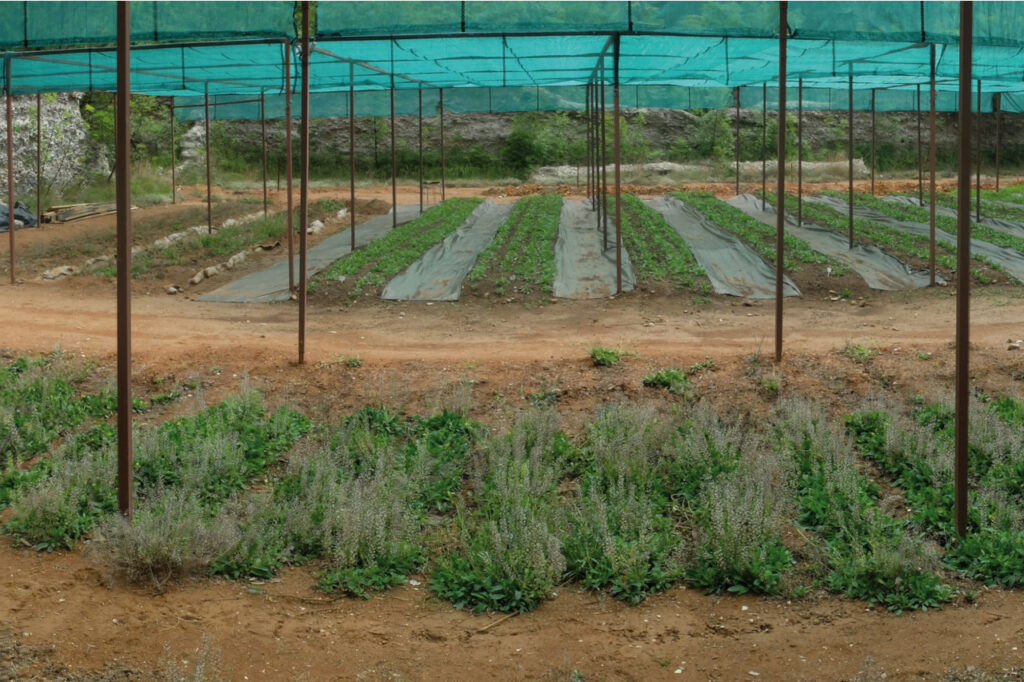
It was 2007, and Claude Grison, a chemist, was not yet an ecologist when four of her students in a preparatory class for the grandes écoles proposed an original research topic to her: “Can we remediate soil using plants?” To help them, she delved into the existing literature.“I discovered plants in a whole new light,” she recalls. “When faced with pollution, they can’t just run away! They have only two options: adapt or disappear.”
Industrial pollution
And those who have had the misfortune of being born on former mining sites must contend with the worst kind of pollutants: heavy metals. “These pollutants are inorganic and therefore not biodegradable. If nothing is done, they will remain there—deep within the soil or in contaminated effluents—forever,” the chemist explains.
In Saint-Laurent-le-Minier, in the Gard department, Claude Grison discovered during his research the grim legacy of decades of industrial activity: soil contaminated with cadmium and lead, two byproducts of zinc mining. The mines have now disappeared from the landscape. Unfortunately, so have the plants: here, the lead concentration in the soil is 800 times higher than normal. With no vegetation to trap them, the metal particles—easily carried away by rain or wind—contaminate the region within a radius of more than 50 km.
Plant Frenzy
Yet, on these arid slopes, a few plants stretch their timid blossoms toward the sun. How do they survive? These “hyperaccumulators,” known as Noccaea caerulescens, Anthyllis vulneraria or Iberis intermedia, all exhibit a remarkable adaptive strategy: they trap metal particles in their leaves, where they store them. Claude Grison, who uses them to remediate the soil in Saint-Laurent-le-Minier, affectionately calls them “plant follies” (Plants for Remediating Soil and Water, 2016).
Since then, the method has been a resounding success, and his ChimEco laboratory has planted similar species in Crete, Gabon, China, and New Caledonia. Everywhere, these valuable plants help stabilize severely degraded soils while using “phytoextraction” to capture the metal particles they contain: zinc, lead, cadmium, copper, manganese, nickel, and even palladium. Some of these metals are valuable: all that remains is to extract them from the leaves of these extraordinary plants using a 100% eco-friendly thermal and chemical treatment ( The Chemistry of the Future Lies in Plants, 2017).
Claude Grison’s laboratory is now turning its attention to a new field of research: water pollution. Some aquatic plants, in fact, have the same hyperaccumulation capabilities as their terrestrial counterparts. “This is a particularly critical issue,” the researcherpoints out. “Drinking water is becoming a scarce resource; we must preserve it. It has become one of humanity’s greatest challenges.”
Check out theUM podcasts, now available on your favorite platform (Spotify, Deezer, Apple Podcasts, Amazon Music, etc.).