Alternative Pedagogies: A Vast Array with Diverse Political Aims
Of the 12 million children and adolescents enrolled in school in France, only a few tens of thousands are reportedly enrolled in programs that use alternative teaching methods.
Sylvain Wagnon, University of Montpellier
Activist websites such as “Le Printemps de l’Éducation” cite a figure of 60,000 children affected. The Miviludes (Interministerial Mission for Vigilance and Combating Sectarian Aberrations) report provides an “official” figure of 24,851 children who are not enrolled in school but are being educated at home or through distance learning.
If we look solely at the statistics, the phenomenon may therefore seem marginal. Nevertheless, it is clearly on the rise, and the arguments put forward by advocates of these educational approaches are resonating strongly in the media and among certain segments of society. In a recent study published in the journal *Tréma*, we outlined an analysis of the definition and scope of this diverse array of approaches.
What do a “traditionalist” religious school and a Montessori school have in common? What about a Freinet school and homeschooling? Analyzing this complex landscape means attempting to identify the unifying principles of these movements without underestimating the differences among the proponents of the various approaches. It also means highlighting the actual role of the pioneers, supporters, and the ideological and financial ramifications.
The Legacy of Progressive Education
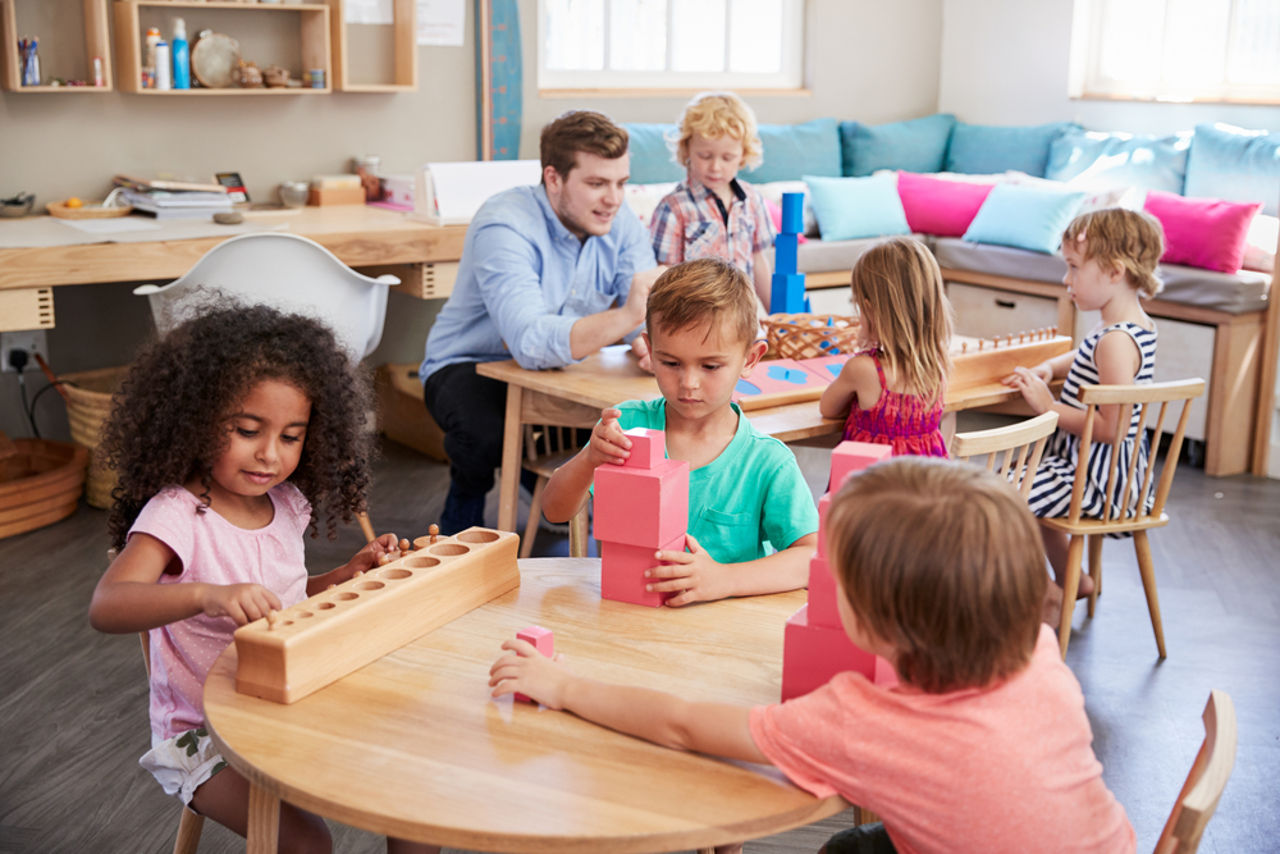
The concept of alternative education is not new, as the progressive education movements pioneered by educators such as Célestin Freinet, Maria Montessori, Rudolf Steiner, and Ovide Decroly have been present in France since the first half ofthe 20th century and emerged as a reaction to traditional schooling. Alternative educational approaches ofthe 21st century differ in their political objectives, methods, and scientific foundations.
Given that they consist mainly of private schools not under contract with the government, the question of their ties to the public school system arises. When examining the arguments put forward by the various factions, it becomes clear that the “attacks” on public education are not all of the same nature.
Homeschooling advocates are fundamentally opposed to school, but other movements, such as democratic schools, advocate strategies to circumvent or compete with the school system in the name of educational freedom. Is this a temporary form of resistance? Does it contribute to the liberalization and privatization of education? These questions remain unanswered.
Neuroscience in the Background
In his latest book, Philippe Meirieu has lucidly clarified the issues at stake in the current debates between proponents of “traditional” schooling, advocates of progressive education, and advocates of contemporary alternative pedagogies who seek to radically redefine all educational relationships by rejecting adult domination. Philippe Meirieu describes them as “hyperpedagogues,” a label that is open to debate, since some advocates reject the very idea of pedagogy as a tool for dominating children.
Behind this typology lies a political divide. The Freinet movement—and, to a lesser extent, the Decroly movement—advocate for an emancipatory goal and a political transformation of education, whereas today’s alternative movements most often describe themselves as “apolitical,” emphasizing the “obviousness” of personal development as validated by neuroscience. However, this refusal to be “labeled” does not preclude discourse and practices that reflect clearly identifiable political and pedagogical frameworks.
Alternative educational approaches ofthe 21st century, whether inside or outside of school, draw implicitly or explicitly on the “new education” movements of the early20th century. They are sometimes direct offshoots of these movements, as is the case with Montessori schools and Freinet classrooms. Nevertheless, the scientific foundations of the two movements are not the same.
The movements in progressive education stem from the theories and practices of child psychology and social psychology. Alternative educational approaches ofthe 21st century, while drawing on part of this body of knowledge, ground their practices in advances in cognitive science and, in particular, neuroscience. Indeed, we are witnessing a sort of alliance between neuroscientists and advocates of alternative educational approaches in response to the public school system.
Debunking Myths
Our analysis of the wide range of alternative teaching methods highlights three groups with divergent—even antagonistic—political objectives.
- The first group consists of the historical currents of progressive education (Decroly, Montessori, Steiner, and Freinet), which remain very much present today in both the public and private educational landscapes in France. This is by no means a common “front.” The ideals of social diversity and educational transformation remain strong cornerstones of the Freinet and Decroly movements, whereas the Steiner and Montessori movements focus primarily on personality development.
- The second group offers an educational model centered on “tradition” and on the transmission of knowledge above all else, even before socialization. This group consists mainly of traditionalist Catholic schools. These schools are ideologically opposed to most alternative schools that advocate for societal transformation. Nevertheless, this movement perceives a convergence with certain alternative schools in their circumvention of the public school system and their liberalization of education.
- Finally, the third cluster—which is currently expanding—is a loose network comprising a wide range of educational initiatives, organizations, and stakeholders that draw on the concepts of family education, personal development, and neuroscience. While its growth remains quantitatively negligible, it is highly assertive in the media and in the political arena. One of the new developments is the appropriation of the idea of innovation by schools or initiatives that are not tied to any particular educational model. We are witnessing a tug-of-war between an individualistic retreat and a desire to transform the existing system.
Yesterday as today, education is, of course, a political issue. The challenge facing reformers within the public education system is to defend the idea of a school system that serves the common good, while at the same time being critical of that system. This does not mean that the situation is set in stone, but it seems to us that we need to dispel the myths.
Progressive education is not a uniform movement; it has not permeated the French educational system with its “pedagogism”—reformers remain marginalized within the public school system. The struggle to define an emancipatory education is even more relevant today in the face of growing social individualism and heightened nationalism.
Sylvain Wagnon, Full Professor of Education, University of Montpellier
This article is republished from The Conversation under a Creative Commons license. Readthe original article.