The Impact of Record-High Abstention Rates: When There Is No Longer a Choice
Political protest can take many forms and encompasses a variety of messages. Abstention—an iconic symbol of political disengagement—is the most visible form. On Sunday, June 11, with more than one in two voters failing to participate in the election of their representative, abstention reached a new high.
Aurélia Troupel, University of Montpellier
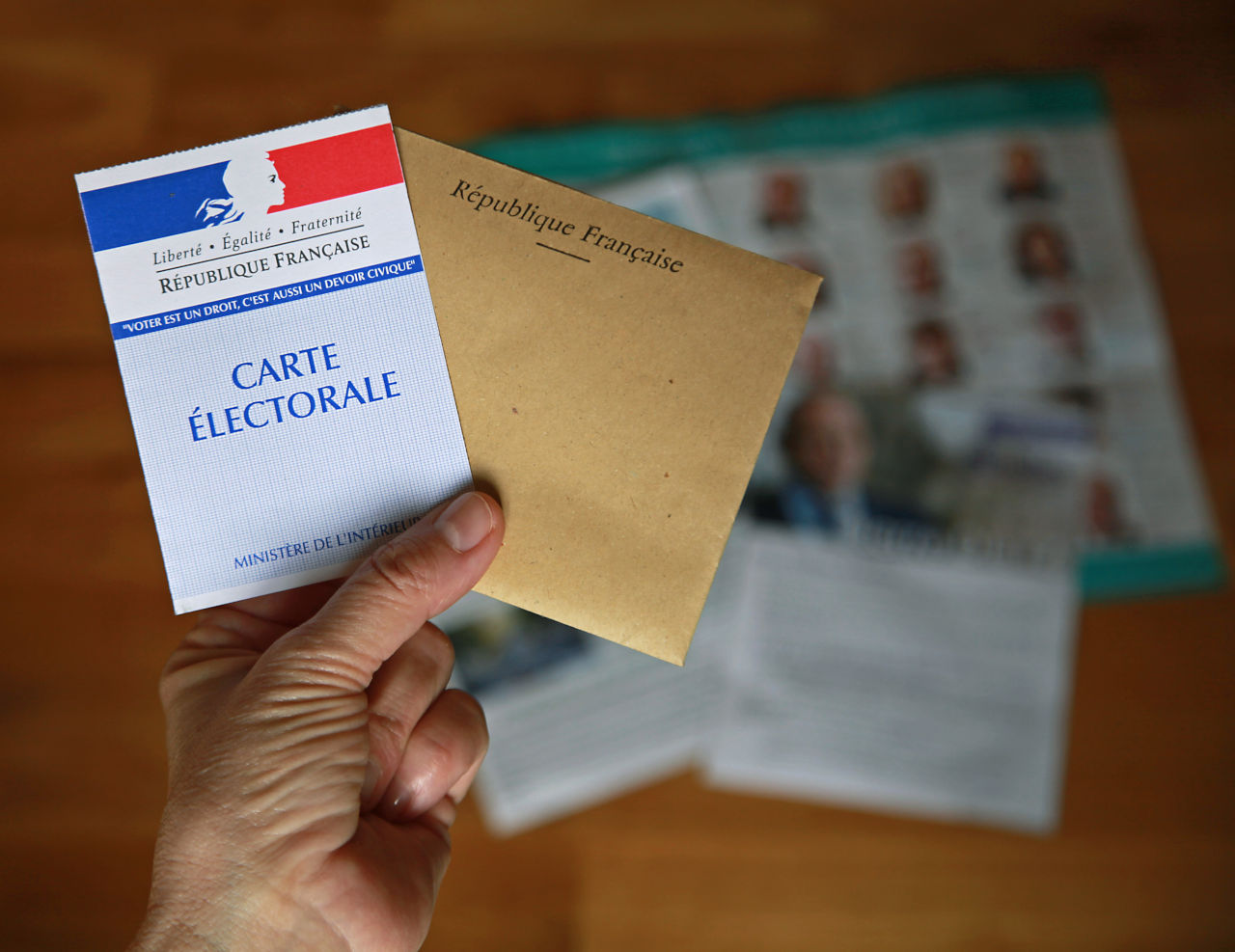
With 51.3% of voters abstaining in the first round, it was indeed much higher than in the presidential election but is in line with compared to the peaks already reached in 2015 during the regional elections (1er (round) and departmental elections, and remains significantly lower than in the last European elections (57.6%).
This ebb and flow in voter abstention, which varies from election to election, can be explained by the many factors at play.
A variety of factors
The importance voters attach to the election, as well as the intensity and quality of the campaign, are the primary factors that may account for this variation. Presidential elections thus tend to mobilize voters more than legislative elections.
Although the campaign was partly overshadowed by the initial steps taken after Emmanuel Macron came to power, the stakes for this first round were all the more significant given the desire for revenge at the polls among the two major parties that had been eliminated, as well as among La France insoumise (FI) and the FN, which were seeking to secure as many elected officials as possible. But with voting intentions showing LREM as the clear winner, the “hangover” among voters and activists—and, to a lesser extent, “electoral fatigue” (this is the sixth election in three years)—seem to have fueled voter apathy.
Beyond these short-term factors, there is also what some call“sociological abstention.” Young people, those with fewer credentials, and the working class are often the ones most likely to stay away from the polls. Incorrect voter registration —that is, voting at a polling place corresponding to a former address or another residence (such as a parent’s home or a secondary residence) rather than one’s current address—makes the act of voting more “cumbersome,” if not impossible (see the error on the voter rolls).
Although subject to fluctuations—even if the general trend is upward—the abstention rate is often analyzed as an indicator of the state of democracy. It receives particular attention when results are announced but is then forgotten until it, in turn, becomes a new benchmark for voter turnout. However, in the case of this first round of the legislative elections, this record-high abstention rate has significant repercussions for the rest of the democratic process.
A limited choice due to abstentions in thesecond round
Elected by a small minority of voters, the legitimacy of the future National Assembly is—even before it convenes—the subject of widespread criticism, compounded by its nearly monochromatic composition, according to projections, and the large number of newcomers entering the Palais Bourbon.
However, even now, between thefirst andsecond rounds, this high percentage of abstentions has already had an impact, given the voting system in place for the legislative elections. For the first time, the exception has largely become the rule.
To qualify for the second round, candidates must receive at least 12.5% of registered voters. Along with the departmental elections (formerly cantonal), these are the only elections based on registered voters rather than votes cast. When the result is calculated based on the number of registered voters, it takes into account all voters who were actually eligible to vote; conversely, when it is calculated based on votes cast, those who abstained (as well as blank ballots) are excluded from the calculation. In this sense, elections based on registered voters would therefore be more representative than those based on votes cast. They are also, in fact, more challenging for candidates because, depending on the abstention rate, the percentage of registered voters needed to reach the 12.5% threshold is high.
For example, in Moselle, Mathilde Huchot obtained 12.52% of registered voters—equivalent to 27.3% of votes cast—once the 52.8% abstention rate and the 1.3% of blank and invalid votes were excluded. Under these conditions, the number of candidates qualifying for the second round may be limited. To ensure that at least two candidates advance to the second round—thereby guaranteeing political pluralism and giving voters a choice—a contingency measure has been put in place: the “repêchage.” Thus, if only one candidate qualifies, the candidate who finishes in second place is automatically guaranteed a spot in the next round.
The particularly high abstention rate inthe first round led to this scenario occurring frequently: in 68% of districts, only one candidate cleared the 12.5% threshold, and the other was promoted. In 14% of districts, both candidates had to be promoted. Ultimately, both candidates qualified normally in only 18% of the districts. In this first round, the exception—the runoff—thus became the rule.
While LREM candidates most often secured a spot in the second round, other political parties benefited significantly from this system: nearly two-thirds of LR and UDI candidates were thus granted a second chance, as were 80% of Socialist candidates, 88.3% of FN candidates, and 97% of FI candidates. Although not explicitly explained to voters, this pathway to the second round favors the most popular candidates—that is, those who attract both a vote of support and a protest vote, as is the case with the FN.
Although they are, in principle, outside the political arena, this large number of abstainers—combined with a high qualification threshold and a large number of contenders—has a significant impact on the remainder of the election. In the short term, this affects candidate selection; in the long term, it undermines the credibility of the election itself.
Restoring Meaning and Significance to the Ballot
To curb voter abstention, several approaches could be considered. While current debates focus on changing the electoral system by introducing a "dose" of proportional representation, it would seem, however, that it would be more useful to give voters more power by restoring meaning to the act of voting and, above all, giving their ballots more weight.
Thinking about what tools to provide citizens so they can make informed choices and reclaim ownership of the electoral process could be a first avenue to explore in combating voter abstention. Understanding not only why we vote but also the context in which we do so—by explaining the roles and functions of the various legislative bodies and outlining what would happen if there were no majority or, conversely, if a majority were too dominant—would help clarify the debate. Understanding the ins and outs of an election helps spark interest and, in turn, mobilize voters.
But voting is also an inclusive act. To emphasize a sense of belonging to the civic “community,” various measures could be implemented. For young people, for example, rather than relying on an automatic, impersonal registration process, registration could take place as part of a Citizenship Day held in high schools. As part of a course on the history of the right to vote, this republican ceremony could serve as a way to lend solemnity to their entry into active citizenship. Similarly, some polling stations could be relocated and placed in the heart of large housing projects to promote the integration of working-class communities. New, more targeted republican rituals could thus be devised to enable all citizens to fully enjoy their rights.
This first aspect must necessarily be complemented by a second: (re)establishing voting as a decisive act that makes a difference. When both candidates have been “rescued,” the election should be annulled; if the vote falls below a certain threshold (e.g., 10% of registered voters), the candidates should be eliminated; the A blank ballot should be counted as a valid vote.
Rather than changing the voting system, it is the election calendar that needs to be adjusted. Not by holding the presidential and legislative elections on the same day, nor by holding the latter before the presidential election, but simply by eliminating the five-year term. Ever since the presidential term was reduced to five years, the legislative elections have been overshadowed by the presidential elections, and the election cycles have become far too intense and almost constant.
 If the The voter registration process has just been revised To reduce voter abstention, it is urgent to take further action and jointly adopt both institutional and more practical measures. Because this Sunday, the record of 51.3% could very well be broken again.
Aurélia Troupel, Associate Professor of Political Science, University of Montpellier
The original version This article was published on The Conversation.