The 2017 Presidential Election and the Vague Group of Non-Voters
To this day, the presidential election has remained a highly mobilizing event—the only one truly capable of drawing out massive voter turnout by bringing some of the abstainers from other elections back to the polls.
Céline Braconnier, University of Cergy-Pontoise and Jean-Yves Dormagen, University of Montpellier
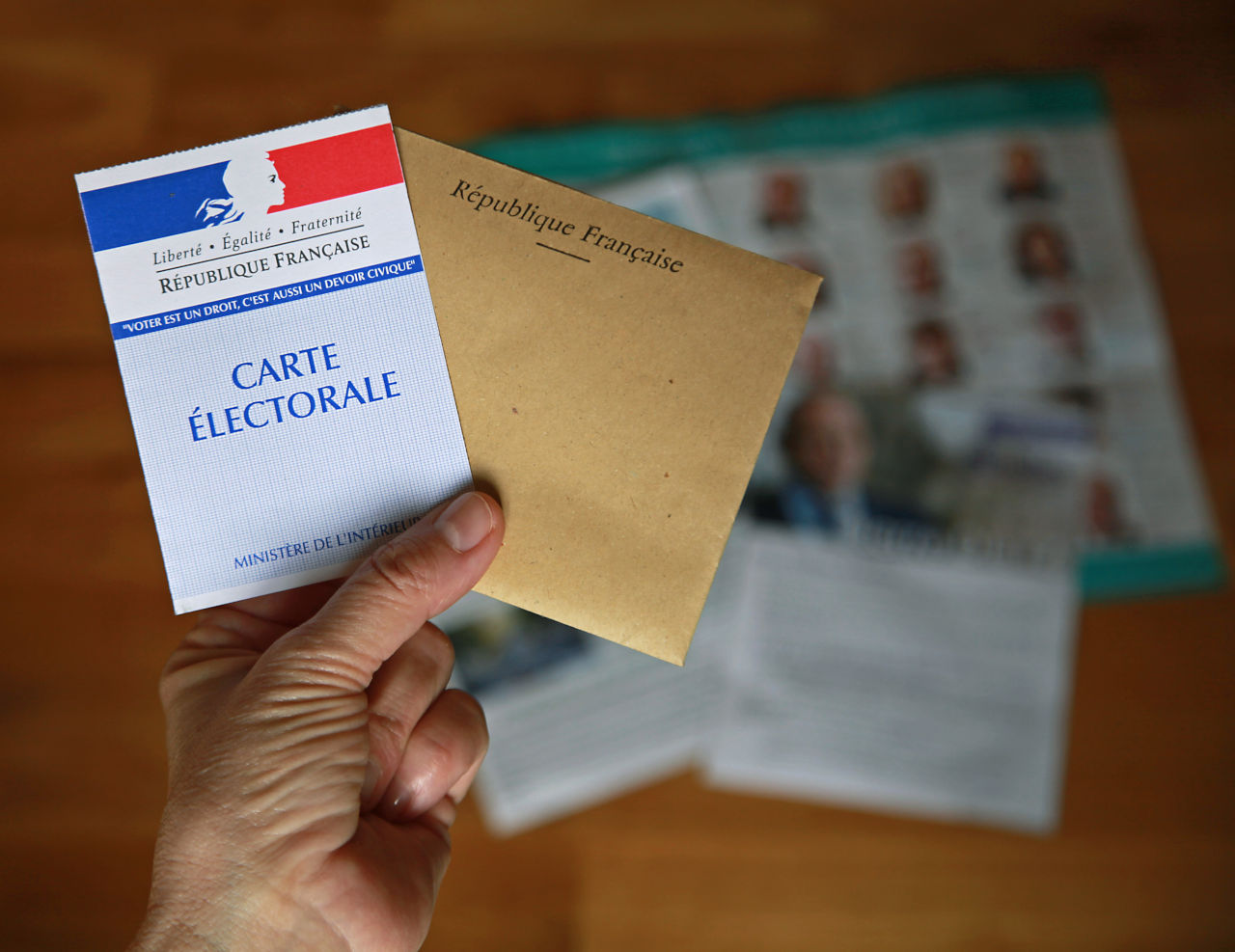
Thus, over the past twenty years, abstention in legislative elections has doubled, and each new election sets a new all-time record. When unregistered voters are taken into account, significantly fewer than one in two citizens now participates in choosing their representative. Furthermore, fewer than one in three citizens participates in European, regional, and departmental elections. And municipal elections—despite mayors’ consistently high popularity in polls—are no exception to this trend of voter apathy: turnout has dropped by 15 percentage points over the past 15 years, even though the stronger turnout in small towns masks the extent of the decline in voter participation in large cities.
In this context, the presidential election—which has demonstrated its ability to continue drawing more than 8 out of 10 registered voters to the polls—is truly an exception. Admittedly, on two occasions under the Ve In the Republic, voter abstention was unusually high, at around 30 percent: during the second round of 1969, which took place without a left-wing candidate (31 percent abstention). And during the first round of 2002 (28% abstention), which was portrayed in the media as a showdown that would inevitably lead to a runoff between the incumbent President and Prime Minister, Jacques Chirac and Lionel Jospin. But since April 21, the abstention rate has remained relatively low: 20.3% for the second round in 2002, 16% for both rounds in 2007, and about 20% for both rounds in 2012.
Voting Intermittency and Social Determinants
Analyses conducted—notably by INSEE—by cross-referencing voter registration lists with sociodemographic data provide two key insights into the factors shaping this contemporary pattern of abstention.
On the one hand, longitudinal studies show that consistent abstention affects no more than 10% of registered voters during an electoral cycle that includes a presidential election. In fact, intermittent voting is the norm, not a permanent break from the voting process. The very same citizens who are increasingly abstaining from midterm elections have nevertheless, until now, continued to participate en masse in the presidential election.
Furthermore, studies show that the traditional social determinants of abstention remain very strong: it is always the same sociodemographic groups that record the highest abstention rates—the youngest, those with the least education, the most economically vulnerable, and the most isolated—though the electoral inequalities thus highlighted vary with the level of abstention. These inequalities are very pronounced when abstention is high—for example, in municipal and legislative elections—and less pronounced when abstention is low—for example, in the presidential election.
These two characteristics of voter abstention should help identify the key issues surrounding participation in the 2017 presidential election, drawing on the indicators currently available to us to map out the range of possibilities.
More independent members
Data published by INSEE on voter registration in 2016 support the hypothesis that the election, from its very outset, failed to generate much enthusiasm: the figures for voluntary registration are lower than those from the previous presidential election, and even more so compared to those from 2007: thus, the “dropout rate” (the percentage of those who were not registered) was only 12.4% in 2017, compared to 15.6% in 2012 and, even more so, 18.7% in 2007.
This lower turnout for voter registration primarily affects vulnerable and isolated populations: this dropout rate was only 11% among members of single-parent families in 2017, compared to 15% in 2012 and 21% in 2007. It affected only 11% of blue-collar workers, compared to 14% and 17% in the two previous presidential elections. Senior executives, for their part, are still twice as likely as blue-collar workers to follow this path of political engagement. But like other groups, they registered less frequently for this presidential election: a 28% rate of transition from non-registration this year, compared to 33% in both 2012 and 2007.
Not only is the proportion of unregistered voters ultimately higher for this presidential election than in previous elections, but since the rate of re-registration after moving has also decreased, the proportion of voters with incorrect registration information is likely to be even higher. To the 6 million unregistered voters who will not be able to exercise their right to vote this year, we must likely add approximately 7 million people registered in a municipality other than the one where they reside. It has recently been established that these voters are three times more likely to abstain than those registered in their local municipality: a consistent abstention rate of 28% across the four rounds of 2012 (presidential and legislative elections) among those with incorrect registration, compared to less than 10% among those with correct registration.
The "punitive abstention" hypothesis
Once we have assessed the possible extent of voter abstention attributable to the voter registration process, how can we account for the increase indicated by numerous polls conducted between February and April 2017, which support the hypothesis of a historically high abstention rate—on par with those recorded in 1969 and 2002 (around 30%) and which would in any case represent an increase of at least 10 percentage points compared to the norm for a presidential election?
Most commentators put forward the theory of a shift in voter behavior: a portion of voters who had previously voted would choose not to go to the polls in this presidential election, thereby engaging in a form of “punitive abstention” that calls into question the political options available and, more broadly, our political system.
Before assessing how realistic this hypothesis is, it is worth noting that the record-high abstention figures reported in the media owe much, on the one hand, to the specific circumstances under which the surveys were conducted and, on the other hand, to the criteria used to define the category of “abstainers.” This explains why the figures vary so widely: abstention rates range from 24% to 40%, depending on the timing and the polling organization!
The Unreliability of Statements of Intent to Participate
It is certainly risky to predict the turnout for such an election. The very nature of a presidential campaign is that it can build in intensity right up to Election Day—particularly due to the way participation is encouraged within families, among groups of friends, and among coworkers, but also because of the candidates’ campaign strategies and tactics, as well as the media’s growing dramatization of the issues at stake.
Moreover—and this is the second point—polls are not particularly well-suited to measuring abstention. The samples always include far too many voters, and statements of intent to participate are even less reliable than statements of voting intent. Experience shows that simply asking potential voters if they will vote is not enough to gauge the future level of voter abstention.
Moreover, the “non-voters” in polls are not citizens who identify themselves as such, but—more often than not—the aggregate of those who say they are not certain they will vote at the time they are surveyed.
In other words, it is actually difficult to predict next Sunday’s abstention rate. Will it reach 20%, 25%, 30%, 35%, or even higher? We won’t know… until Election Day.
The Risk of a Sharp Rise in Electoral Inequality
On the other hand, it is already possible to anticipate what the sociological effects of a high abstention rate would be. This is because the likelihood that citizens will ultimately go to the polls varies widely and depends not only on the electoral options available but just as much on their age, educational level, professional environment, economic status, and household composition.
In 2012, unskilled workers already abstained twice as often as skilled workers; and workers as a whole abstained twice as often as senior executives. Those with the lowest levels of education abstained three times as often as those with the highest levels of education. Voter turnout among 18- to 25-year-olds was 10 percentage points lower than that of 50- to 64-year-olds. And as abstention rates rise, these gaps widen considerably. Thus, two months later, in the legislative elections, the turnout gap between 18- to 25-year-olds and 50- to 64-year-olds reached 30 percentage points.
As a result, if abstention were to approach or even exceed 30% in the first round of the presidential election, the disparities in voter turnout—which are typically reduced for this election—would likely return to a level comparable to that seen in midterm elections.
The Impact of Business and the Left-Right Divide
On the political front, it is clear that the 2017 presidential election is not helping voters make up their minds. The level of uncertainty among the declared potential electorate for the main candidates—with just one week left before the election—is unprecedented in its magnitude, and obviously fuels the hypothesis that disoriented citizens might not turn out to vote, unable to find a candidate worthy of their vote or even a somewhat stable point of reference on which to base their choice.
The prominence of scandals calling into question the integrity of certain official candidates likely only reinforces the already widespread perception of a political world turned in on itself, unconcerned with the difficulties ordinary citizens face in their daily lives, and which exempts itself from adhering to common rules. By fueling a toxic climate, these scandals undoubtedly increase the risk of voter abstention, though not necessarily primarily or exclusively among the electorate of the figures most frequently implicated.
The overrepresentation of young retirees in his electorate—an age group that votes (almost) systematically—certainly shields François Fillon from a real risk of voter abstention (though not from the risk of some of his potential voters defecting to Marine Le Pen, Emmanuel Macron, or casting blank ballots). On the other hand, the suspicions that plague all candidates for elected office—“they’re all the same; the others just haven’t been caught yet”—could well hinder the mobilization of less committed voters, namely, first and foremost, young people—regardless of their political leanings—as well as those from lower socioeconomic backgrounds and those with fewer educational credentials.
Nor should we forget that the higher-than-usual turnout recorded so far for the presidential election is largely due to the mobilization of citizens who are most distant from institutional politics—those who may vote out of a sense of duty, out of habit, under social pressure, or out of conformity, but are not necessarily driven by strong convictions or a deep interest in politics and its issues. For many of them, the left-right divide, in particular, still serves as a framework for a basic understanding of the candidates. Blurring these reference points—by making voting more complex and costly—may also discourage participation.
The Myth of Passionate Nonvoters
Are these political factors really enough to make abstention a new form of expression that conveys “messages,” as we’ve been hearing for the past few weeks on the airwaves, social media, and television talk shows? Of course not. Indifference, disillusionment, and skepticism have for several years now been integral parts of how many citizens relate to politics—even though the vast majority of them have continued to vote, at least in the presidential election. Though disillusioned voters, they do not turn into passionate abstainers during midterm elections.
Non-voters, in fact, make up a particularly heterogeneous group that includes both highly politicized citizens and individuals who are completely indifferent to politics. Nevertheless, if abstention were to rise significantly next Sunday, it would likely continue to be driven primarily by the least politically engaged segments of the population—young people, blue-collar workers, those without a college degree, etc.—whom the specific context of this election could push toward a sort of electoral exit.
To focus solely on the “political” dimension of abstention and interpret it as a form of expression equivalent to voting would be to overlook this fundamental reality: our democratic system is based on growing inequalities in political engagement and participation, which are no less concerning than the social or economic inequalities they help perpetuate.
 Céline Braconnier and Jean-Yves Dormagen co-authored *La démocratie de l’abstention* (Folio Actuel).
Céline Braconnier and Jean-Yves Dormagen are professors at the School of Law and Political Science of theUniversity of Montpellier
The original version This article was published on The Conversation.