Scientific Perspectives on Contemporary Art
From February 15 through May 18 at MO.CO, the exhibition *Eprouver l’inconnu* brings together scientists from the University of Montpellier and contemporary artists to explore approximately 100 works and artifacts from the scientific collections of theUM. A tour with Gérald Chanques, vice president for historical heritage and coordinator on the scientific committee that oversaw the creation of this event.
“What makes this exhibition unique is that the scientific community has examined the works of art and offered its perspective. About fifteenProfessors , and researchers wrote labels to describe what they saw,” explains Gérald Chanques, vice president for historical heritage at theUM and a member of the exhibition’s scientific committee, who, along with Agnès Fichard-Carroll, vice president for training, facilitated the collaboration between the scientists and the artworks.
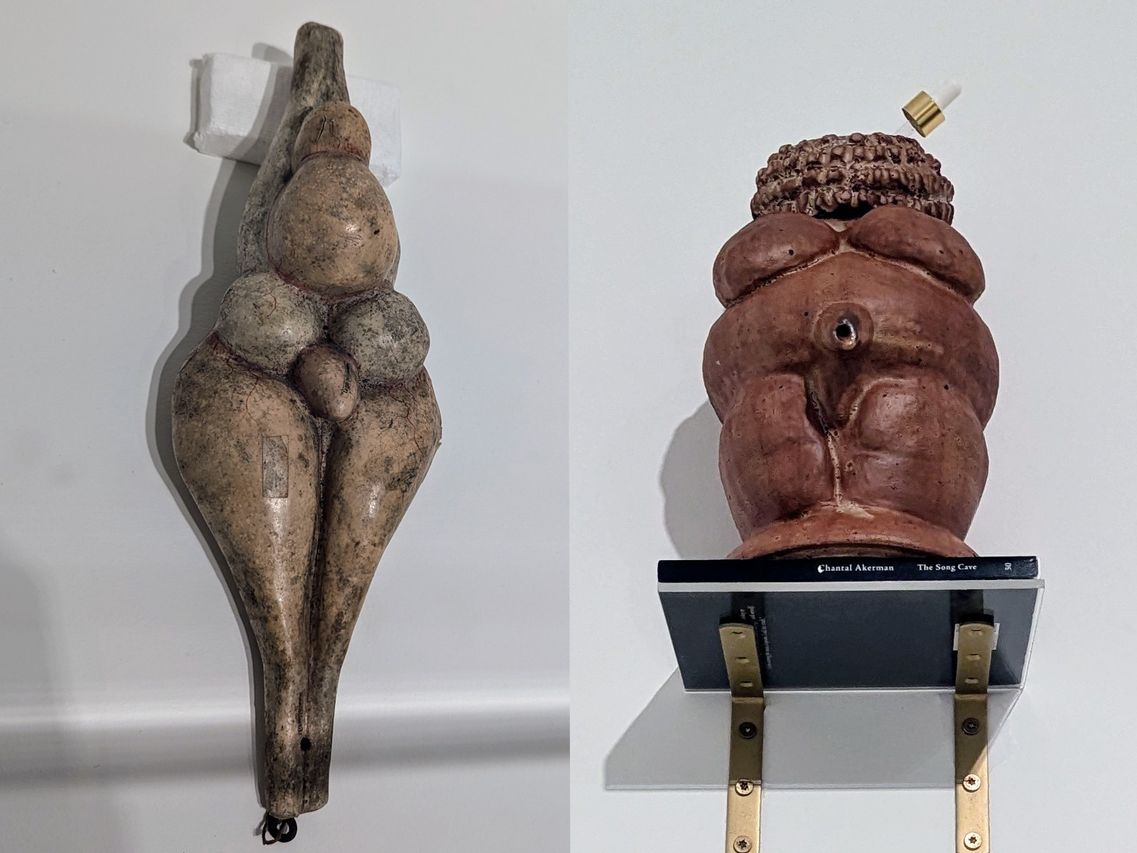
Venus and the Turtle
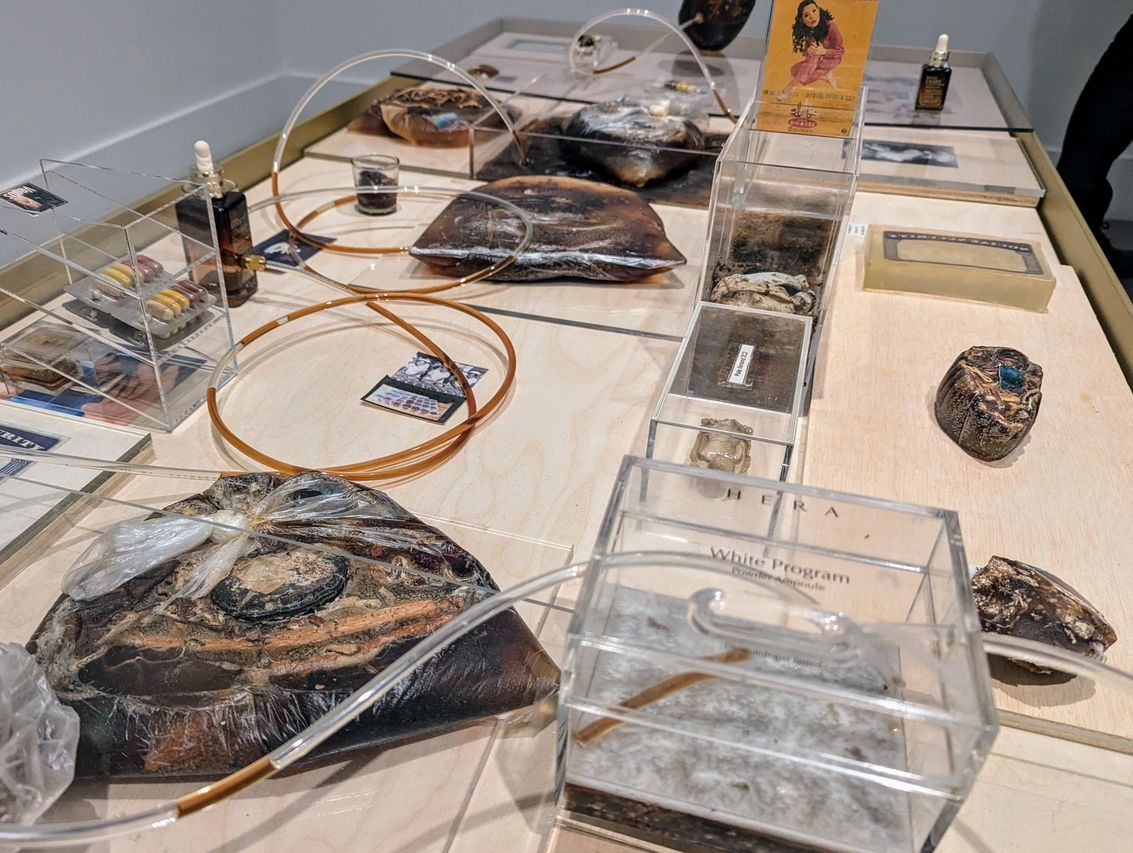
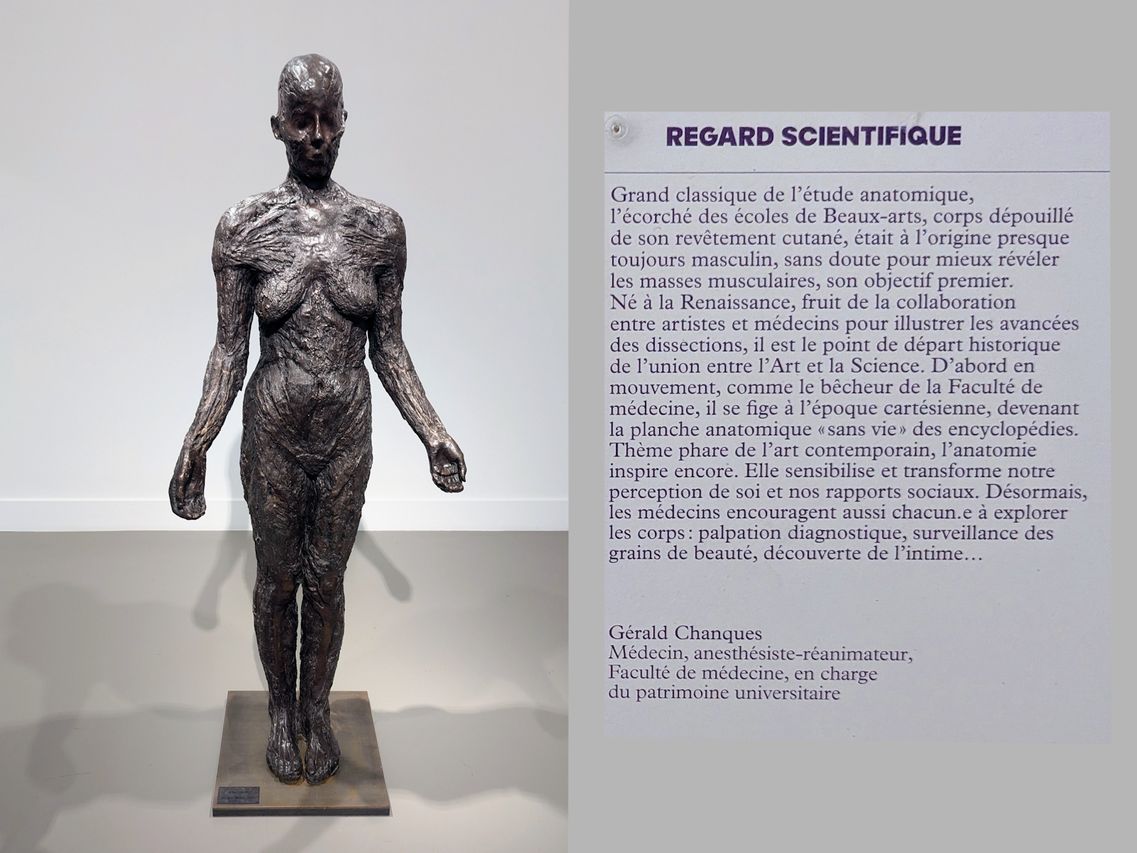
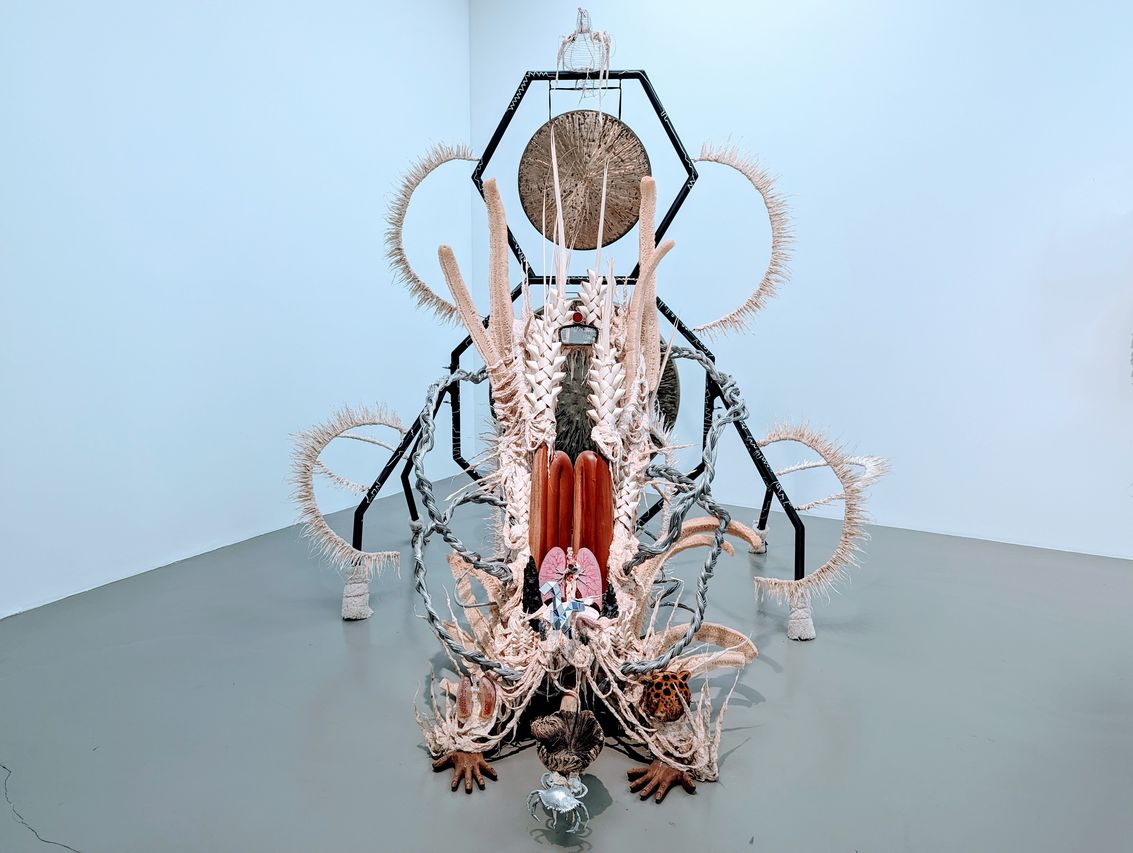
The vice president, who is also an anesthesiologist and intensive care physician, indulged in this exercise himself by commenting on the highly organic work by German sculptor Kiki Smith titled *Digestive System*. But also her *Virgin Mary*, a flayed female figure echoing the famous ambassador of the Faculty of Medicine’s anatomy conservatory,“the historical starting point of the union between Art and Science.” In another room, where the gynoid shape of a turtle’s brain is strangely reminiscent of Paleolithic Venus figurines, Marie-Catherine Reboul—a professor of narrative medicine and general practitioner—and artist Haena Yoo continue this feminist reflection by questioning“anti-aging medicine with standardized ideals.”
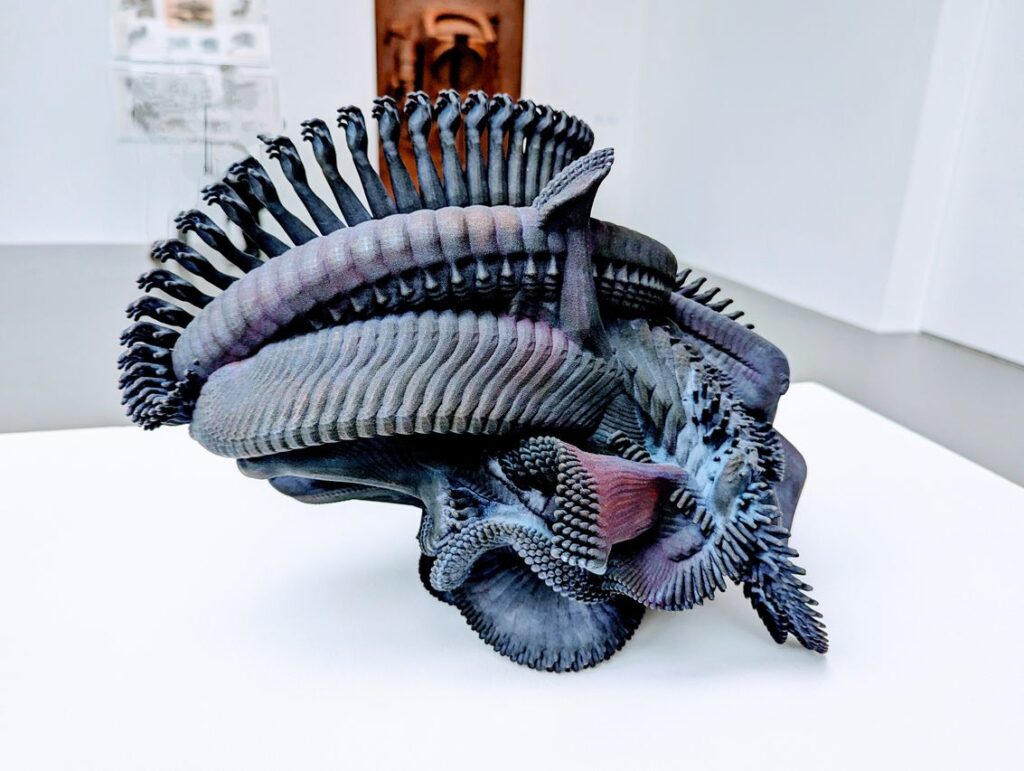
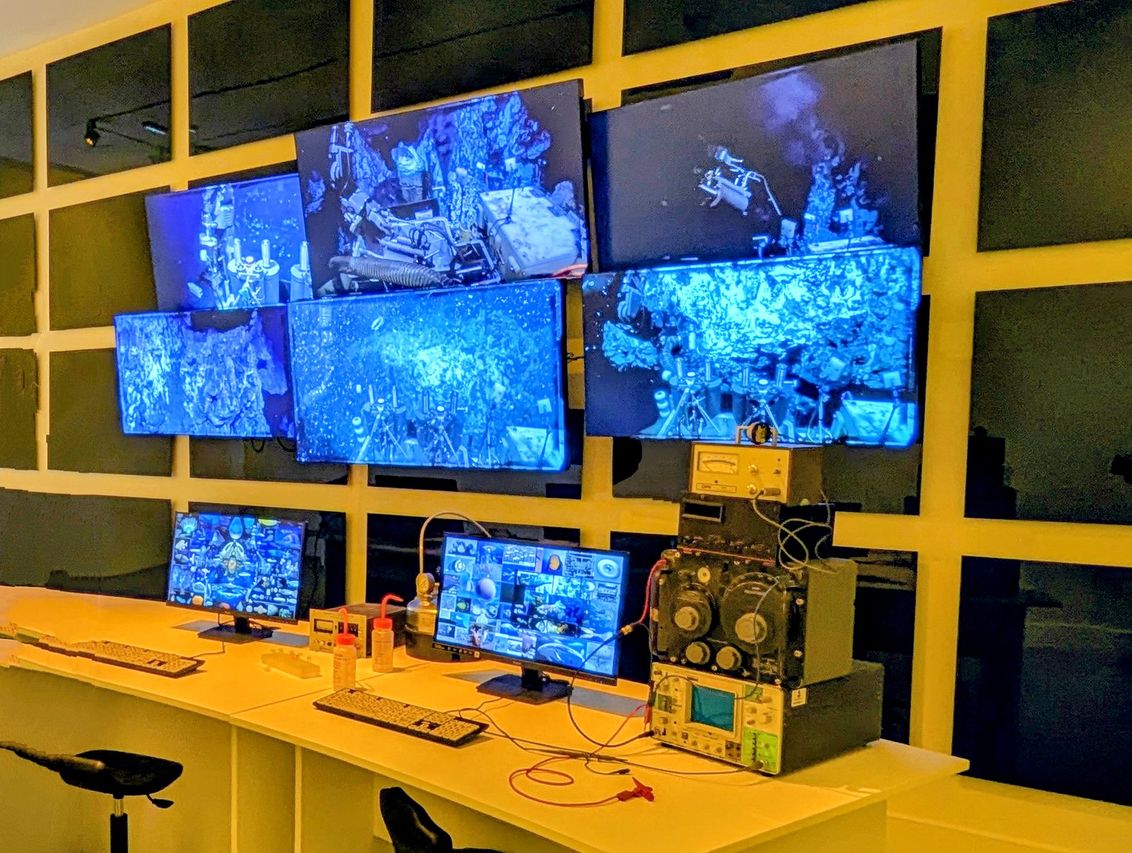
While the link between femininity and the sea is a cliché in poetry, performer Joey Holder and Benoît Charlot, a researcher at the Institute of Electronics and Systems, offer us a very different vision of the ocean’s depths. In this piece, where oscillators and screens are piled high, strange aquatic chimeras—created by artificial intelligence—emerge from underwater vents to prompt us to reflect on posthumanism:“What might life be like outside the environments we know? Are there other forms of life besides those based on carbon chemistry?”
An Insect's Dance with the Orchid
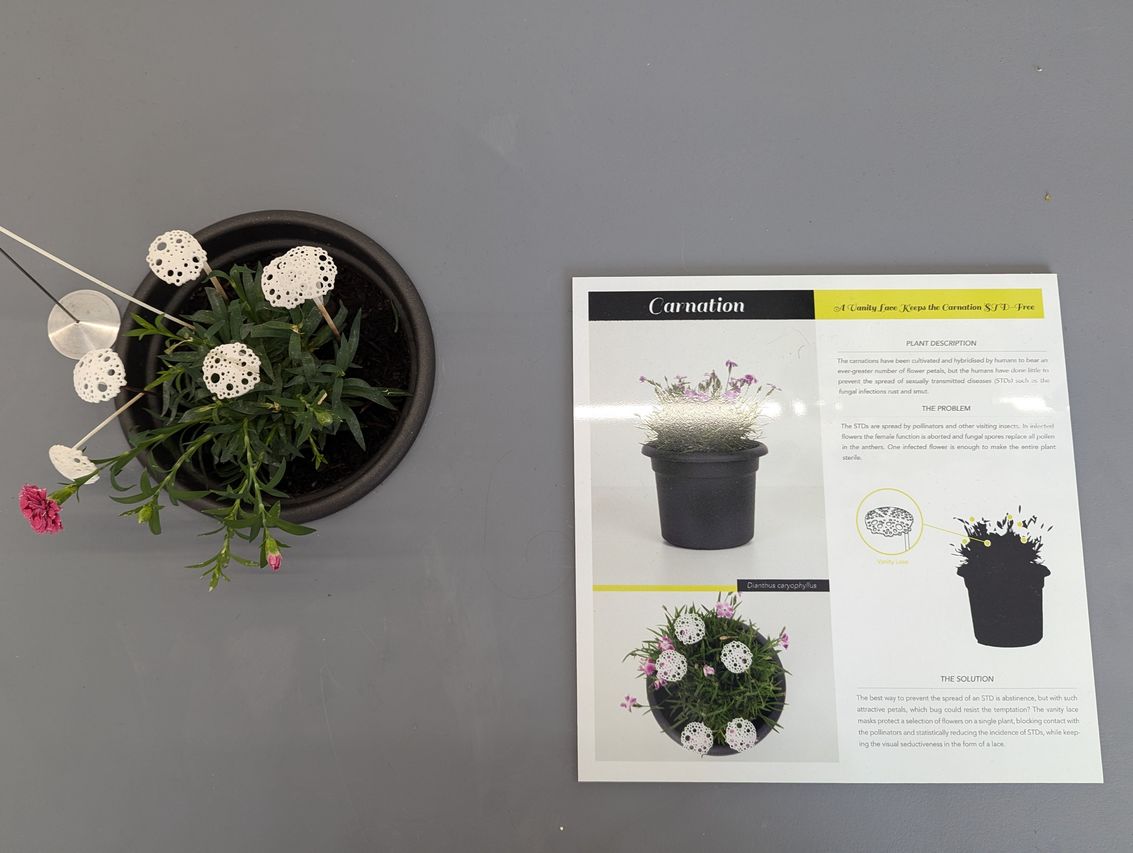
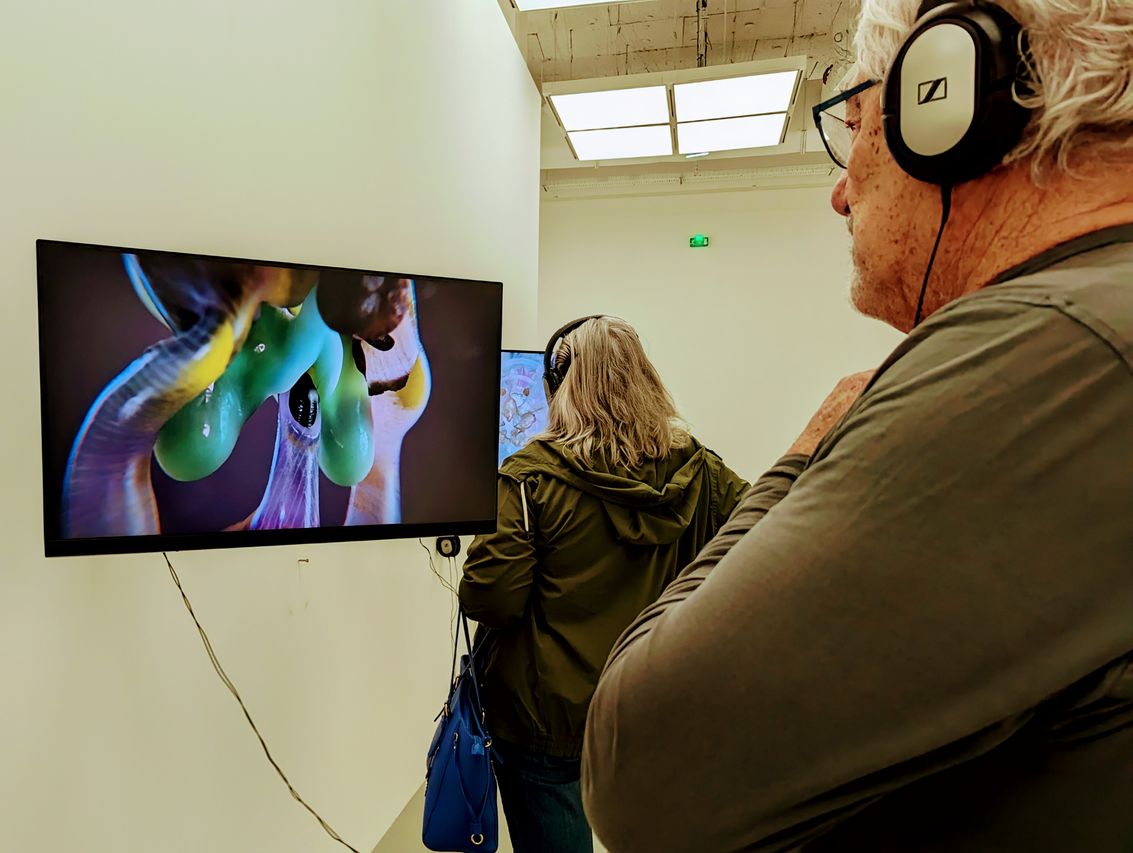
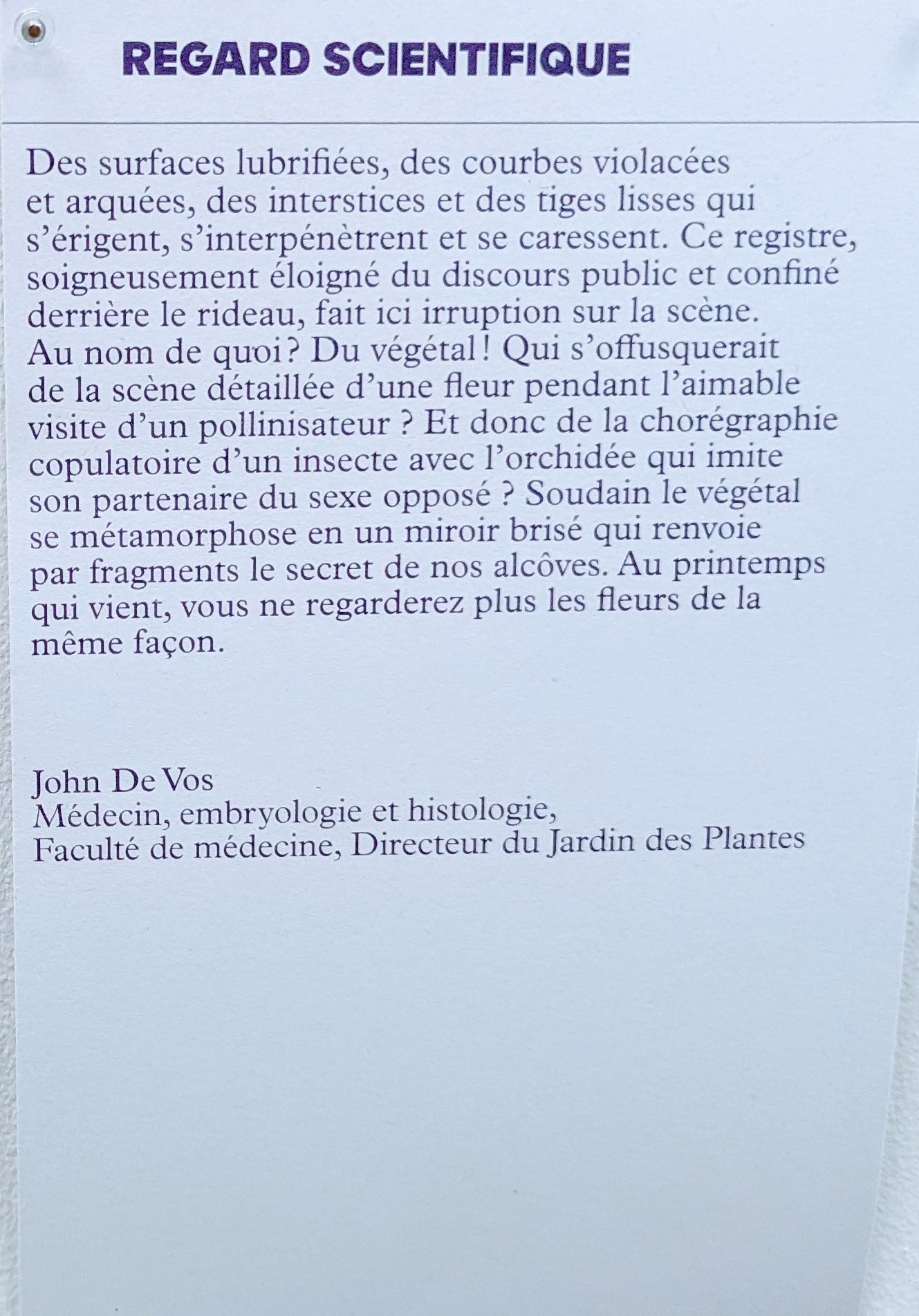
And what would life be without the plant kingdom, to which four artists from Slovenia, Taiwan, and Greece are drawing our attention? They have thus devised sex toys and other“gadgets to solve some of their everyday concerns, such as seduction or the prevention of sexually transmitted diseases,” explains John De Vos, a physician specializing in embryology and histology and director of the Jardin des Plantes. In this exhibition, he also presents a label imbued with delicate sensuality to highlight the “copulatory choreography of an insect with an orchid” by artist Roy Kohnke in his latest project, titled *Magnetic Tendencies*.
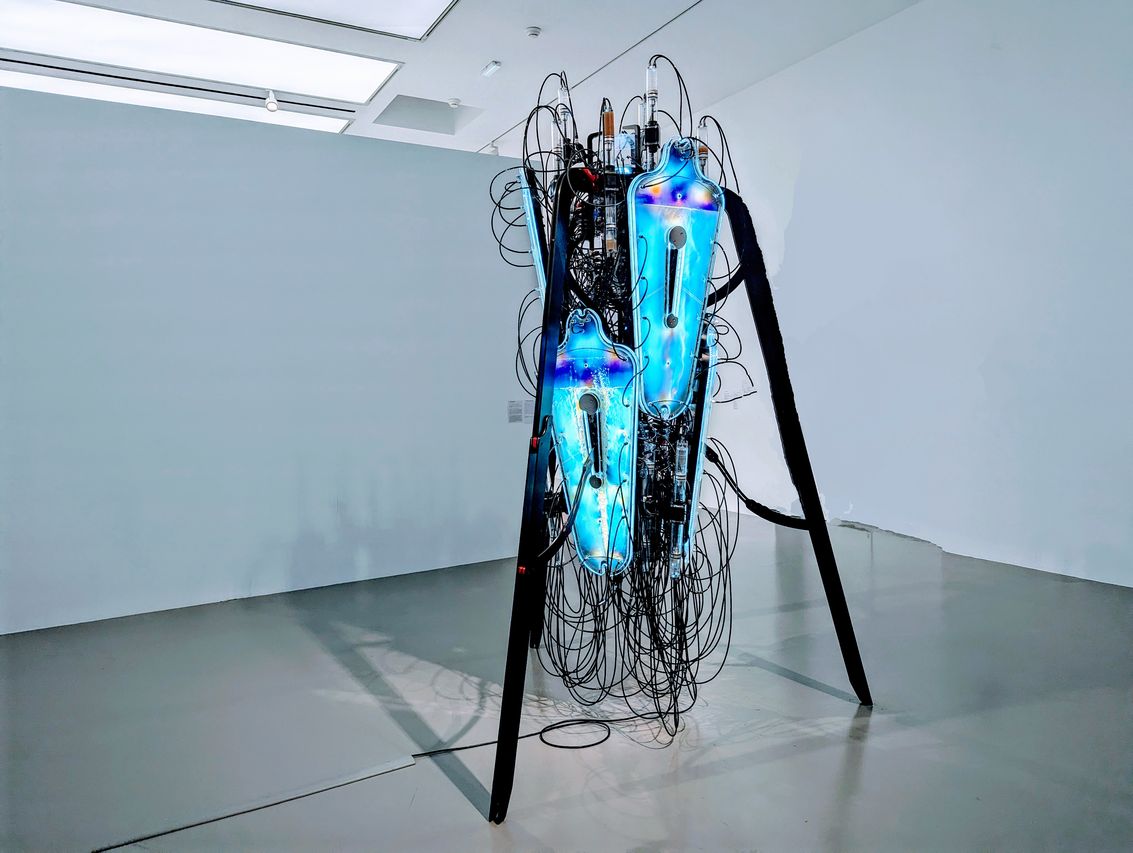
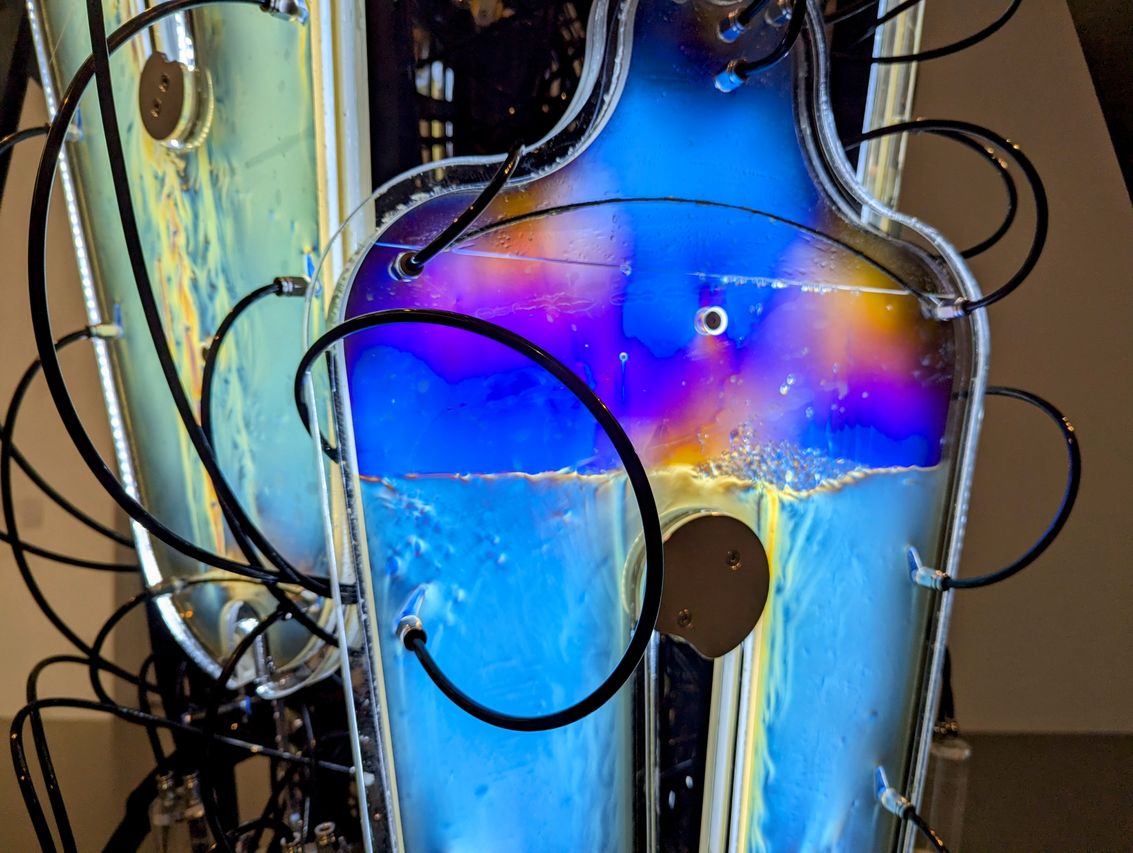
As they move through the galleries, visitors will also encounterISEM paleontologist Pierre-Olivier Antoine, who provides commentary on the works of the great Bernard Palissy, a 16th-century ceramist who was the first to realize that fossils were the remains of animals and plants; LUPM astrophysicist Vincent Guillet, whose eyes light up only at the sight of the suspended “solar dust” created by Korean artist Yunchul Kim. The art brut of Lubos Plny, enhanced by a text by physician Naïs Herbreteau. Or, ethnopharmacologist Julien Antih and pharmacy druggist Alexandra Strelcova, who shed light with their expertise on the shamanically inspired works of Salvadoran artist and healer Guadalupe Maravilla, while non-pharmacological therapy specialist Gregory Ninot questions the work of Swiss artist Emma Kunz:“Healing powder or hocus-pocus?”
Eliminate all waste of strength and energy
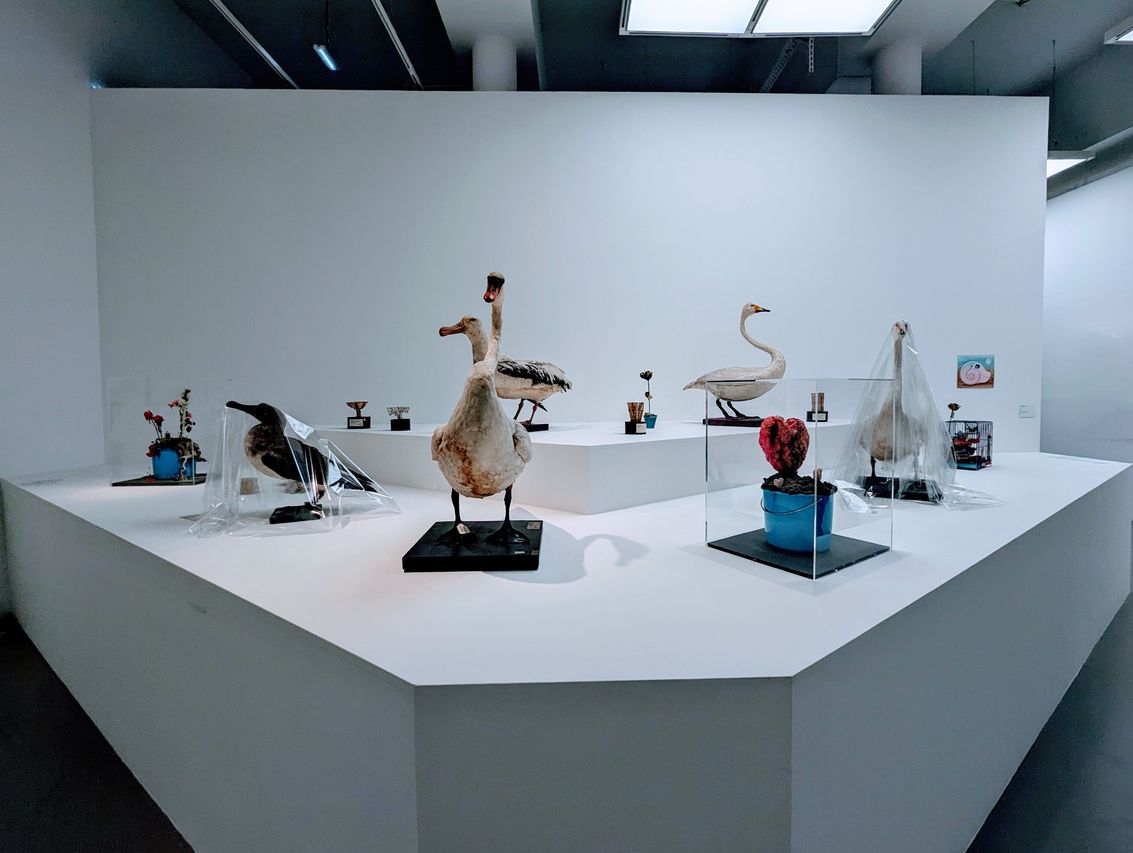
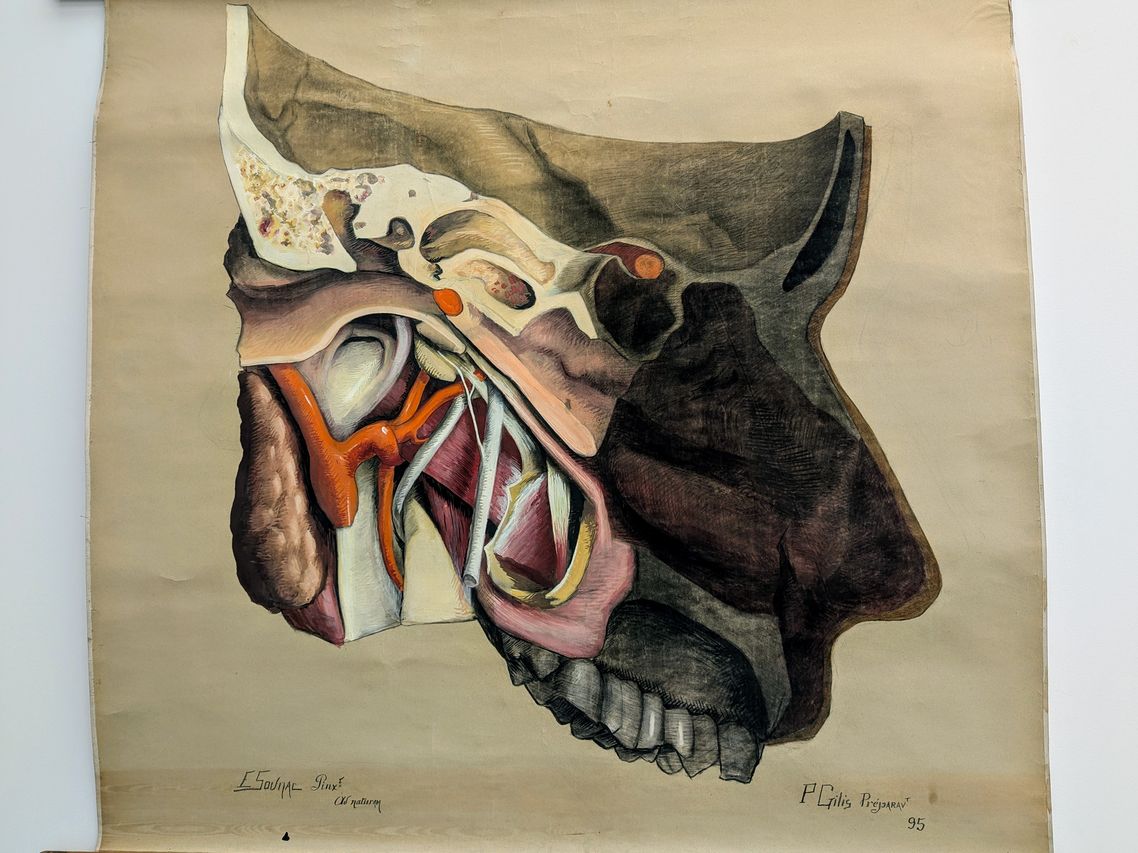
Among the many items from the scientific collections of the “UM ” that are featured throughout the exhibition, the papier-mâché educational models by Louis Auzoux—preserved by the Faculty of Education—recur as a recurring theme. Visitors will also encounter anatomical plates from the Faculty of Medicine and several specimens from the ornithological collection of the Faculty of Sciences, presented by the curators, collection manager, and heritage collection coordinator at the “UM ”—Véronique Bourgade, Marie-Angeline Pinail, and Audrey Théron.
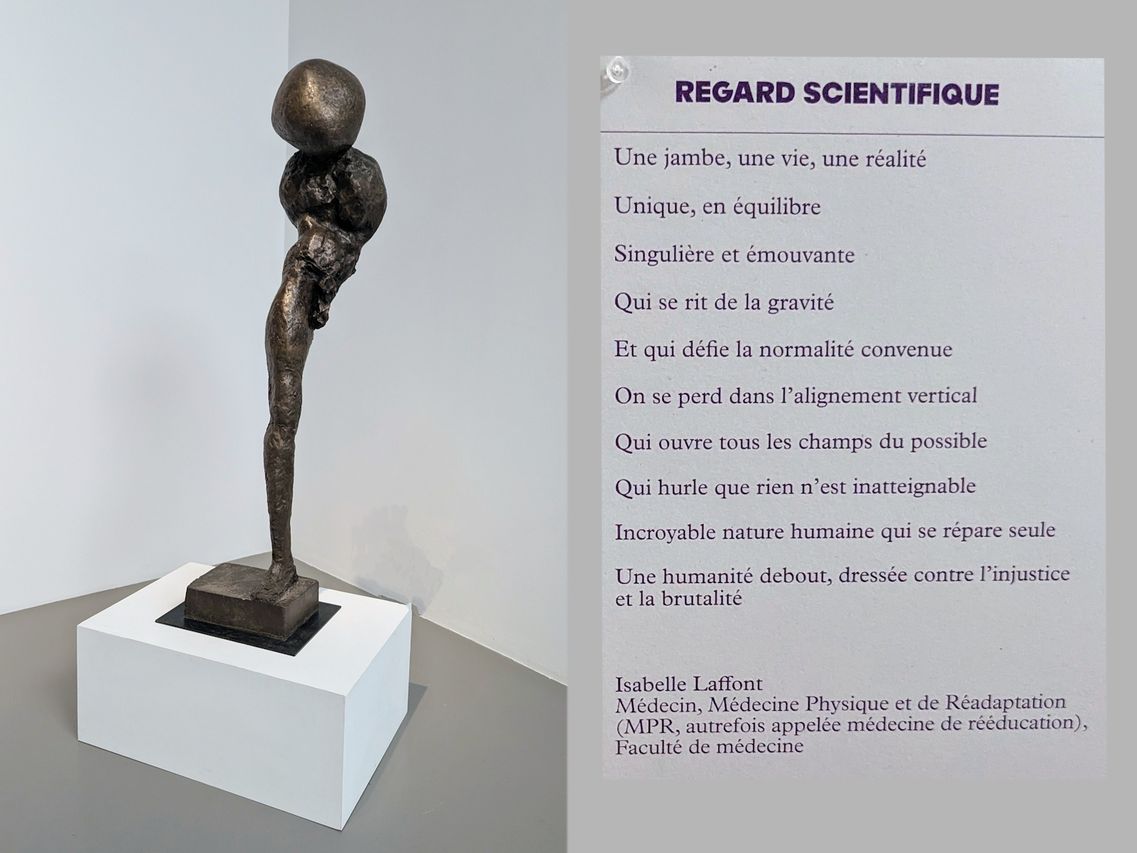
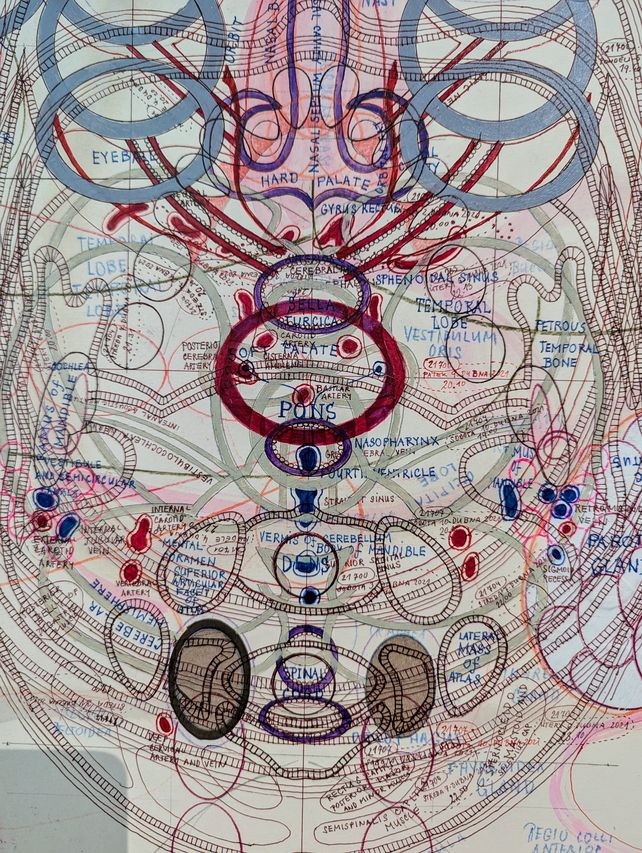
Finally, there is the sensuality of a scent in the folds of a loved one’s skin, which research professor Isabelle Parrot-Smietana captures in perfume on Morgan Courtois’s portrait sculptures. Or the unexpected poetry of Isabelle Laffont, dean of the Faculty of Medicine, when her gaze lingers on*The One-Legged Woman* by Polish artist and concentration camp survivor Alina Szapocznikow. “This emotion of the scientist—it’s there; it’s palpable throughout the exhibition,” concludes Gérald Chanques. Professor of physiology Stephan Matecki expresses it very well when he comments on Kinke Kooi’s imaginary world. He points out that if we pay close attention to this absolute beauty, ‘ifwe gently scratch the surface to penetrate it, we can then see a kind of universal harmony governed by laws based on balances that banish all waste of force and energy—a harmony that only human intervention can threaten.’”