Wastewater Reuse: What Changes Will the New European Regulation Bring?
Reusing wastewater to conserve freshwater is one of the benefits of what is known as “reuse.” This approach is a key strategy in a context where global warming is increasing pressure on water resources.
Julie Mendret, University of Montpellier
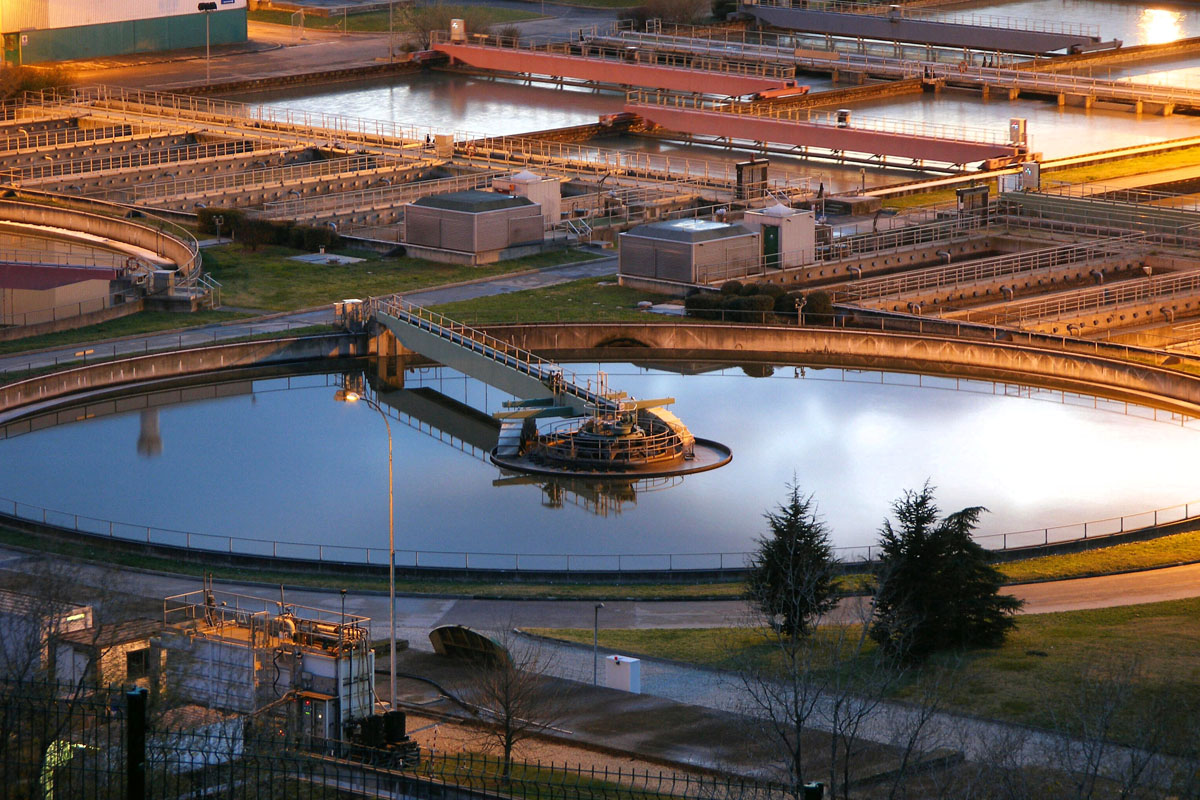
Yet this potential is hardly being tapped in France, where only 0.6% of wastewater is reused. This is negligible compared to other European neighbors, such as Italy, which reuses 8% of its wastewater, or Spain, which reuses 14%. Why is our country lagging behind? This situation in France can be explained mainly by a lack of public awareness and very strict regulations.
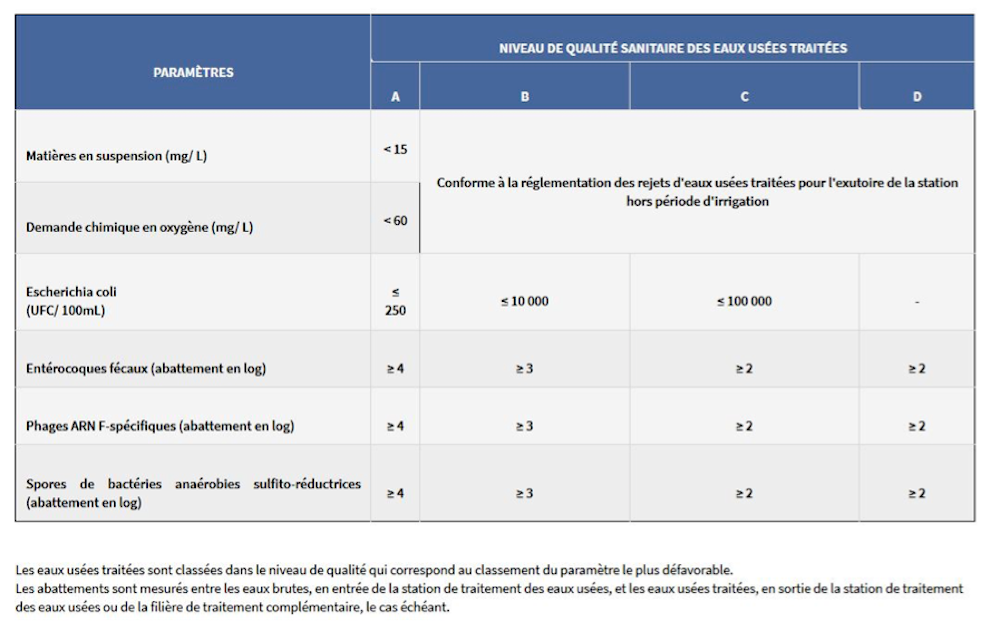
The reprocessing and reuse of treated wastewater are governed in France by two ministerial decrees from 2010 and 2014. These regulations define four levels—A, B, C, and D, from best to worst—each with specific water quality requirements and a list of permitted and prohibited uses. For example, crops consumed raw may only be irrigated with water of quality level A.
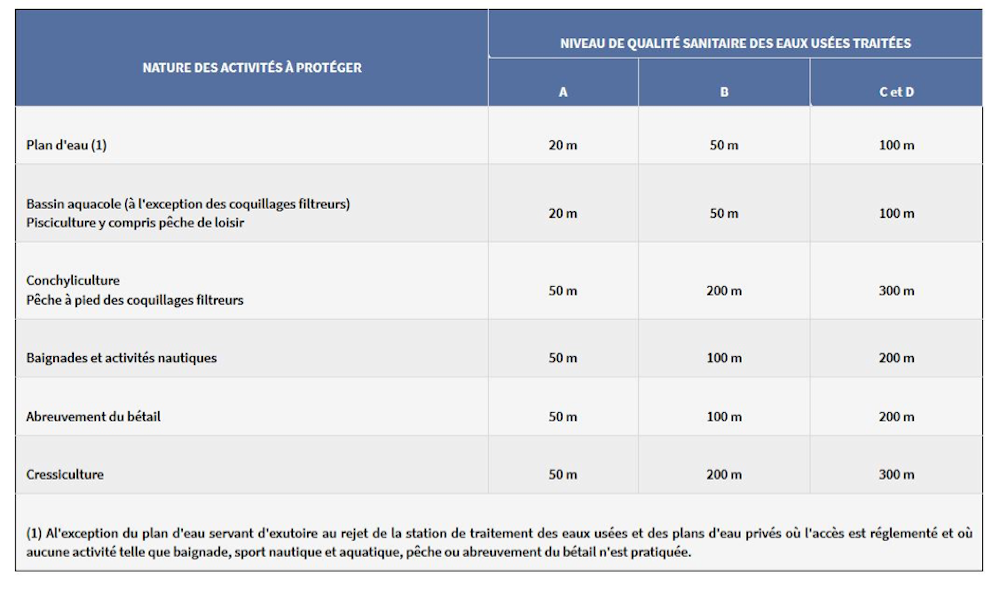
In addition, there are operational constraints depending on the irrigation method, such as wind speed, minimum safety distances from homes or waterways, and public outreach…
Regulatory barriers
While these strict regulations may be necessary for public health and environmental reasons, the constraints involved in implementing them complicate the preparation of applications and may even jeopardize projects.
Several of these projects were thus abandoned due to constraints related to implementation (preparing the application, land-type restrictions, specific requirements for sprinkler irrigation, etc.) and operation (traceability requirements, water quality monitoring, management of the irrigation schedule, etc.).
A new European regulation
How can we prevent these projects from falling apart in the face of regulatory obstacles? That is the purpose of the new European regulation of June 5, 2020, on the reuse of wastewater, which aims to promote reuse by harmonizing the rules for its implementation across Europe.
The European Parliament thus reiterates that these new rules:
“are intended to ensure that treated wastewater is reused more widely in order to limit the use of surface water bodies and groundwater. The decline in groundwater levels—due in particular to agricultural irrigation, but also to industrial use and urban development—is one of the main threats to the EU’s aquatic environment.”
The stated goal is to increase water reuse from 1.7 billion cubic meters per year to 6.6 billion, which would reduce water stress across the EU by 5% by 2025.
The European regulation applies only to agricultural irrigation—other uses remain under the responsibility of the Member State; Member States have three years to bring their facilities into compliance.
More flexible than the French framework
This new regulation is more flexible than the current French framework: the four water quality classes are retained—with stricter microbiological thresholds (for the Escherichia coli criterion, the French Class A corresponds to Class C in the new regulation)—but performance targets are no longer required, except for Class A. To compensate, the frequency of health inspections—which varies depending on the water class—has been increased.
Another major advance: the mandatory usage restrictions related to distance, soil type, and wind speed have been eliminated. In their place, “barriers” have been introduced—such as an additional treatment—that allow quality criteria to be adjusted based on the risks involved.
The operator of the wastewater treatment plant must submit a risk management plan that identifies the risks and the measures implemented to manage them (replacing the mandatory French guidelines that have been in effect until now). Once approved, this plan will enable the operator to obtain an operating permit that specifies, among other things, the quality class of the discharged water and the authorized agricultural use.
The risk management plan, developed by the wastewater treatment plant operator, is therefore one of the cornerstones of this new regulation.
It allows each project to be considered on a case-by-case basis and provides greater flexibility in setting up water reuse projects. It also includes a public awareness component by encouraging the publication of certain data (quality of recycled water, test results, etc.) to reassure consumers and improve social acceptance of water reuse, which is already growing rapidly. Today, 83% of French people say they are willing to drink potable water produced from wastewater.
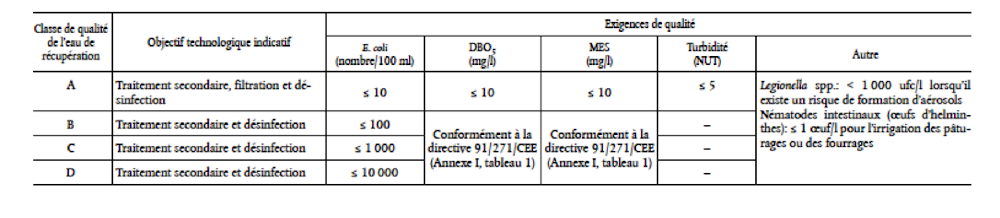
EUR-Lex
Harmonization and Questions
In some respects, the European regulation of June 5, 2020, represents a real step forward. Practices and quality standards will be uniform across all member states, with usage restrictions tailored to actual risks and greater transparency for consumers.
However, this new regulation considers only one use—irrigation; it is to be hoped that, over time, this will provide an opportunity to make other uses more widespread in France, such as irrigation of golf courses and parks, firefighting, and groundwater recharge.
However, very stringent quality requirements can lead to additional costs for upgrading facilities, particularly if an additional treatment step must be added. In some cases, this obstacle cannot be overcome without government assistance.
Finally, these regulations do not address certain categories of pollutants that are of great concern (such as microplastics and pharmaceutical micropollutants), which are a source of anxiety for consumers and for which advanced treatments must generally be put in place.
Julie Mendret, Associate Professor, HDR, University of Montpellier
This article is republished from The Conversation under a Creative Commons license. Readthe original article.