Scanorhize: Soil Life for Sustainable Agriculture
This scanner, buried underground, is capable of tracking changes in root systems to better understand the impact of fertilizers, irrigation, or drought. An innovative project developed using equipment from the University Innovation Hub in Montpellier, which is particularly promising at a time when the agricultural sector is in the throes of a major crisis.
Analyze the impact of fertilizers on soil in real time
A sensor buried in the soil could help“accelerate the transition to sustainable agriculture.” That, in a nutshell, is the goal of Scanorhize, a project conceived withinthe Eco&Sols Joint Research Unit ( Research ), whose first prototypes were developed in 2017 at the initiative of researcher Christophe Jourdan of CIRAD Montpellier.
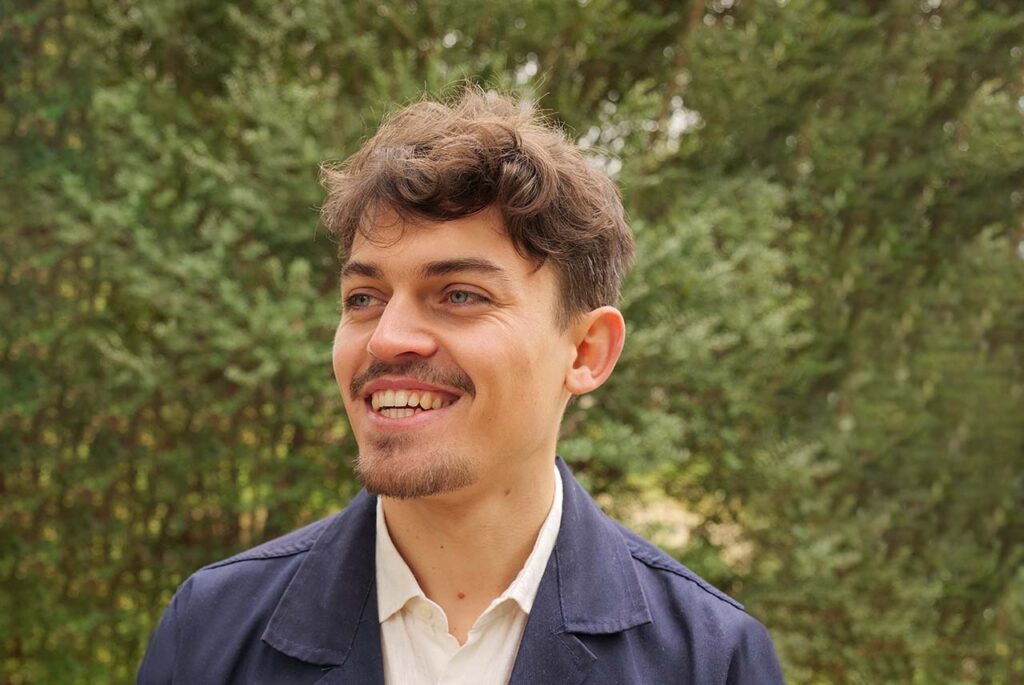
“In practical terms,‘Scanorhize’ is a type of camera buried in the ground that can capture images of the root system by creating two-dimensional cross-sections,”explains William Arditi, the future president of the startup, which is expected to begin using the sensor in the coming months. “The idea is to dynamically capture images so we can observe changes in the soil and understand the impact of fertilizers, as well as drought or irrigation.” The device is connected to a unit that transfers the images directly to the cloud, before passing them on to an artificial intelligence system capable of recognizing roots and soil biodiversity, and analyzing changes in the root system. This innovative technology may soon be patented.
Initially intended for research, this tool quickly piqued the curiosity of other stakeholders, who reached out to the laboratory. “Seed companies and manufacturers of crop protection products have shown great interest,” adds William Arditi. “For them, soil is an increasingly important issue,” particularly in terms of adapting their products to climate change while ensuring sustainable agriculture.
A startup supported by the Montpellier PUI program
In 2023, Christophe Jourdan and SATT AxLR (a technology transfer acceleration company) set out to find a project leader to develop a startup based on this innovation. William Arditi responded to the call immediately through the Les Deeptech platform managed by Bpifrance. An engineer by training, the young man had already worked on a technology transfer related to a portable artificial lung project. “But this time, I wanted to be part of something that would have an impact on society in the short term,” he explains. Following an initial market study, William Arditi was officially hired in February 2024.
As part of the incubation program, Satt AxLR is covering William’s salary, the costs associated with the industrialization of the sensors, and the development of the software component for one year. At the same time, William Arditi received the French Tech Lab (BFT Lab) grant from Bpifrance, which enabled him to fund sales training, market research, and an update on regulatory issues. The engineer also participated in the “Première Marche” program at the BIC (Business & Innovation Center) in Montpellier.“It was fairly short and intense. It allowed me to explore all aspects of starting a startup.”
From February to June 2024, the future entrepreneur participated in the Pépite Deeptech program, offered by Initium, the University of Montpellier’s incubator. The program’s goal: to support project leaders working on the themes of “Feeding,” “Healthcare,” and “Protection”—and to provide them with a wide range of training opportunities, expert advice, and coaching sessions to refine the structure of their future startup. “This allows us to work on intellectual property, business strategy, entrepreneurial mindset, and even the pitch…, ” he explains. “It’s always helpful to get feedback from experts in each field when you’re launching a project like this.” This is the first step in the support offered by the incubator at theUM, which will span three years, including the startup’s pre-incubation and co-incubation phases.
Together with his new business partner, Louis Marot, William Arditi has just applied to Bpifrance’s i-Lab competition in order to develop a research and development program aimed at overcoming the remaining technological hurdles to transform Scanorhize“into a decision-support tool for the agricultural sector,” the engineerexplains .“After scanning the root system, it could tell us when to fertilize, when to irrigate, which variety to choose…” This marks another step toward putting this ingenious tool to work in support of the ecological transition.
Incubated at AgroVallée, with support from the Initium incubator and the Montpellier BIC, the startup is expected to launch at the end of the SATT AxLR maturation program in June 2025. This is a great collective success for the Montpellier PUI, which is seeing a new Montpellier-based startup mark a turning point in sustainable agriculture!