[LUM#18] Thau: A Mirror of the Future
With its 6,900 hectares of saltwater, the Thau Basin is the largest coastal lagoon in Occitanie and a major center for shellfish farming. This industry is now under close scrutiny due to the effects of climate change, which have already disrupted the fragile balance of this small inland sea.
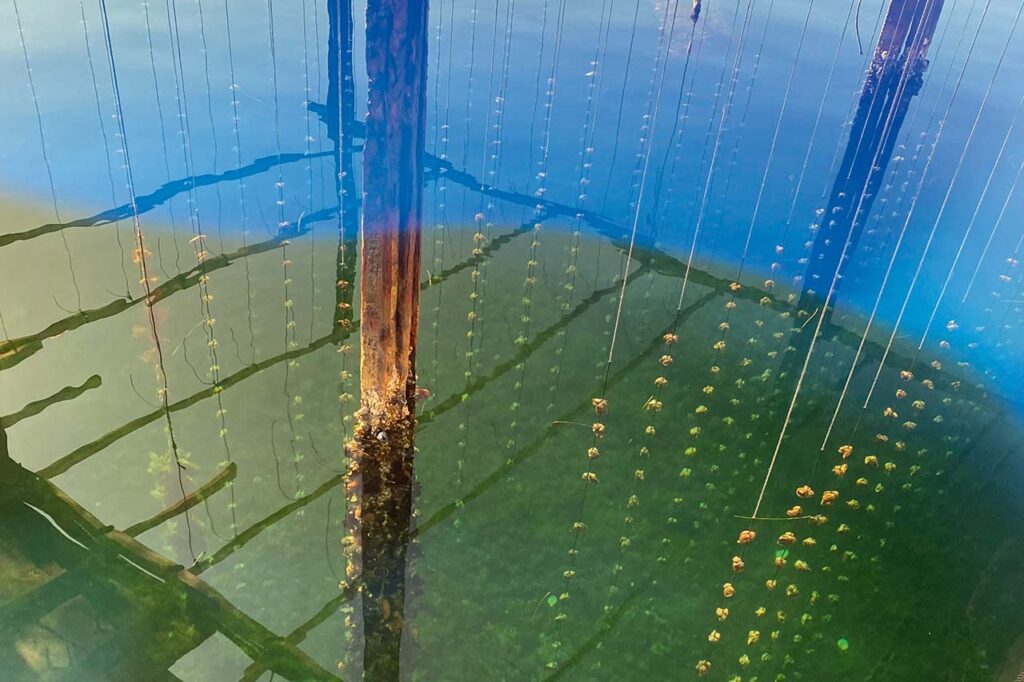
The summer of 2018 will long remain etched in the memories of the shellfish farmers in the Thau Lagoon. That year, unusually heavy rainfall in the winter and spring, followed by scorching temperatures and a lack of wind, caused what is known as a “malaïgue”—meaning “bad water” in Occitan. Deprived of oxygen for several days, the lagoon suffocated—and so did the shellfish. “100 percent of the mussels farmed in the basin died, along with 30 to 40 percent of the oysters, resulting in a net loss of 6 million euros , ” explains Franck Lagarde.
A phenomenon of exceptional intensity that highlights the fragility of this unique ecosystem.“The Thau Lagoon, this small inland sea, is a veritable open-air laboratory where we can get a glimpse of the future,” explains the researcher from the Marbec* laboratory. This is because, in the lagoon, the annual average water temperature has already risen by 1.6 degrees over the past 20 years.
A Delicate Balance
With rising water temperatures coupled with more intense rainfall events in the Mediterranean basin, the entire fragile balance of the lagoon is under threat, and an entire economic sector is being called into question. Because there will be more events like this one. “The risk of anoxia triples for every degree the lagoon water warms, as shown by the research of my colleague Valérie Derolez,” explains Franck Lagarde. Faced with these prospects, professionals, researchers, and policymakers are joining forces to protect the lagoon and its uses.“The good news is that all stakeholders in the basin are working together to adapt to new farming practices and mitigate the effects of climate change.”
According to the expert, the pond’s resilience also depends on continuing efforts to ecologically restore the ecosystem and biodiversity. This starts with eelgrass beds—these seagrass meadows that provide oxygen and thus reduce the risk of eutrophication.“We must also encourage the return of engineer species that were historically present in the lagoon but have since disappeared—such as the flat oyster or the European clam—which oxygenate the sediments and promote water flow and biodiversity ,” adds Franck Lagarde. These approaches to ecosystem restoration are nature-based solutions that will strengthen the ecosystem in the face of the more intense stresses we will encounter in the future.
“Will there be a limit?”
These efforts are also necessary for professionals in the shellfish industry, who can likewise contribute to this restoration,“for example, by further improving cleanliness under the rafts to limit the presence of plastic waste, pieces of nets, or piles of oyster bags and polyethylene ropes. “Each plot must be clean to allow this precious biodiversity to return.”These individual and collective efforts promote the lagoon’s resilience,“as evidenced by the absence of malaïgue in 2022 despite hydroclimatic conditions deemed particularly sensitive.”
Must-see:
- A presentation by Valérie Dérolez illustrating the restoration process of the Thau Lagoon, titled “50 Years of Observation to Understand the Restoration Dynamics and Resilience of the Thau Lagoon.”
Check out:
- In *A l’UM * la science, Caroline Montagnani, a researcher at Ifremer and director of the IHPE** unit, talks to us about vaccinating oysters against oyster herpesvirus.
*Marbec (UM, IRD, CNRS, Ifremer)
**IHPE (CNRS, Ifremer, UPVD, UM)
Check out theUM podcasts, now available on your favorite platform (Spotify, Deezer, Apple Podcasts, Amazon Music, etc.).