[LUM#17] High-Tech Therapies: Treatments and Entertainment
Innovation in healthcare takes unexpected turns when it moves beyond medication. Using music and games, the EuroMov Digital Health in Motion* research unit is developing cutting-edge therapeutic treatments for movement rehabilitation.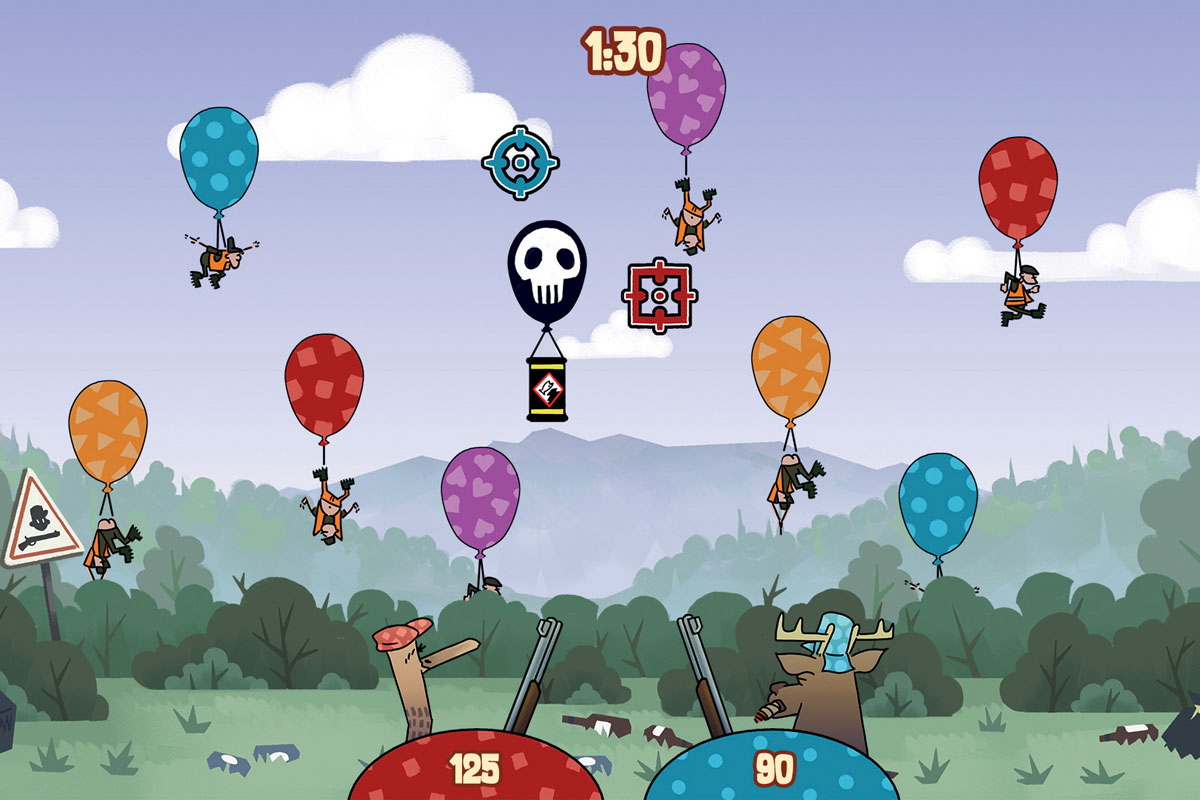
“A king without entertainment is a man full of misery.” Pascal’s thought may have inspired the movement scientists at EuroMov DHM, as several of their innovations combine treatment with entertainment. First and foremost is music, whose benefits for walking and balance inspired the BeatMove smartphone app. “By imposing an external rhythm, music improves the gait of people with Parkinson’s disease,” explains Benoît Bardy, a professor of movement and health sciences. Together with his team, he is developing software capable of adaptively synchronizing music with walking cadence.
In practice, the patient needs to bring their smartphone and headphones, as well as insoles equipped with motion sensors. “During the first minute of walking, the‘
’ algorithmdetects the characteristics of the stride to configure the app and select the song that matches,” explains Benoît Bardy. The BeatMove software draws from a database of nearly 600 songs to find the one that matches the right pace. Since the goal is not to disrupt the walker’s experience, they can choose from five musical genres: pop, rock, classical, pop-rock, and jazz.
Halving the number of falls
“The major innovation of this algorithm is that it adapts the music’s tempo to the walker’s pace in real time. The app handles a 10- to 20-percent variation in pace to speed up or slow down the music without it being noticeable to the ear. Then, if the walker’s pace changes too drastically, the app automatically switches to a different song,” explains Benoît Bardy. The music selection was developed in collaboration with Ghent University in Belgium to cover a very wide range. “The artificial intelligence used also allows the algorithm to anticipate movement, handle disruptive events such as stepping onto a sidewalk, and manage changes in pace, such as when climbing stairs…, ” explains the researcher. BeatMove also gradually and subtly increases the pace to reach an optimal speed, calculated for each patient. This acceleration counteracts the tendency of people with Parkinson’s to slow down their gait, often out of caution or fear of falling.
The initial results are spectacular. In 2021, a study of 40 patients showed a 50 percent reduction in falls, improved gait stability, and a 20 percent increase in walking speed. A large-scale clinical study is currently underway nationwide involving 400 patients, led by the Clinique Beau Soleil under the direction of Dr. Valérie Cochen de Cock, to ensure that the beneficial effects are linked to the treatment itself and not merely to the resumption of regular physical activity.
Distraction from the Effort
After publishing about 20 papers and securing a patent, the startup BeatHealth must now move forward with the commercialization phase of the Beat-Move app. Several improvements are already planned, notably the elimination of external sensors so that only those built into smartphones are used. Another potential application, through the I-Site’s “Companies on Campus” program and the Montpellier University Hospital (
), is to offer this non-pharmaceutical solution to obese individuals to encourage them to engage in physical activity, leveraging the motivational power of music. Distracting users from the effort involved is also the focus of another project launched within EuroMov: Medimoov, a therapeutic gaming platform for movement rehabilitation.
“The project began with doctoral students at the Montpellier Laboratory of Computer Science, Robotics, and Microelectronics who were determined to demonstrate the positive effects of video games,” recalls Antoine Seilles, who was then a doctoral student at the lab and is now CEO of Naturalpad, the company founded to develop Medimoov. The group of young researchers then turned their attention to the benefits of dynamic video games for physical exercise, particularly in preventing falls and aiding rehabilitation in nursing homes. Their project resonated with medical specialists, who observed that three-quarters of their elderly patients discontinue their rehabilitation, either because they grow tired of repetitive exercises or out of fear of getting hurt.
On Piracy and the Conquest of Space
The challenge now is to design games that are both effective and fun. “Naturalpad is developing an iterative game-design process, in collaboration with healthcare providers and patients, to fully understand therapeutic needs and gaming preferences, ” explains Antoine Seilles. Interviews with healthcare providers help identify the most effective movements for rehabilitation. “Occupational therapists want players to use broad, sweeping movements that engage both hands. Physical therapists, on the other hand, focus on precise movements for more targeted rehabilitation. “We also talk with the players to fully understand their preferences, ” says the developer. While healthcare providers rely on familiar game settings—such as a driving simulator—the patients themselves ask for pirate adventures, space exploration, or even car racing with no speed limits! “Some patients wanted a hunting game—a request that wasn’t easy to reconcile with healthcare providers’ concerns about the presence of weapons and the developers’ own reservations, as they’re generally opposed to hunting. In the end, our game features rabbits and wild boars shooting at balloons with hunters hanging from them… a solution that satisfies everyone!” laughs Antoine Seilles.
With a staff of fifteen, the Naturalpad team is currently developing games for people with various medical conditions, particularly those with disabilities—some of which are severe. Since its first game, *
*, was developed in 2011, the company now provides its games to 150 medical facilities, half of which are nursing homes.
Check out theUM podcasts, now available on your favorite platform (Spotify, Deezer, Apple Podcasts, Amazon Music, etc.).
* EuroMov DHM (UM, IMT Mines Alès)