Digital Transformation, Uberization: Threats or Opportunities for the Healthcare Sector?
While it has become common to speak of the digital revolution, it is clear that the development of connected and communicating devices, as well as the rise of new Internet services, is giving rise to radical innovations that are shaking up the economy.
Roxana Ologeanu-Taddei, University of Montpellier and David Morquin, University of Montpellier
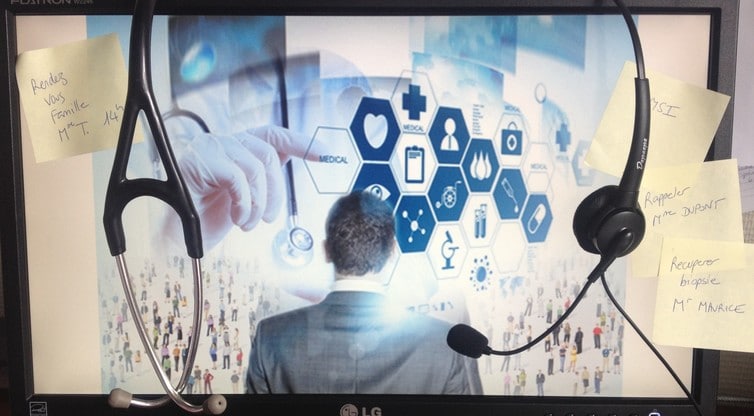
While it has become common to speak of the digital revolution, it is clear that the development of connected and communicating devices, as well as the rise of new Internet services, is giving rise to radical innovations that are shaking up the economy.
The example of the self-driving car is undoubtedly one of the issues most on people's minds, raising new challenges: technical reliability and safety, and above all, the sharing of responsibility among industry players due to the entry of new players—companies entering a new market—such as the major Internet companies, including Google, Apple, and Microsoft, Amazon. New services are being tested, such as communication between connected or autonomous cars and home devices, and remote control of certain appliances.
With regard to new Internet services in France, the platform economy, in sectors as diverse as passenger transportation (BlaBlaCar, Uber), lodging (Airbnb), the crowdfunding (Kisskissbankbank), or even parking (Mr. Parking), renders existing models obsolete, particularly in sectors where exclusive practice was guaranteed by the professional license.
Rapid Changes in the Environment That Affect Health
Although the healthcare sector is more protected than other economic sectors by strong barriers to entry—linked to government regulation and strict professional oversight (the National Medical Board)—it, too, is undergoing this dual transformation: the emergence of new connected products and new services via specialized matching platforms.
Already, in private practices as well as in hospitals, information technology has been integrated into physicians’ daily practice: prescription-assistance software, clinical decision-support systems, secure professional messaging platforms, software for managing appointments or home visits, and, above all, clinical software—including, notably, the electronic health record—which enables the organization and storage of the patient’s medical information necessary for diagnosis and care.
The digitization of medical information, far from being limited to the medium used to store the information, is transforming healthcare professions by changing the ways in which information is exchanged and coordinated among healthcare providers, enabling the emergence of new telemedicine practices and highlighting the need for specific technological skills to implement them.
Health Apps for Patients: Are Primary Care Physicians Losing Control?

From the patient’s perspective, new medical information websites offer free, more personalized advisory services, such as Mesvaccins.net—a site designed for travelers and published by an association of travel medicine experts that includes several medical professors. Using a series of questionnaires tailored to the destination country and the traveler’s medical history, it provides targeted vaccination recommendations as well as an electronic vaccination record—which can be validated by a healthcare professional (such as the patient’s primary care physician)—along with medical information for healthcare professionals and software solutions for managing vaccination centers.
In addition, there are currently more than 750 French-language health apps, ranging from diabetes management to the monitoring of various health parameters and therapeutic education—such as Mission Phosphore, developed by Sanofi and designed for patients with chronic kidney disease to help them better manage their treatment and make the best dietary choices.
Doctors are encouraged to familiarize themselves with these apps in order to advise patients; however, there is currently no regulatory framework for evaluating the medical benefits provided by these apps, unlike the existing processes for drugs or medical devices.
Two possible responses can be considered: either the doctor prescribes these apps based on advertising claims and industry lobbying—following models familiar fromthe pharmaceutical industry—or the doctor ignores them entirely, even if this means leaving the patient to choose based on the more or less opaque criteria of rankings published by consumer magazines and websites, as Doctissimo does for diabetes management apps.
or by using an additional app that helps users find the best health apps based on user feedback.
In both cases, the attending physician may lose control over a significant amount of personalized information and medical advice that could influence the quality of the patient’s care. Could this phenomenon go so far as to call into question the physician’s role—particularly regarding diagnostic skills and treatment decisions—as current discussions about the role of big data suggest?
From the "connected" patient to the "autonomous" patient?
For now, big data projects using medical data (Electronic Health Records, telemedicine software, and connected biomedical devices) are still in their infancy, due to difficulties in data sharing—linked in particular to the lack of interoperability among existing software and the lack of harmonization in the terminology standards used—in a context where the sector is fragmented and siloed.
Furthermore, the processing of digital data—including big data—requires a redefinition of responsibilities and professional roles. Indeed, medical information is governed by law due to medical confidentiality. In France, physicians in the Medical Informatics Departments (DIM) are responsible for processing this personally identifiable information within each facility; this information is necessary for analyzing clinical activity and for the reimbursement of costs associated with patient care by the national health insurance system. What about anonymized medical information? Who, then, owns this data, and who can be responsible for processing it, programming that processing, and using the results of automated processing?
For now, Apple and IBM are outlining a new model in which big data from Apple’s smartwatch would feed into IBM’s artificial intelligence program, called Watson. The major Internet companies possess the financial capacity, technological expertise, and agility required for innovation, as well as a global customer base, to experiment with new expert system models that could foreshadow the advent of “automated” doctors or “autonomous” patients, as predicted in the foresight report published by the University of Oxford. However, while big data analysis makes it possible to establish a diagnosis and a treatment plan for a given individual, the question of how to share medical responsibility with software developers remains to be defined.
New health care services: a Trojan horse for the commodification of health care
Software publishers and pure-play Internet companies aren’t the only drivers of change. Healthcare professionals themselves are using technology to create new services. For example, the iDoc24 and Epiderm apps offer paid remote consultations with a dermatologist based on photos and information about symptoms provided by patients. Another example is the Expenli website, which allows users to ask doctors questions online 24 hours a day, or DirectoDoc, which enables patients to use their smartphones to request a callback from their primary care physician, who then calls them back for a telephone consultation when available. Another website published by a medical association, Deuxièmeavis.fr, offers patients a second opinion on a specific medical condition, outside the fee schedule set by the CNAM. Do these types of websites signal the rise of a for-profit model, similar to that pioneered by numerous smartphone telemedicine apps in the United States?
Paradoxically, the restrictive regulatory framework governingthe practice of telemedicine is fostering the emergence of paid medical services—operating outside the reimbursement system—that harness the potential of the Internet and meet the demand for the convenience and accessibility of standard medical care. Recently, the French Medical Council highlighted this contradiction, calling for regulation of the sector while ensuring flexibility for telemedicine, which—through the digitization of patient records—has become an integral part of doctors’ daily practice.
Uber in healthcare?
In addition to medical services and health information, new platforms are targeting specific markets, such as online medical appointment scheduling and patient transportation.
When it comes to online medical appointment scheduling, several players are competing for market share: Doctolib, KelDoc, Dokiliko, and Allodocteurs. Among them, MonDocteur.fr—which was acquired by Doctissimo, the Lagardère Group’s healthcare brand—stands out by offering an additional service: it has just partnered with Uber to allow its users to book a driver to take them to their doctor’s office.
However, the platform’s business model can only remain on the periphery of the healthcare sector, since this model requires the existence of a competitive market—one in which numerous service providers are present (taxi drivers for Uber)—and the definition of a standard service (passenger transportation for Uber). These conditions are not met by medical services, since France is facing a shortage of doctors and medical services cannot be standardized on a large scale. Unless certain doctors shift from private practice to online consultations, or unless app and online service providers outsource medical expertise to doctors located abroad—a scenario that is unlikely due to labor market regulations. Furthermore, medical prescriptions—which entail legal liability for the prescriber—are not offered by existing apps and services outside the framework of telemedicine.
However, Uber offers an innovative service (accessibility and flexibility in placing orders), which stands out from existing services—perceived as inadequate (expensive, restrictive, and inconvenient, since orders often must be placed in advance)—provided by entities operating as monopolies. It is indeed the provision of an innovative service that must remain the goal of the healthcare sector’s digital transformation.
On the healthcare system side, we can envision accessibility and ease of use at the heart of innovation for patients, such as e-prescriptions, which have been implemented nationwide in several countries—including the United Kingdom, Finland, and Sweden—to facilitate the transfer of prescriptions between doctors and pharmacists and allow patients to view their prescribed and dispensed prescriptions.
From the doctor’s perspective—whether it involves telemedicine applications and services or the use of predictive algorithms that analyze big data to suggest diagnoses and treatments—the question arises of how to redefine the medical profession: What part of the profession cannot be automated? What part of the profession can only be performed in person? In what situations are the doctor-patient relationship (active listening, psychological support) and the clinical examination particularly indispensable compared to other digitized information?
Avoiding the Kodak Syndrome
Digital technology is driving change in the healthcare sector, which may lead to resistance from stakeholders in the system (healthcare professionals, regulatory bodies, and public and private institutions) who are concerned about challenging the status quo and redefining the rules of the game to accommodate new entrants. However, the “besieged citadel” syndrome risks leading to theKodak effect : the persistence of a business model that had proven successful (the sale of 35mm film) while failing to take into account changes in the business environment and the impact of technology, which ultimately led to Kodak's bankruptcy.
 Because the question facing stakeholders in the healthcare system is not whether to move toward regulation and/or deregulation, toward paid or free services, or even toward the use of information technology or its rejection, but how to use digital technology as an opportunity to provide better care for patients by offering them new services, rather than simply accepting the technology and models proposed by software vendors. The sector’s digital transformation must involve an analysis of the risks and challenges associated with the various technologies used, just as is done for self-driving cars.
Roxana Ologeanu-Taddei, Associate Professor, HDR, Information Systems and Health Management, University of Montpellier and David Morquin, M.D., Montpellier University Hospital, University of Montpellier
The original version This article was published on The Conversation.