A “liminal space” between humans and AI: Will the boundary be less distinct than we might think?
There is something strangely reassuring about the way we continue to talk about artificial intelligence. It’s as if the fundamental structure of this relationship had already been laid out once and for all. On one side, human beings. On the other, machines.
Yet machines are becoming faster, more convincing, and more autonomous; humans adapt, resist, or perhaps eventually take a back seat. But the boundary separating the two remains remarkably unquestioned, as if its permanence were a given.
And yet, as we continue to live with these systems, something more ambiguous begins to emerge.
Ganesh Gowrishankar, University of Montpellier and Madalina Croitoru, University of Montpellier
THE ESSENTIALS
- Until now, tools had been quite distinct from the beings who used them.
- Today, the emergence of artificial intelligence systems for the general public is blurring the lines: our memories and decisions are often closely tied to our digital footprints, while modern computer systems feed on our data.
- Considering a gradual blurring of this conceptual boundary allows us to reframe the debates and discussions surrounding the rise of AI.
An increasingly internalized interaction with artificial systems
What sets contemporary artificial intelligence apart is precisely its refusal to remain outside of ourselves.
Tools of the past played a relatively simple role in our lives. A hammer served as an extension of the hand. A telescope extended the range of our vision. A computer made calculations easier. We used them while remaining firmly grounded in our own identities.
Artificial intelligence is disrupting this balance. Little by little, interaction ceases to seem cognitively external. Memory is scattered across digital archives that we constantly return to. Decisions emerge from an ongoing negotiation with algorithms capable of anticipating our preferences (much like the recommendation systems deployed on major digital platforms) even before those preferences have fully taken shape.
Systems based on argumentative dialogue illustrate this transformation by incorporating user feedback into an iterative process of justifying and revising recommendations: reflection can now unfold through exchanges with conversational agents. In short, human thought is increasingly taking on artificial structures before returning to us, subtly transformed.
At the same time, artificial systems draw on immense amounts of data reflecting human experience. Language models discover the many forms of emotional expression within this data and acquire the ability to interpret their nuances. They have learned the linguistic cues, emotional nuances, and contexts of expression, to the point of recognizing complex emotional states in textual interactions. They assimilate traces of human experience without ever being part of human experience itself.
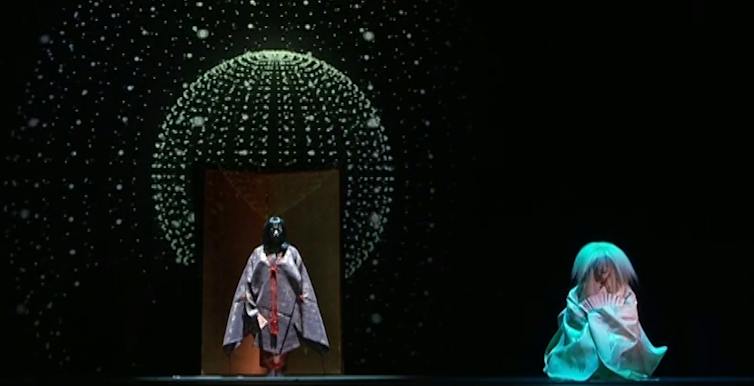
What emerges then is a “liminal space”: a territory where there is neither true fusion nor clear separation, but rather an intermediate, fluid state in which the categories that once structured our interactions gradually lose their obviousness.
Humans become partially artificial through the gradual outsourcing of their cognition, perception, and actions. Machines, for their part, absorb human language, movements, behaviors, and emotions as the interaction unfolds. Around them, the environment, too, begins to transform, taking on a hybrid nature all its own.
None of these categories disappears completely. But none emerges from the encounter unscathed.

Technologies for enhancing human capabilities: at the heart of this ambiguity
A person wearing an adaptive prosthesis is supported by a device that continuously adjusts its behavior to the person’s movements and intentions. This adaptive approach now extends to motorized lower-limb prostheses, which are capable of adjusting their assistance to the dynamics of walking.
Beyond compensating for a lost function, wearable robots extend the body by offering it new capabilities, sometimes through additional limbs directly controlled by the user.
Other approaches emphasize close collaboration between humans and robotic arms worn on the body to assist in performing complex tasks.
Finally, predictive cognitive systems use the data continuously generated by the user to anticipate certain states or needs and adapt their operation accordingly.
Thought, movement, and perception begin to flow simultaneously between biological and artificial layers. Agency gradually extends beyond the body’s boundaries, spreading into systems that anticipate, respond, and adapt in turn. And the brain, slowly, redefines what it considers to be part of the body and the self.
What emerges, then, is neither entirely human nor entirely artificial, but a more fluid state, continually reconstructed through interaction with the machine and the surrounding environment.
Machines are also transforming our environment
Virtual reality and augmented reality undoubtedly offer the most visible expression of this transformation of the environment. In these immersive worlds, the body remains physical, while perception is anchored in a computationally generated world. Presence no longer coincides perfectly with physical space. The environment itself takes on a “liminal” quality, suspended somewhere between tangible reality and artificial construction.
Yet much of the current discussion surrounding artificial intelligence continues to focus on intelligence, consciousness, or the replacement of humans. While these issues are certainly important, they may not be the most profound ones.
The fundamental transformation does not lie in the possible replacement of humans
The main transformation lies in the gradual erasure of the conceptual boundaries through which modern societies have long organized their relationships with machines and their environment.
And perhaps that is what gives contemporary artificial intelligence its strange mix of fascination and unease. This interaction does not merely change our habits or behaviors. It is beginning to undermine the very categories through which we have traditionally understood who we are, what our machines are, and what the worlds we inhabit are.
Future collaborations between psychologists, neuroscientists, computer scientists, and artists will be essential for exploring this liminal space. Understanding how it transforms the human brain, individual behaviors, and social dynamics is a necessary step if we wish to develop artificial intelligence designed as a collaborative entity rather than a competitive one.
The authors would like to thank Shotaru Oku and the team at Evision Tokyo for their longstanding artistic collaboration, marked by the joint production of performances and immersive films, as well as for the exchanges that have enriched the work presented in this article.
Ganesh Gowrishankar, Researcher at the Montpellier Laboratory of Computer Science, Robotics, and Microelectronics, University of Montpellier and Madalina Croitoru, Professor, University of Montpellier
This article is republished from The Conversation under a Creative Commons license. Readthe original article.