[LUM#11] A Sterile Mosquito for a Peaceful Island
“Fighting evil with males.” This is the strategy chosen by researchers at the Mivegec laboratory to reduce the risk of outbreaks of mosquito-borne diseases on Réunion Island. Their method: the sterile insect technique, which involves mass-rearing male tiger mosquitoes, sterilizing them, and then releasing them into the wild.
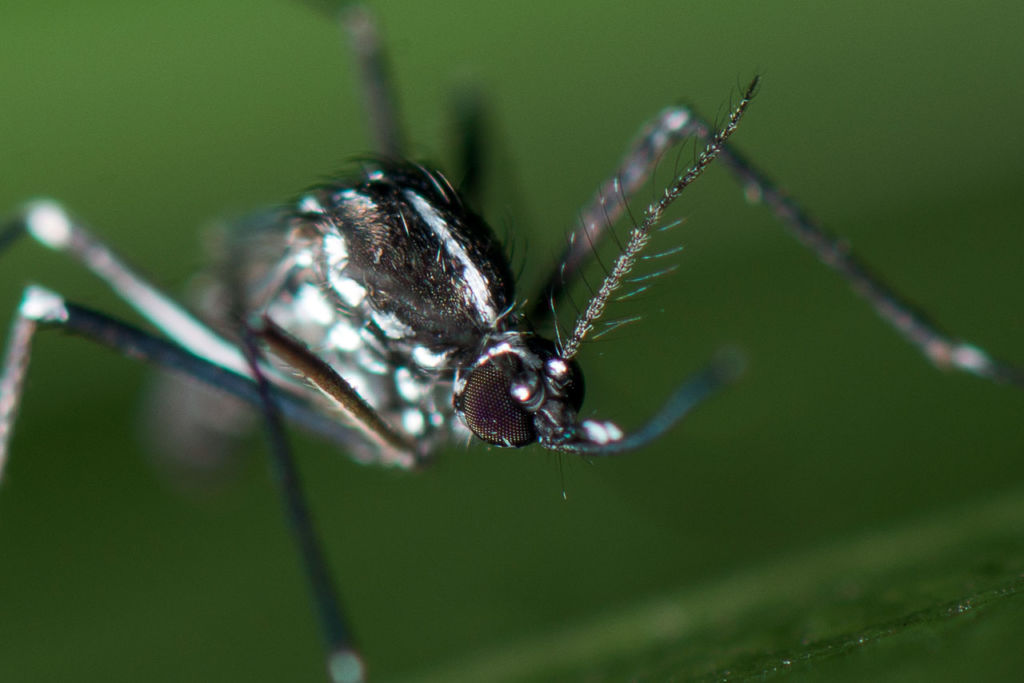
266,000. That is the number of residents of Réunion affected by the chikungunya outbreak that struck the island in 2005–2006. How was the virus responsible for this disease able to infect 30% of Réunion’s population? “Chikungunya is transmitted by the tiger mosquito, Aedes albopictus, which is also a vector for the dengue virus—a disease that has affected more than 50,000 people on the island since the beginning of last year,” explains Frédéric Simard of the Infectious Diseases and Vectors: Ecology, Genetics, Evolution, and Control laboratory.
In the absence of a vaccine, the only way to limit the transmission of these diseases is to reduce contact with the mosquito vectors. While mosquito control has long taken the form of massive insecticide spraying, this practice is now reaching its limits: not only do the products used have consequences for the environment and for local communities, which now view them with suspicion, but moreover , “mosquitoes are becoming resistant to insecticides, which significantly reduces their effectiveness, ” explains Frédéric Simard.
Insecticide Resistance
How can we curb the spread of Aedes albopictus while limiting the use of insecticides? Researchers at the Mivegec laboratory are banking on a promising strategy: the sterile insect technique. It involves sterilizing male mosquitoes raised in the laboratory with X-rays and then releasing them en masse into the wild. “Females fertilized by these males will lay eggs that will never hatch, ” explains the researcher.
This method is all the more effective because female mosquitoes mate only once in their lifetime and then store the sperm in their spermatheca to fertilize their eggs. “If a female mates with a sterile male, she fills her spermatheca with non-functional sperm and will never have offspring.” Given that a single female can lay more than 1,000 eggs in her lifetime, that means just as many fewer mosquitoes will ever hatch.
The sterile insect technique has already proven effective, particularly in agriculture, where it has been used for about 50 years to control certain insect pests. But to apply it to the tiger mosquito, researchers had to overcome specific challenges.
Mass production
First step: mastering the techniques for mass rearing Aedes albopictus in the laboratory, followed by sexing the individuals—that is, separating the males from the females. “This is a crucial step because only the males will be released into the wild, ” explains Frédéric Simard. To separate the males from the females, the researchers pass the mosquito nymphs through a sieve, which removes the females, whose nymphs are larger.
The second decisive step: sterilizing the male nymphs using X-rays. “After this step, we had to verify that the irradiation did not affect the males’ health or their ability to mate,” the researcher explains.
Build Support
Final step: testing the method in the field! “In June 2019, we carried out an initial release of 3,000 sterile males,” explains Frédéric Simard, who notes that these releases do not cause any nuisance to residents, since only the females bite to collect blood to feed their eggs. “We’ve also done a great deal of educational and awareness-raising work with communities and institutions whose involvement is absolutely essential to the development of this eco-friendly method for controlling the tiger mosquito. To make it sustainable, it must not only be effective and clean, but it must also be socially acceptable, economically viable, and implemented within a legal framework. This is a massive undertaking for truly transdisciplinary research!” says Frédéric Simard.
This dialogue is taking place in a favorable context, as more than two out of three Réunion residents spontaneously express support for the initiative. Given the success of these initial phases, researchers conducted a second release in September 2019 and plan even larger-scale releases in 2020. “The ongoing field studies will help us determine where, when, and how often to release the males to ensure maximum impact on the Aedes albopictus population. And thus significantly reduce the risk of new chikungunya or dengue outbreaks. We’re going to fight the problem… with the males.”
Check out theUM podcasts, now available on your favorite platform (Spotify, Deezer, Apple Podcasts, Amazon Music, etc.).