[LUM#16] “You’ve never seen a flamingo in court”
What tools does French law currently offer to protect the interests of natural features such as rivers and streams—or, for that matter, a tree or a flamingo? What remedies can be sought in the event of pollution? And, for that matter, can compensation still be considered a solution? Catherine Ribot, a professor specializing in environmental law and a researcher at the Montpellier Center for Administrative Research and Studies ( CREAM), offers some insights.
What is the role of environmental protection in French law?
Today, we have an anthropocentric view of the environment. We are at the center of it—you, me, humans. Let me give you an example: You’re on a mountain road when a tanker truck tips over and spills highly toxic chemicals. There are herds nearby—the cows die; there’s a vegetable farm—no more lettuce; there’s an orchard—no more fruit trees. Worse still! Ten kilometers downstream, there’s a drinking water intake that’s at risk of contamination. What should be done?
I suppose we need to clean it up?
Of course, because it’s dangerous! Dangerous for the cows, for the lettuce, for the fruit trees, and maybe even for me, since the water I drink in the morning might be contaminated. Now imagine that the toxic substance is trapped in a non-porous, clay-rich geological pocket. Will we clean it up? No, because this pollution doesn’t harm anyone’s interests. This reflects an anthropocentric view of the environment and pollution.
What is the legal definition of pollution?
Pollution is damage caused to a person’s property. In the case of an oil spill, for example, bird conservation organizations have sought compensation for the costs incurred, while municipalities have sought compensation for the decline in tourist visitation…
Is ecological damage the harm done to nature itself?
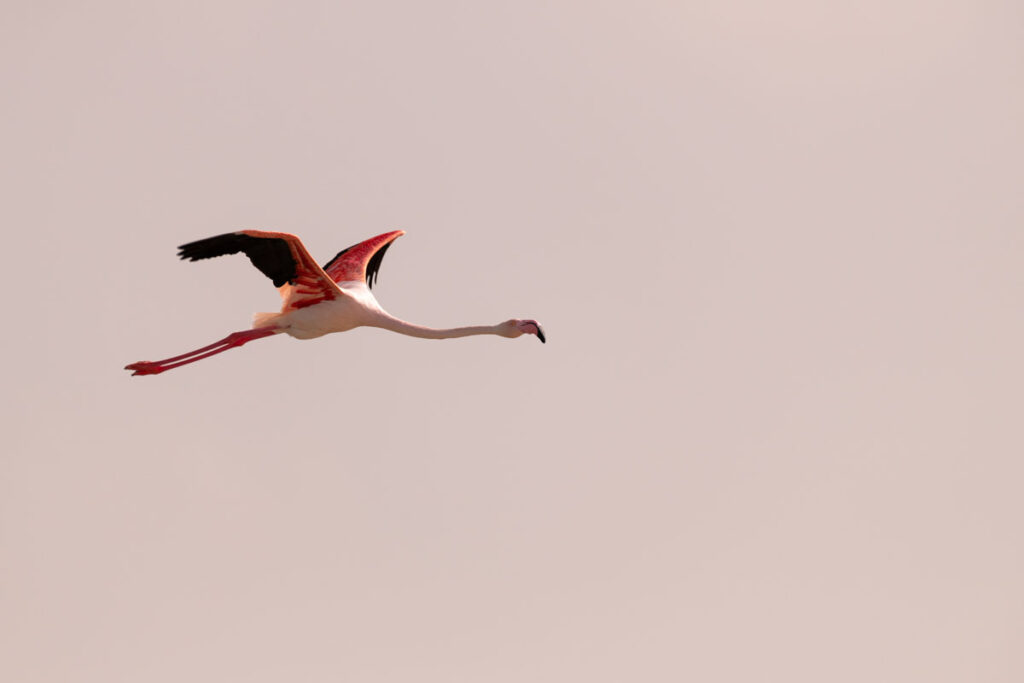
You’ve never seen a flamingo in court seeking compensation for damages caused by pollution in the pond where it lives. This flamingo may be the sole survivor of its flock following an episode of pollution. How do we recognize damage that is not merely compensation for the cost caused by this pollution, but rather compensation for the cost incurred by the environment?
Has the law evolved on this point today?
It was a complicated process, but ultimately, Article 4 of the August 8, 2016, Law on the Restoration of Biodiversity incorporated new provisions into the Civil Code recognizing the existence of ecological harm and stipulating that such harm must first be remedied in kind. This necessitates—though one may always criticize it—a different relationship with the environment.
But then who can file a claim for damages on behalf of the flamingo?
An organization, for example, will be able to seek compensation for this harm. There’s a lot of talk about this right now—not so much about water, but about climate litigation, such as “The Case of the Century”…We’re also seeing a shift, with the first countries beginning to recognize rights for natural entities. New Zealand recognized the Whanganui River as a legal entity in 2017. In India, the Ganges River has also been granted certain rights…
What exactly is a legal entity?
A legal entity is a subject of law. You are a subject of law, I am a subject of law, and we can seek compensation for harm caused to us. In France, a tree is not a subject of law. A tree may belong to you; it is part of your property, and as such, you can seek compensation if it suffers damage. The tree itself is not a legal entity; this concept is not rooted in our tradition.
And what does the concept of the common good contribute?
Article L210-1 of the Environmental Code states that water is part of the nation’s common heritage. In practical terms, a citizen may consider the Lez River to be part of their heritage, but technically and legally, this does not hold up in court. Because, ultimately, what would that citizen be asking for?
Yes, and besides, how can we determine the value of a common good?
First, we’ll need to define what a common good is. Can an animal be a common good? Do you remember Cannelle the bear? She was the last bear in the Pyrenees—a species that no longer exists. The hunter who killed her might, perhaps, involve his insurance company, but what costs will the insurer reimburse, and what damages will it compensate for? When three metric tons of fish wash up belly-up due to pollution, have we truly resolved the issue simply by paying to clean the riverbanks and restock the body of water? Perhaps the damage to the integrity of the water cannot be reduced to the payment of compensation or restocking. It is a social issue that may need to be addressed differently.
So is it more a matter of awareness than of the law?
There are legal instruments and protective mechanisms in place, but our awareness hasn’t fully developed yet. Today, this way of thinking is beginning to shock younger generations, who believe that compensation alone isn’t enough. These new generations will find ways to help us think differently. The law will change, and so will legal professionals.
*CREAM – Montpellier Center for Administrative Research and Studies (UM)
Check out theUM podcasts, now available on your favorite platform (Spotify, Deezer, Apple Podcasts, Amazon Music, etc.).