
The Constitutional Principle of Secularism: A Kaleidoscope of Rules and Values
Content Type: Calendar

"Propulsion for pleasure boats, recreational craft, and small service vessels"
Content Type: Calendar

Business Forum
Content Type: Calendar

Exposum
Content Type: Page
The ExposUM Institute is an initiative of the University of Montpellier and its partners aimed at establishing a leading, off-campus, interdisciplinary institute dedicated to the study, education, and science-society interaction regarding the environmental determinants of human health. A recipient of the ExcellenceS (PIA4) call for proposals and supported by the Occitanie Region, ExposUM is funded to the tune of 46.4 M€ for the period 2022–2030. The exposome refers to the totality of lifelong exposures to environmental and social factors whose specific effects, combined with individuals’ intrinsic characteristics, underpin health as well as the onset, progression, and severity of infectious and noncommunicable human diseases. In this sense, it is the environmental counterpart to the genome, with which it interacts throughout an individual’s lifetime. Visit the ExposUM Institute website Calls for Proposals Objective To provide an innovative conceptual framework for studying multiple environmental risks and their combined effects GATe: Gather people to Generate, Apply, Transmit knowledge Priority Area 1: Generate knowledge: accelerate the acquisition of basic knowledge in a coordinated, interdisciplinary, and non-segmented manner Priority Area 2: Apply knowledge: define comprehensive mitigation strategies tailored to the local context and encourage innovation. Learn More Axis 3: Transmit Knowledge: Promote the education of the next generation of scientists Organization Steering Committee (CoDir): Pascal Demoly (Chair), Aurélie Binot, Charlotte Boullé, Mircea Sofonea. Project Manager: Elodie Suttling. Scientific and Strategic Advisory Board (COSS): Agnès Mignot (Chair), Amaria Baghdadli, Bernadette Bensaude-Vincent, Jean-Paul Cristol, Eric Delaporte, Delphine Destoumieux-Garzon, Hélène Fenet, Sylvain Gandon, Alain Lacampagne, Laurence Lachaud, Nadine Laguette, Brice Laurent, Delphine Muriaux, Denis Pesche, Coumba Toure Kane, Andrei Turtoi, Nathalie Vachiery, Muriel Vayssier-Tarissat, Laurent Visier. Research ’s Guidance and Evaluation Council (COER): Mircea Sofonea (Chair), Anne-Muriel Arigon, Aurélie Binot, Christophe Boete, Charlotte Boullé, Antoine Claessens, Sylvie Claeysen, Constance Delaby, Gauthier Dobigny, François Favier, Olivier Gimenez, Antoine Gross, Rodolphe Hamel, Luciana Kase-Tanno, Antonio Maraver, Jérôme Poli, Gwenn Pulliat, Anatja Samouelian, Annelise Tran, Aurore Vicet. Program Guidance and Evaluation Committee (COEF): Charlotte Boullé (Chair), Sylvaine Artero, Anne Blanc-Potard, Sandra Bringay, Robin Candau, Fabrice Caudron, Joseph Chamieh, Nathalie Charbonnel, David Cornu, Philippe Courtet, Marc Cretin, Ramses Djidjou Demasse, Catherine Faur, Olivier Gimenez, Bernard Godelle, Fares Gouzi, Claire Immediato Daien, Andrey Kajava, Sofia Kossida, Jean Philippe Lavigne, François-Xavier Lesage, Marie Christine Lichtlé, Gladys Massiera, Sandrine Michel, Mai Nguyen Chi, Émilie Olie, Marie-Laure Parmentier, Christophe Paupy, Chrysta Pelissier, Marie Pequignot, Eric Perera, Olivier Torres, Rémi Servien, Mircéa Sofonea, Annette Vergunst, Laurent Visier, Valérie Zimmermann. Get project updates directly: Subscribe to the mailing list Partners
Key Challenges Facing the Occitanie Region
Content Type: Page
Advancing regional research to better preserve biodiversity, more effectively combat vector-borne diseases, envision the future of viticulture and oenology, and address the collective challenges of the water cycle… These are all scientific challenges that the University of Montpellier and its regional partners intend to address by leading four of the 15 “key challenges” identified and supported by the Occitanie Region. The “key challenges” are initiatives launched by the Occitanie Region to support the collective efforts of research stakeholders in Occitanie. Centered on strategic issues for our region, they aim to encourage the formation of scientific communities, thereby making regional research even more collaborative, visible, and attractive, and to produce research of the highest quality in line with the Region’s policy priorities, particularly the Transformation Plan—Green New Deal adopted at the Plenary Assembly on November 19, 2020. Each key challenge receives €2 million in regional funding to implement its action plan over a four-year period. Among the 15 challenges supported by the Region, the University of Montpellier is the lead partner for the “key challenges” on the themes of biodiversity, water, infectious risks, and viticulture and wine, in collaboration with numerous partners spread throughout the region. Key Challenge BIODIVOC Officially launched on April 1, 2021, the goal of the BIODIVOC project is to advance fundamental research in ecology and evolution focused on the theme “Dynamics, resilience, and management of biodiversity and ecosystems subjected to human-induced environmental pressures.” Biodivoc Website Key Challenge: RIVOC Officially launched on March 18, 2021, the goal of the RIVOC project (“Infectious Risks and Vectors”) is to develop innovative and sustainable approaches to improve the understanding, surveillance, and control of these diseases and their vectors. RIVOC website VINIDOCC Challenge The “Innovation for the Viticulture and Oenology of the Future in Occitanie” project was launched on September 16, 2022, to conduct multidisciplinary, fundamental, and applied research and to develop new practices for the viticulture and oenology of tomorrow. Learn more BIO’OCC Challenge Bio’Occ is a project funded by the government as part of the France 2030 plan. This regionally focused initiative aims to attract, train, and retain the talent and key players of tomorrow by developing specialized training programs in the fields of biotherapies and bioproduction. Learn more Key Challenge “Water Occitanie”: The Water Occitanie project aims to develop expertise in wastewater reuse, design and analyze infrastructure, equipment, and governance structures to address stakeholders’ challenges at the local level, assess the impacts across major watersheds, and analyze the collective capacity to address the shared challenges of the water cycle. Learn more MarinOc Key Challenge Launched on July 9, 2026, the MarinOc Key Challenge aims to strengthen cooperation among laboratories, institutions, local governments, and socio-economic stakeholders to generate knowledge useful for understanding, anticipating, and supporting conservation and adaptation processes in coastal and marine socio-ecosystems in the face of increasingly frequent extreme events of climatic or anthropogenic origin. Learn more
Purchasing at the University
Content Type: Page
Our Procurement Policy As a public institution, the University is subject to the Public Procurement Code. Its procurement activities fall within the legal framework of public procurement and adhere to the three fundamental principles of public procurement: free access for businesses to public procurement opportunities; equal treatment of bidders; and full transparency in procurement procedures. The University’s procurement policy also aims for more efficient procurement, which is based on the following objectives: ensuring better management of public funds through the streamlining and pooling of needs; promoting the integration of individuals who are furthest from the job market or those with disabilities; protecting the environment; contributing to the dissemination of innovation; enabling small and medium-sized enterprises to access public procurement. Where can you find our public contracts? For contracts exceeding €60,000 (excluding tax), all our procedures are advertised on the following platforms: our buyer profile: Achapublic.com; Achapublic allows companies to view and respond to requests for proposals issued by the University. The platform allows users to set up personalized alerts to be notified at regular intervals of the publication of public contracts based on the criteria specified when creating the alert. a Legal Announcements Journal or the BOAMP; the Official Journal of the European Union for formalized procedures. Our Procurement Areas To fulfill its public service missions, the University purchases various supplies, services, and construction work. It has over a hundred so-called “cross-functional” contracts that cover the most common needs and are renewed regularly. These contracts cover both general supplies and services (printing supplies, periodicals, IT and audiovisual equipment, software, office supplies, etc.) and, for research, a wide range of scientific equipment and consumables, laboratory products and gases, etc. Publication of Key Data For purchases ranging from 25,000 euros to 60,000 euros (excluding tax), the University is required to publish certain key data: here is the information for the year 2025.For purchases exceeding 60,000 euros (excluding tax), the essential data is published on the University’s buyer profile. Essential data by year: 2024 2023 2022 2021
Guide to Preparing for Extreme Situations
Content Type: Page
How should I respond to a terrorist attack or a major incident on campus? The Specific Safety Plan (PPMS) is an organizational plan designed to ensure people’s safety in the event of a major incident or a terrorist attack involving an intruder. How is the PPMS activated? Crisis response teams are established at each campus location. They activate the Special Safety Plan (PPMS) when necessary. How will I be alerted? Case 1: I witness a terrorist attack or major incident Case 2: I am notified by someone If the threat comes from outside (chemical attack, terrorist attack in a neighboring building, etc.), the message sent by the alert system will encourage people to: take shelter follow the instructions provided in these areas by a designated representative in contact with the crisis response team (remain in place, wait for law enforcement to organize the evacuation, etc.) These areas are indicated by the following symbol: Case 3: I am alerted by the audible alert system set up by the University What methods are used? In addition to the technical and logistical resources specific to each institution, an alert system has been implemented. When it is triggered: High-powered outdoor sirens will sound. Messages will be sent to indicate the nature of the alert (email, text message, voice message for reception desks and security stations). Please note: Only @umontpellier email addresses will receive these messages. If you wish to receive these messages via text, you must register at the following address: https://consentement.umontpellier.fr/web/ Case 1: Evacuation If a threat endangers people on campus, the message sent by the alert system will instruct them to: evacuate safely if possible (get out) take cover if it is dangerous to leave Follow the Ministry’s guidelines by visiting www.encasdattaque.gouv.fr Case 2: Taking Shelter If the threat comes from outside (chemical attack, terrorist attack in a neighboring building, etc.), the message sent by the alert system will encourage people to: take shelter follow the instructions provided in these areas by a coordinator in contact with the crisis response team (stay put, wait for law enforcement to organize the evacuation, etc.) These zones are indicated by the following symbol: University Alert Drills Drills will be conducted annually to test the alert system and remind everyone of the procedures in place at the university.When the alert system is triggered, a sound will be broadcast via sirens, and messages will be sent simultaneously by email to indicate the affected site and the appropriate action to take (evacuate or take shelter). Listen to the sound used for these alerts: If you have any questions, please email us.

Self-Defense Workshop – Open only to female students at theUM
Content Type: Calendar
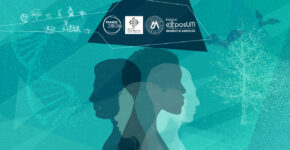
ExposUM 2023 Calls for Research Proposals: The Emerging Exposome
Content Type: Call for Proposals
Published on: December 9 , 2022
ExposUM is an initiative of the University of Montpellier and its partners aimed at…
Joint Service for Support of Educational Innovation (SCSIP)
Content Type: Page
Director: Jean-Patrick Respaut Administrative Manager: Dominique Barbe-Asensio Responsibilities: The Joint Service for Support of Pedagogical Innovation is tasked with initiating, guiding, and supporting pedagogical transformation; establishing the conditions for evaluating the initiatives developed; and measuring the impact of their implementation in relation to stated objectives, using a “ Research-Action” approach. It provides expertise in the field of pedagogy through an experimental approach. It brings together stakeholders through local, national, and international networks. It conducts research on pedagogical practices and student learning. Learn more about pedagogical innovation View the organizational charts of the University of Montpellier
Office of Campus Life
Content Type: Page
Director: Valérie Rabia Deputy Director: Vanessa Bontems The Campus Life Division comprises five departments focused on the following areas: social services and recreation, art and culture, disability services, workplace quality of life, and student life. These departments share a common goal: to work toward improving the academic, work, and living conditions of students and staff at theUM. This division also helps strengthen the sense of belonging to the university and foster cohesion within the university community. https://www.youtube.com/watch?v=Y793XNAZDzA Missions: To make the workplace for students and staff a place for living and personal growth and to promote student success. To participate in defining and implementing the institution’s CSR (Corporate Social Responsibility) policy, particularly through the development and implementation of: Master plans on disability and student life. Programs to improve quality of life at work (QLW) and prevent psychosocial risks (PSR). Roadmap for contemporary art and culture. Social benefits program specific to the University of Montpellier. Action plans for gender equality in the workplace. A reporting system for any acts of violence, discrimination, psychological or sexual harassment, sexist behavior, etc. Building a more inclusive university: Promoting diversity and combating discrimination and sexist or sexual violence. Promoting gender equality. Welcoming, supporting, and including students and staff with disabilities. Providing support to student organizations and fostering their initiatives, in accordance with the values of the “UM.” Making the university a cultural hub rooted in the local community. Organize, coordinate, and manage campus events, such as the Open House (JPO), “Donner des Elles à l’UM ” (a series of events held in March around International Women’s Day), Anti-Racism and Anti-Semitism Awareness Week, the Staff Celebration, the ceremony honoring retirees, the Christmas party for staff children, the Week Against LGBT+ Phobia, orientation days for new students, or other events for students and staff, in line with the University of Montpellier’s diversity and inclusion goals. The departments that make up Campus Life: Social Services and Recreation. Email Art & Culture. Email Handiversité. Email Students Staff Quality of Life at Work. Email Student Life: Email View the University of Montpellier’s organizational charts

“There can be no tolerance for acts like these!”
Content Type: Article
Published on: November 30 , 2022
Two major events marked life on the University of Montpellier campuses this past month.…
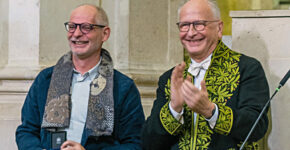
Jean-Philippe Pin: His Head Is Full of Glutamate
Content Type: Profile
Jean-Philippe Pin, a research director at the Institute of Functional Genomics (IGF) in Montpellier, was awarded the Lamonica Prize this year for his work in molecular pharmacology, which is opening up new therapeutic avenues for the treatment of neurological and psychiatric disorders.
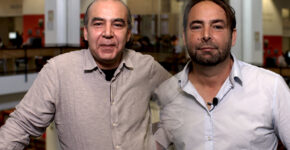
Rouages: “Behind every career guidance project lies the question of identity”
Content type: Article , Video
Published on: November 21 , 2022
Cheikh Latrache and Matthieu Evrard are psychologists with the French Ministry of Education. Seconded by the…

"Why don't you come to school with us?"
Content Type: Article
Published on: November 17 , 2022
As part of the recruitment campaign for teaching staff and…
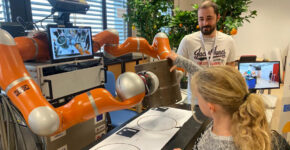
30 Years of Innovation with the LIRMM
Content Type: Article
Published on: October 25 , 2022
Founded in 1992, the Computer Science, Robotics, and Microelectronics Laboratory at…