Laura Michel – MAK’IT Great Again
A political scientist at theUM, Laura Michel has been coordinating a research group focused entirely on the social sciences and humanities and dedicated to public transition policies since 2024. This role led to her appointment as director of the Mak’it program, the Montpellier Institute for Advanced Studies, which specializes in transition.
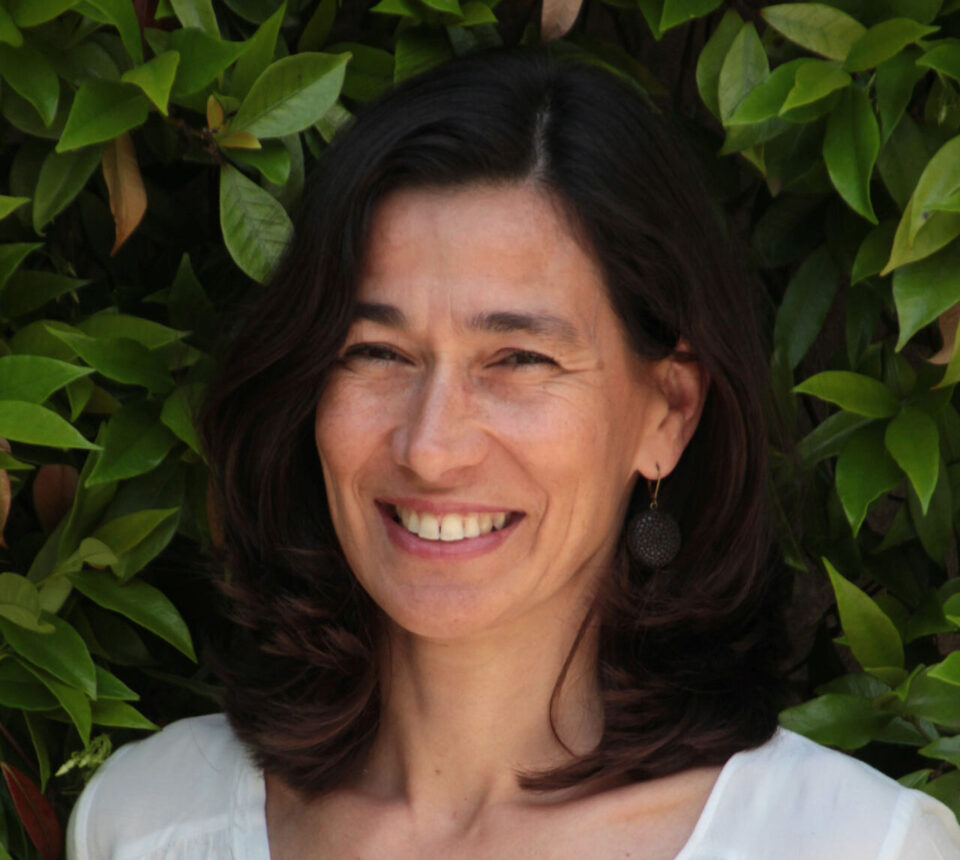
Laura Michel takes the lead. This is likely because the deputy director of the Center for Political and Social Studies (Cepel) knows that every field within the humanities and social sciences (HSS) is essential to analyzing how our societies absorb, process, and sometimes reject environmental issues. A specialist in the greening of industrial and regional policies, the researcher has led the Montpellier I-site’s key initiative on public policies for the transition (KIPPT) since 2024, which brings together political science, education, economics, law, management, and geography.
This 100% SHS program involves about twenty research laboratories in Montpellier.“Our bimonthly seminars are truly dynamic, with about fifty participants at each session,” says the political scientist, whose goal is to bring researchers together as a community. With a budget of 300,000 euros over two years, the initiative also funds multidisciplinary research projects emphasizing the dialogue between science and society: “A dozen projects have already been launched on topics ranging from agrivoltaics to mobility, including outdoor sports and the financing of transitions.”
Observe the trade-offs
This goal of fostering relationships between researchers working on transition policies and public and civil society actors suits her well. Indeed, Laura Michel has a background outside of research, specifically in serving local governments and the private sector.
After working as a research analyst at the Observatory of Local Public Service, she went on to serve as a consultant on environmental conflict management for various industrial groups. This gave her a firsthand look at the trade-offs involved.
Above all, this experience convinced her to return to research. She did so through a dissertation funded by ADEME, which she defended in 2003; this immediately led to a position as an associate professor at the University of Montpellier a year later. Since then, she has been examining“how environmental issues are framed in the public sphere and how industry leaders and elected officials incorporate them—not with the aim of transforming the industrial system, but of ensuring its continued existence.” In short, she seeks to understand how the conditions for maintaining the current system—however destructive it may be—are created.
For example, Laura Michel examines the processes by which environmental criticism is channeled into public policy:“Environmental controversies have fostered a greening of public policy. But this process is equally hampered by forms of co-optation and strategies to channel criticism by hegemonic actors, which limit its transformative potential.” With 20 years of research under her belt, it’s difficult to list all of her research topics. Let’s at least mention coastal adaptation policies in response to climate change, as well as sustainable food policies—two topics close to the city’s heart.
The most rewarding welcome possible
As a natural progression of her two-year involvement in the initiative on public policies for the transition, Laura Michel took over as director in 2025 of MAK’IT, the Institute for Advanced Study (IEA) in Montpellier:“These IEAs are international initiatives designed to host top-tier international scientists and foster collaborative research. In Montpellier, it specializes in the transition. My appointment comes as the strategic committee has decided to strengthen the social sciences and humanities and the theme of transition policies within the institute.”
The new director revealed a new feature in MAK’IT’s recruitment system, designed both to better highlight the researchers’ contributions to the Montpellier scientific community and to offer them the most enriching experience possible:“We require a project developed jointly by the visiting researcher and the host unit.” The application process will be more rigorous for stays ranging from 3 to 6 months. But the effort is well worth it for the new director, who wants to maintain high standards after six years of operation and having hosted 75 researchers from 37 different countries.
News

The AAP TALENTS – PTL CARLA and CHIMENE from the Chemistry Division
Published on: October 6 , 2026
As part of the I-SITE Program of Excellence (PEI) at the University of Montpellier (UM) and the…