Collections
Astronomy
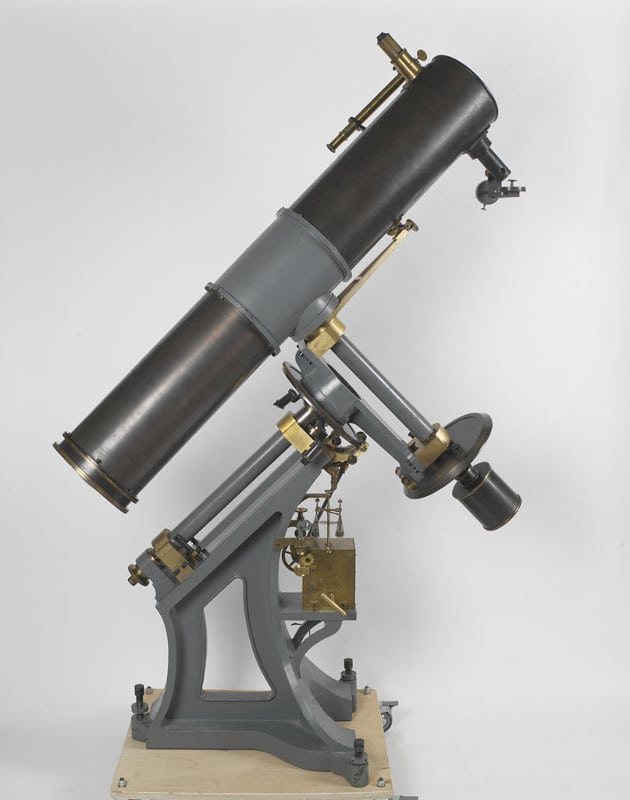
The University of Montpellier’s astronomy collection comprises approximately 200 objects, 56 of which are designated as Historic Monuments. It is of great heritage significance and illustrates the technical and scientific developments in instruments from the 18th to the 20th century.
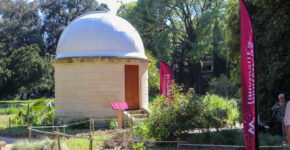
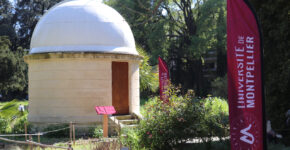
The first instruments came from the Royal Society of Sciences and were placed on loan by the city of Montpellier in 1811. These devices allow students to conduct observations and experiments during lab sessions. Held at iconic locations throughout the city—such as the Babote Tower, the Arc de Triomphe, and the observatory at the Jardin des Plantes—these classes require the use of quadrants, precision clocks, telescopes, magnifying glasses, and other equipment.
Throughout the 19th and 20th centuries, the Faculty of Sciences continued to acquire new instruments to meet the modern needs of teaching and research, such as the observation equipment used for experiments with artificial comets in the 1960s.
Botany
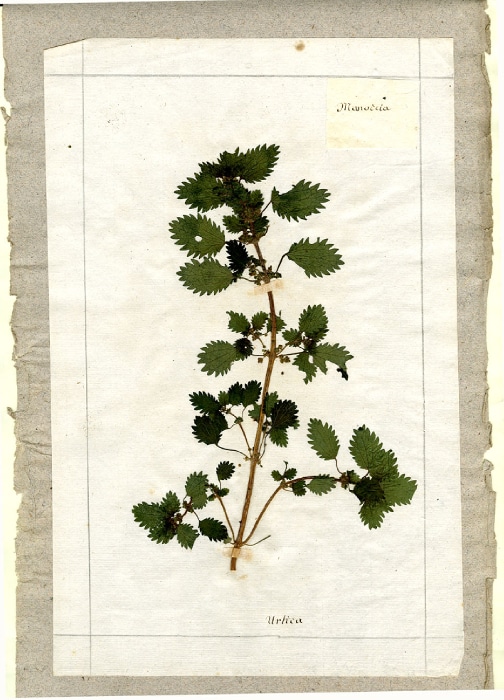
The Montpellier University Herbarium (MPU) is, in terms of both size and the quality of its collections, the second-largest herbarium in France after that of the Muséum de Paris. Serving as both a research tool and a cultural heritage collection, it contains approximately 3.5 million dried specimens of vascular plants, algae, mosses, and fungi. It also includes more unusual collections (a medicinal plant collection, a wood collection, etc.) as well as documentary archives related to the specimens (handwritten notes by botanists and researchers, scientific illustrations such as the botanical watercolors created by T.F. Node-Véran and designated as Historic Monuments in 2010). The oldest specimens are believed to date back to the 16th century, and each year new collections and acquisitions enrich this collection.
In addition to these collections are the biological specimen collections of the Center for Bioarchaeology and Ecology (CBAE) and those of the Montpellier Institute of Evolutionary Sciences (ISE-M), which manages one of the world’s largest collections of pollen slides.
Ethnology
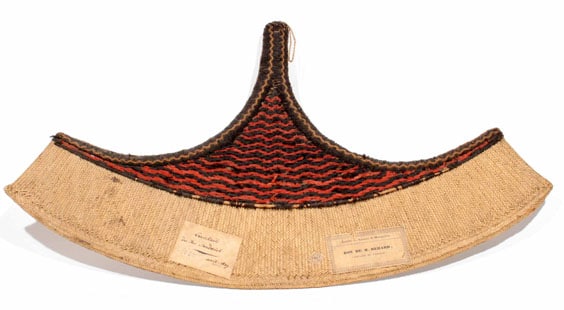
The University of Montpellier’s ethnology collection brings together objects from around the world that reflect the diversity and richness of various cultures, particularly those of the Kanak, Papuan, and Māori peoples.
This heritage collection includes more than 130 artifacts acquired in the 19th century. The pieces come from various regions of the world, including Oceania, Asia, South America, and North Africa. It was primarily collected by naval officer Auguste Bérard during three round-the-world exploration voyages undertaken between 1810 and 1840. The collection includes bone and shell ornaments, wood carvings, weapons, musical instruments, and furniture. It was designated a Historic Monument in 2009.
Another unique feature of this collection is the presence of a collection of fragments of Egyptian mummies, including, in particular, feet, hands, a few bones, several skulls, and the embalmed body of a child.
Flahaut Photo Library
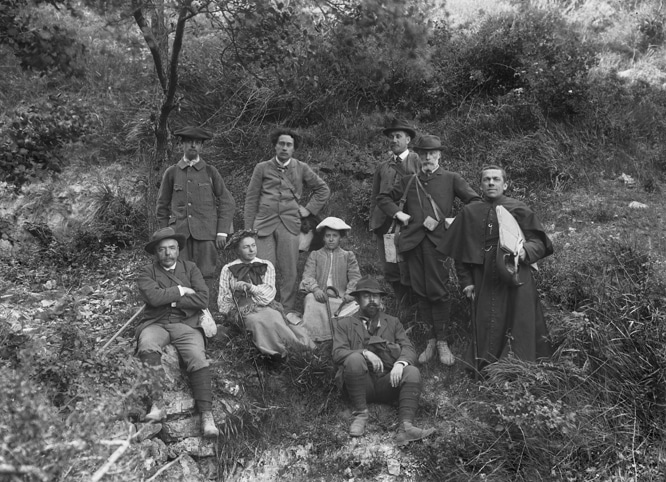
The "Charles Flahault" photo archive contains more than 2,000 digitized images of glass plate and paper prints from the late 19th and early 20th centuries.
This collection was assembled by botanist Charles Flahault (1852–1935), a professor in the Faculty of Sciences and director of the Montpellier Botanical Institute from 1883 to 1927. These photographs were taken during scientific research aimed at studying changes in landscapes and vegetation. Many of the photographs are signed by Charles Flahault’s collaborators, such as Johannes Lagarde (1866–1934). Family photographs from the Emberger collection—descendants of Charles Flahault—have been added to this collection.
The cataloging and digitization of this collection are the result of a partnership between the Montpellier Interuniversity Library (Photography Workshop, Science Library) and the “Présence de Charles Flahault” association. The collection is preserved by the Science Library and the Historical Heritage Department of the University of Montpellier.
Mineralogy
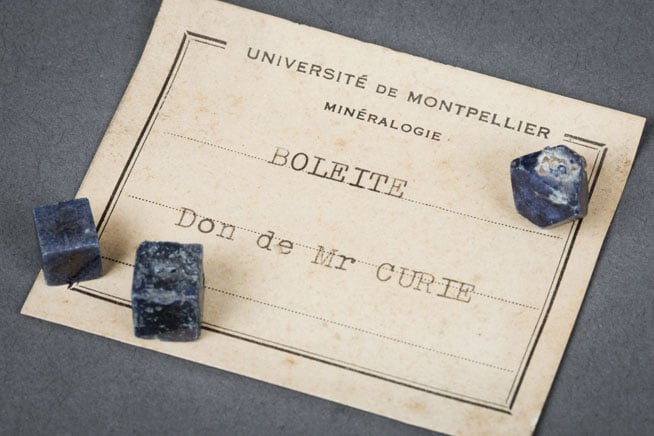
When it was founded in 1809, the Faculty of Sciences in Montpellier was the only one—along with the Faculty of Sciences in Paris—to have a chair of mineralogy. To illustrate the first lectures, the city of Montpellier made a donation in 1811 consisting of mineral samples from Revolutionary confiscations. The collections continued to grow throughout the century thanks to donations and purchases by professors, as well as exchanges with various institutions. Students also contributed by collecting samples during fieldwork. All these efforts made it possible to assemble a large collection representative of the mineral deposits in the Languedoc-Roussillon region and, more broadly, throughout France.
Today, the mineralogy collection comprises approximately 2,500 specimens, as well as teaching materials such as wooden mineralogy models. This collection continues to grow thanks to numerous donations from private individuals.
Furniture and Works of Art
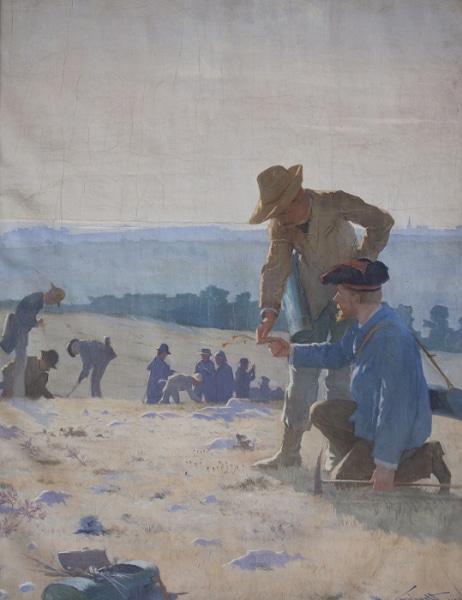
The University of Montpellier has inherited a rich collection of furniture and works of art that reflect its remarkable history.
Paintings and Sculptures: Nearly 300 paintings and sculptures depict the major events and figures that have shaped the university’s history. Among them are more than 260 painted portraits of professors, designated as Historic Monuments, as well as busts and decorative paintings.
Furniture: The university has preserved antique furniture used to display and store its collections. It also owns 19th-century furniture from the former bishop’s residence in Montpellier.
Works of art: The two ceremonial maces of the School of Medicine and the School of Sciences are among the university’s most iconic objects. The one from the Faculty of Medicine, known as the Rod of Asclepius, was crafted by goldsmith Jean-Baptiste-Claude Odiot in 1804, while the one from the Faculty of Sciences was crafted by goldsmith Placide Boué in 1819. They are used, just like academic gowns, during official ceremonies.
Paleontology
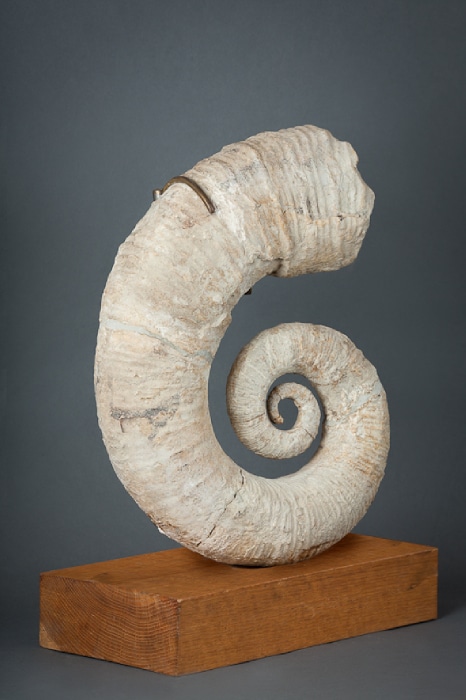
The origins of the University of Montpellier’s paleontology collection date back to the founding of the Montpellier Faculty of Sciences in 1809. This discipline, dedicated to the study of extinct life forms and their evolution over geological time, was then affiliated with the Department of Mineralogy and Geology.
The first paleontological collections were acquired through a deposit from the city of Montpellier in 1811. They were subsequently expanded through donations, bequests, and purchases. They also include material from excavations conducted in the region beginning in the 19th century; many of these specimens are internationally recognized as standard specimens, with approximately 10,000 type specimens.
Today, fossil collections include thousands of imprints, vertebrates, invertebrates, charophytes, plants, and pollen grains.
These collections, which are continually expanded, are managed by the Montpellier Institute of Evolutionary Sciences (ISE-M). They continue to serve as a resource for teaching and international research.
Contemporary Scientific and Technical Heritage (PATSTEC)
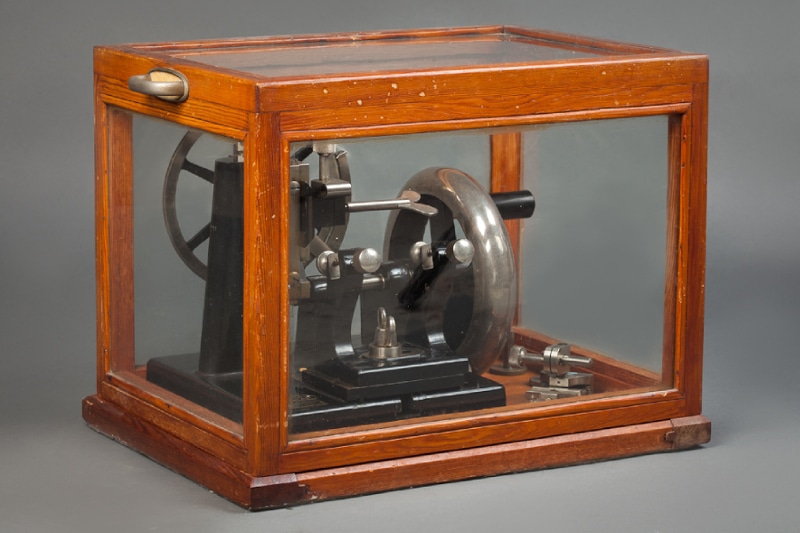
This collection is part of the PATSTEC (PATrimoine Scientifique et TEchnique Contemporain) preservation initiative, supported by the Ministry of Higher Education and Research and the Musée des Arts et Métiers/CNAM. It involves cataloging instruments that bear witness to the technical advances of the 20th and 21st centuries.
The diversity and modernity of the objects that make up this collection give it a remarkable character. Computer equipment, educational charts, microscopes, photomultipliers, and more are just a few examples of this collection, which grows by 150 items each year.
Donated by laboratories, private companies, and individuals, these instruments are cataloged to highlight the areas of research conducted in the Languedoc-Roussillon region. The project focuses specifically on identifying and preserving equipment related to health, botany, and interdisciplinary fields such as photography, microscopy, and educational materials.
Physics
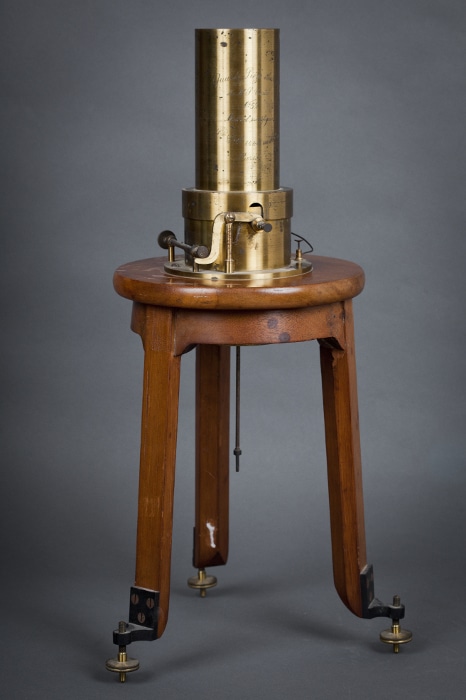
The physics collection at the University of Montpellier reflects the history of education, science, and technology in the 19th and early 20th centuries.
Some of the instruments in this collection were acquired by university professors beginning in the early 19th century for educational or practical purposes, such as demonstrations and scientific research. Another portion of this collection comes from revolutionary confiscations placed in storage by the municipality of Montpellier in 1811. According to the archives, physics instruction in Montpellier at that time covered a wide range of topics, including the motion of celestial bodies, optics, acoustics, electricity, the analysis of matter, and physics as applied to the human body.
Today, more than 300 instruments bear witness to the evolution of teaching methods and practices over the past few centuries. Leading instrument makers are represented by such renowned brands as Pixii, Ducretet, Secrétan, and Beaudouin.
Zoology
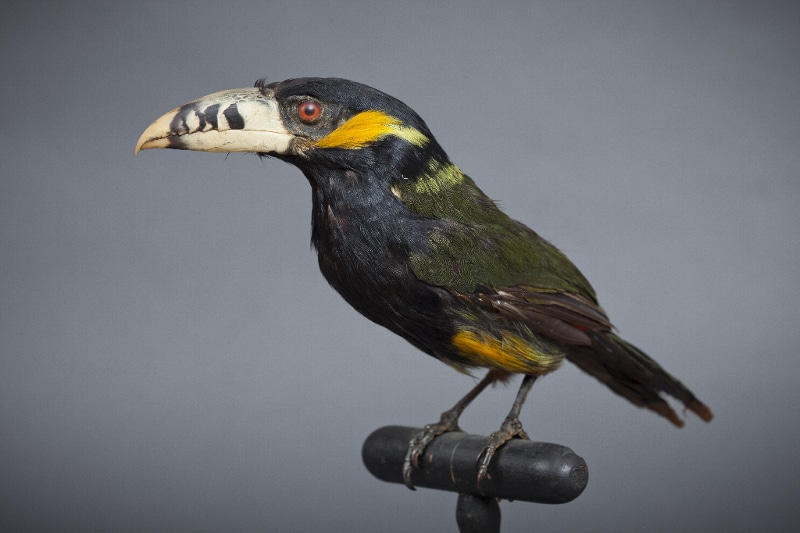
The University of Montpellier’s zoology collection consists of more than 40,000 specimens preserved using various methods. In addition to collections of taxidermied animals (birds, mammals, fish, and reptiles), it also houses numerous unmounted specimens, others preserved in liquid (vertebrates and invertebrates), several thousand shelled mollusks, corals, a large collection of mounted skeletons, and entomological specimens.
These collections are the result of donations, exchanges, bequests, or purchases between individuals or institutions—such as the National Museum of Natural History—beginning in the early 19th century. They are used in the animal biology and comparative anatomy courses taught at the Faculty of Sciences and the School of Pharmacy.
Even today, they remain an excellent teaching tool and constitute a remarkable resource for research, particularly in fields such as molecular biology and phylogenetics.
1% for the Arts
The “1% Art Program” is a unique initiative created in 1951 to support contemporary art, raise public awareness of art, and provide as many people as possible with direct access to contemporary artworks outside of specialized institutions.
This initiative calls for allocating 1% of the cost of construction, expansion, or renovation of certain public buildings to the creation of one or more works of art designed specifically for the sites where they will be displayed.
Most of the works created on the Triolet campus are in the “Op Art” style, also known as optical art. This movement refers to an artistic practice that emerged in the 1960s and exploits the fallibility of the eye through optical illusions. Op Art works are generally abstract and convey a sense of movement, flashes of light, and vibration. These visual stimuli place the viewer’s body in an unstable state, somewhere between pleasure and discomfort, immersed in a sensation of dizziness akin to certain states of mild intoxication.