Conference: “The Smart Home: Why and How?”
This event has already taken place!
First event of the 2019 “Thursday Lectures” series at the Montpellier Institute of Botany, 163 Rue Auguste Broussonnet, Montpellier.
Free admission.
This conference will be moderated by:
- Alain Foucaran, professor at the University of Montpellier, director of the Institute of Electronics and Systems (IES), and co-initiator of the project;
- Anne-Sophie Cases, professor at the University of Montpellier (IAE – Institute of Business Administration). She is the program director for the “e-Marketing” and “Web Project Management” master’s programs;
- Malo Depincé, associate professor at the University of Montpellier and deputy director of the “Dynamiques du droit” laboratory. A specialist in consumer and competition law, he coordinates the HUT project.
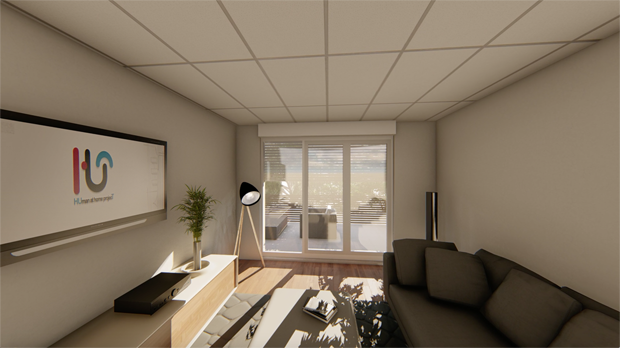
Together, they will present the “HUmans at home projecT – HUT” project, which aims to examine and understand the factors affecting residents’ well-being in the smart homes of the future:
- What is our relationship with the homes of the future, and how will we live in the future?
- What will living conditions be like in the typical home of the future: a potentially urban apartment equipped with numerous sensors, actuators, and an analytics system?
- What is possible, desirable, and acceptable in terms of contributing to well-being in the smart home of the future?
HUT takes a multidisciplinary approach to addressing major scientific questions related to the housing of the future:
- What connected data will we share? How and why?
- How do we interact with smart homes?
- How can technology improve our living conditions?
- What future legislative framework for the housing of the future?
HUT brings together scientists from 12 research laboratories and 8 innovative companies: researchers specializing in sensors, data, language, motion, commerce, and more. Architects, lawyers, historians, and psychologists have come together to understand and design the apartment of the future for the occupant of the future, using an innovative experimental setup.
Read the related article “Human at Home: Toward a Human-Centered, Smart Living Environment”
News
“Medical Students in the Interwar Period”: A Unique Immersion into the History of the Montpellier-Nîmes School of Medicine
Published on: September 21 , 2026
The University of Montpellier is presenting an exhibition dedicated to the lives of female students and…