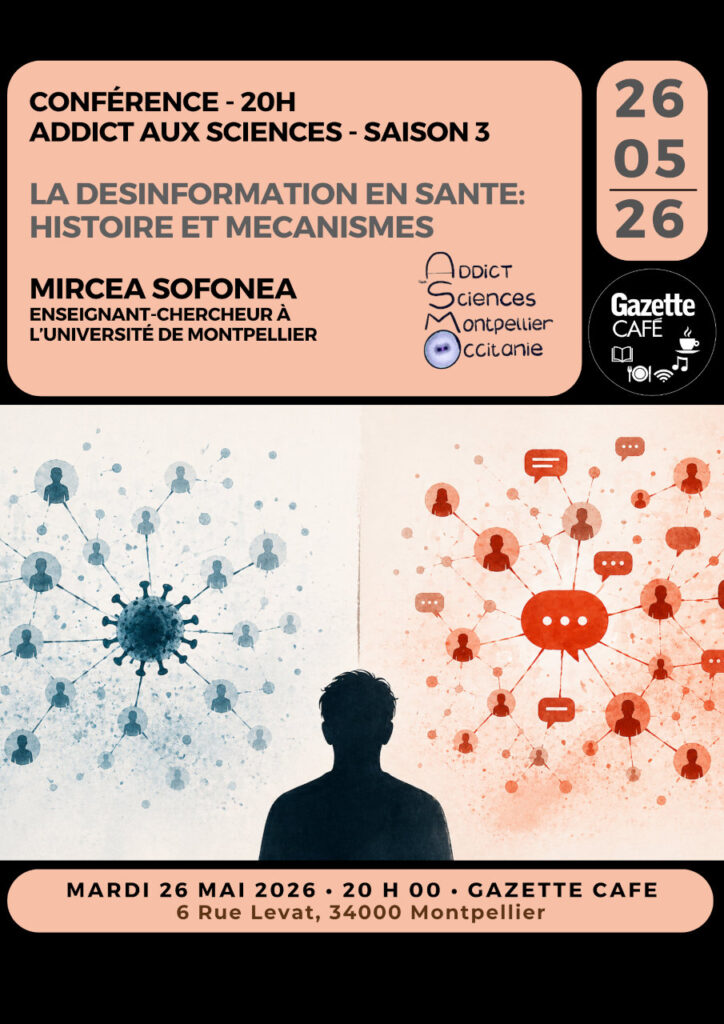
Health Misinformation: History and Mechanisms
This event has already taken place!
By Mircea T. Sofonea, Professor at the University of Montpellier.
In all its forms, “fake news” has, over the past decade, become a subject of study and a news topic in its own right—almost as much as it has poisoned the news landscape itself. The health sector has been particularly affected, and the SARS-CoV-2 pandemic (2020) marked a turning point in the intensity and methods of dissemination of biomedical fake news. However, disinformation (deliberately false news) and misinformation (errors spread in good faith) are not recent phenomena in science and technology; they are in fact inherent to its advances and have been part of its history, as evidenced by anti-vaccination sentiment, which traces its origins to the 18th century and experienced a resurgence with the advent of mRNA vaccines. In this presentation, I will first discuss, in chronological order, several instances in which science was affected by political manipulation, fraud, or errors that were recognized too late, to illustrate the diverse origins of scientific fake news. Next, I will present a synthesis of research on the common mechanisms that have shaped its spread, and the lessons we can draw from this to improve our ability to combat disinformation and misinformation in the field of health.
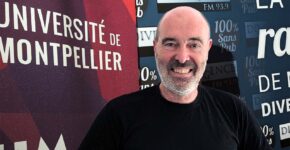
Mircea T. Sofoneahas been an associate professor at the University of Montpellier since 2018, where he teaches spatial analysis, biostatistics, epidemiology, and stochastic processes in biology, pharmacy, and medicine programs. With training in anti-infective strategies and health databases, he is also an epidemiologist at the Nîmes University Hospital. In addition, he is a visiting professor at the École normale supérieure in Paris and at the Conservatoire national des arts et métiers. Within the UMR PCCEI (University of Montpellier, INSERM, University of the Antilles), he co-directs the modeling division, addressing fundamental and applied research questions related to the epidemiology, evolution, and control of respiratory viruses. Committed to fostering dialogue between public health and the formal sciences to prepare society for health crises, he joined ANSES’s Air & COVID expert group and is regularly consulted by the media and policymakers on epidemiological issues. Since 2022, he has served as co-director in charge of research at the ExposUM Institute, responsible for accelerating interdisciplinary projects in environmental health led by the University of Montpellier and its partners. Since 2025, he has served as the national coordinator of the “Pandemic Preparedness for Respiratory Virus X” research program, funded by ANRS MIE and France 2030.
Receive a weekly summary of theUM 's schedule
* By entering your email address, you agree to receive a weekly summary of the “UM ” calendar via email and acknowledge that you have read ourprivacy policy. You can unsubscribe at any time by using the unsubscribe linkor by contacting us via email.
News
"UM : Science" [S06-ep01]: Green Education, the Education of Tomorrow
Published on: September 14 , 2026
For this first episode of the new season, *A l’UM * explores the future of science with Sylvain Wagnon, a researcher…