Picking the Medicines of Tomorrow
When mycologists from very different backgrounds combine their expertise to discover the medicines of the future: the story of a collaborative adventure at the Center for Functional and Evolutionary Ecology (CEFE).
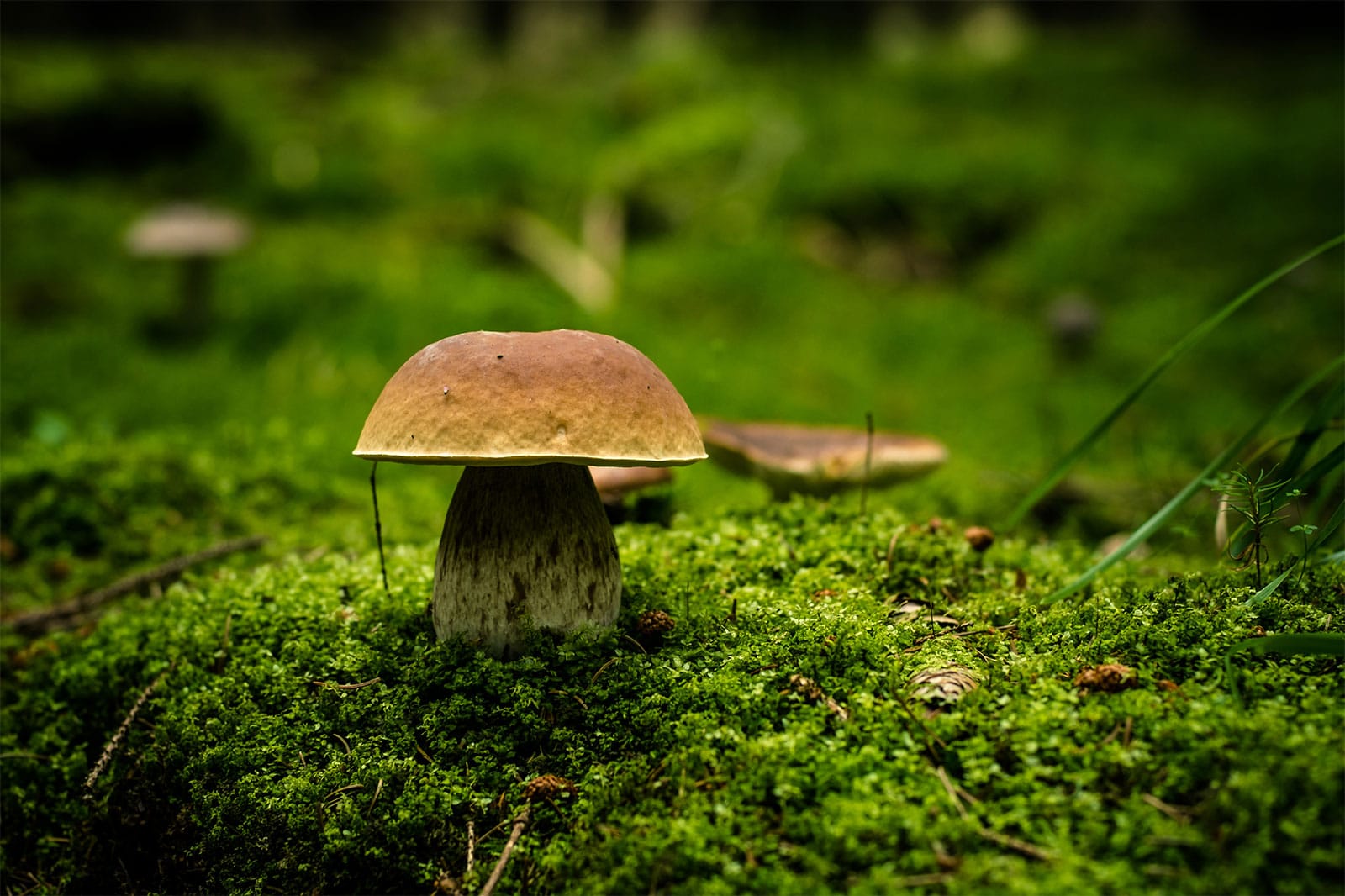 Researching mushroom-derived drugs to treat neurodegenerative diseases: this is the mission that brings together Sylvie Rapior and Franck Richard (University of Montpellier) and Jean-Michel Bellanger (Inserm). Three mycologists with radically different backgrounds…
“Mycologists’ Ecosystem”
“Mycology encompasses an infinite variety of professions,” explains Sylvie Rapior. “We’re an ecosystem of mycologists!” she says with a smile…
At the start of the process are Sylvie and her team of chemists. It’s up to them to extract compounds from the selected mushrooms: it’s this mixture of molecules that will be tested on living organisms.
This is where Jean-Michel Bellanger takes over. A mycology enthusiast, this geneticist and biologist came up with the idea of testing these molecules on nematodes (C. elegans). This tiny, transparent worm, barely a millimeter long, is a model organism often used in molecular biology.“It allows us to replicate the characteristic symptoms of Parkinson’s disease. And thus to identify the possible presence of neuroprotective molecules that could treat this disease.”
Open Collaborations
All that remains is to consult an ecologist—a specialist in fungal communities, their evolution, and their interaction with their environment.“Franck Richard provides a comprehensive understanding that allows us, in particular, to identify areas where we’re likely to find a specific species,” says Sylvie Rapior. But it also sheds light on the links between the concentration of active molecules and the natural environment,“two parameters that are intrinsically linked, because chemistry plays a key role in a fungus’s integration into its ecological niche,” explains Jean-Michel Bellanger.
While cooperation between these various specialists is working perfectly, they themselves now aspire to pursue more open collaborations. What’s next? Ethnomycology, where scholars in the humanities can propose new avenues of research. But also the development of increasingly active networks with amateur mycologists.
“When knowledgeable enthusiasts and skilled laboratories come together, it ensures that we obtain accurate data. We want to benefit from the insights of these excellent observers, but we also want to provide them with practical support—for example, by giving them access to the power of molecular biology tools,” concludes Franck Richard.
36th Annual Fall Mushroom and Plant Fair
October 24 and 25 at the Montpellier School of Pharmacy: an exhibition organized by the Hérault Society for Horticulture and Natural History. Highlights of the program include: the main mushrooms used in dietary supplements—presentation, uses, and precautions for use.