"UM , Science" [S02-ep12]: From COP 15 to the Science Bar
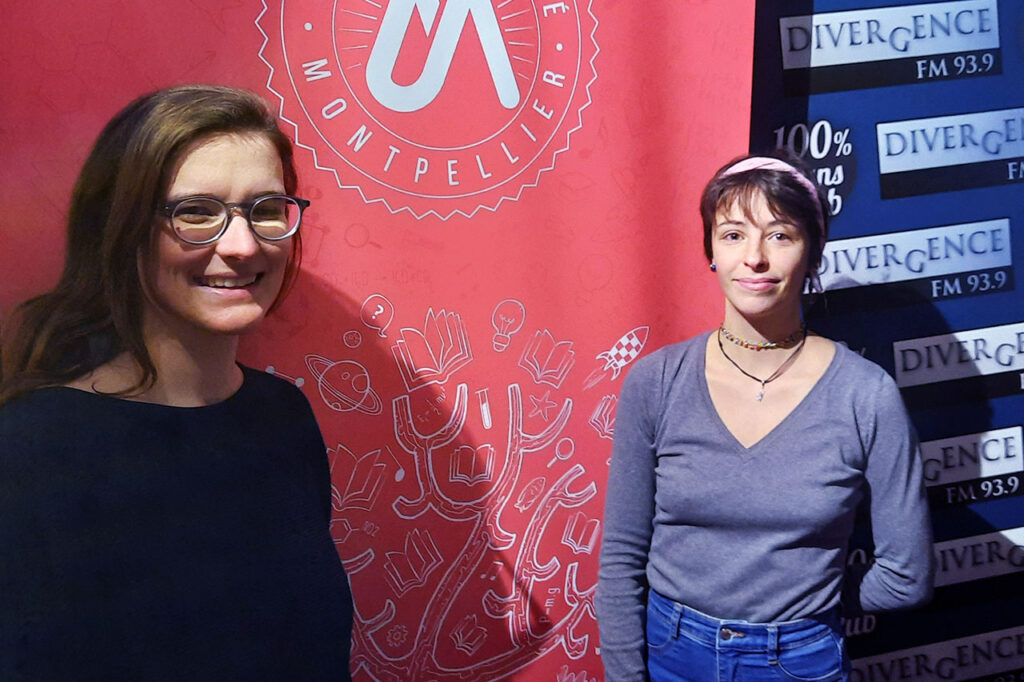
This week on *A l’UM * la science, Anaëlle Durfort, a doctoral student at Marbec, and Marie-Morgane Rouyer, a doctoral student at CEFE, join us to break down the latest COP 15 on biodiversity that they attended. Agnès Pesenti, head of science outreach, joins us at the end of the show to introduce the new season of the Bar des sciences. A program broadcast on Divergence FM-93.9, every Wednesday at 6 p.m.
When a ship takes on water, a good captain brings the entire crew up on deck to bail, bail, and hope to reach dry land. And in “bail,” as you’ve heard, there’s “COP,” short for Conference of the Parties—that international body created following the Earth Summit in Rio in ’92 to try to stem the threat of a massive shipwreck: climate change. The idea: to ensure that the 198 signatory countries implement the United Nations Framework Convention on Climate Change.
The first COP was held in Berlin in 1995. Twenty-six have taken place since then—one per year—up to the most recent one, COP 27, held in 2022 in Sharm el-Sheikh. Among these conferences, COP 3—which produced the Kyoto Protocol —and COP 21—which producedthe Paris Agreement—are particularly noteworthy. We also recall the failure of COP 15 in Copenhagen, which aimed to renegotiate a climate agreement (“The Disappointing Outcome of the Copenhagen Summit,” Le Monde, 12/19/2009).
In parallel with these climate COPs and in response to the collapse of biodiversity, the COP on Biodiversity—held every two years—was established in 1994. If we had to single out just one, it would be COP 10 in Nagoya, where governments committed to achieving the 20 Aichi Targets, including halving the loss of natural habitats and implementing plans for sustainable consumption and production.
By 2020, none of these goals had been fully achieved. The evidence of the collapse of biodiversity is undeniable: 1 million species are threatened with extinction, 75% of the Earth’s land surface has been significantly altered, and 85% of wetlands have disappeared. The problem with bailing water out of a sinking boat is that you can’t stop the leak.
Anaëlle Durfort and Marie-Morgane Rouyer are our guests. They are both Ph.D. candidates at the University of Montpellier—the former at the Marbec Underwater Biology Laboratory and the latter at the Center for Functional and Evolutionary Ecology (CEFE). They were selected by the Global Youth Biodiversity Network to participate in the most recent biodiversity COP, COP 15, held in Montreal from December 7 to 19 under the Chinese presidency. And they’re here today to tell us all about it. They will also give a lecture open to the public on Thursday, January 26, at 6:30 p.m. on the Triolet campus.
Our last-minute guest will be Agnès Pesenti, head of science outreach. She’ll be introducing us to the new season of the Bar des sciences, which kicks off on January 26 with a nightmarish topic: sleep disorders.
At "UM : Science," here's the lineup—let's get started!
Co-production: Divergence FM / University of Montpellier
Host: Lucie Lecherbonnier
Interview: Aline Périault / Lucie Lecherbonnier
Director: Tom Chevalier
Listen to the show “A l’UM la science” on Divergence FM 93.9

Check out theUM podcasts, now available on your favorite platform (Spotify, Deezer, Apple Podcasts, Amazon Music, etc.).