"UM : Science" [S02-ep26]: From the Cost of Electricity to the Agropolis Conferences
This week on *A l’UM * science, François Mirabel, a researcher at the Montpellier Research Institute in Economics (MRE), breaks down the causes of the surge in electricity rates for us. This is an opportunity to revisit the latest issue of *LUM* magazine, which focused on energy. In the second half of the program, Ly Yann Kauv, program manager at the Agropolis Foundation, announces three conferences on the topic of climate change in Africa. The program airs on Divergence FM-93.9 every Wednesday at 6 p.m.

And today we present the 19th issue of LUM, the university’s science and society magazine. This issue is devoted to the issue of energy in a context that has surely not escaped your notice: the energy crisis. A crisis that sometimes casts a harsh light on our dependence on oil, electricity, and natural gas to heat our homes, get around, feed ourselves—in short, to live… So harnessing this energy means first knowing how to produce it, then store it, and above all, manage it. The top priority is addressing the need to reduce our oil consumption—through geothermal energy, for example, or solar power. It also involves figuring out what to do with nuclear waste, reducing the impact of wind turbines on biodiversity, optimizing wood combustion processes, and developing innovative batteries to store energy. All these challenges involve a wide variety of research fields: geology, chemistry, nuclear science, biology, and political science—as the “Yellow Vests” crisis, triggered, as you may recall, by the carbon tax, has shown us. We address all these topics in this issue.
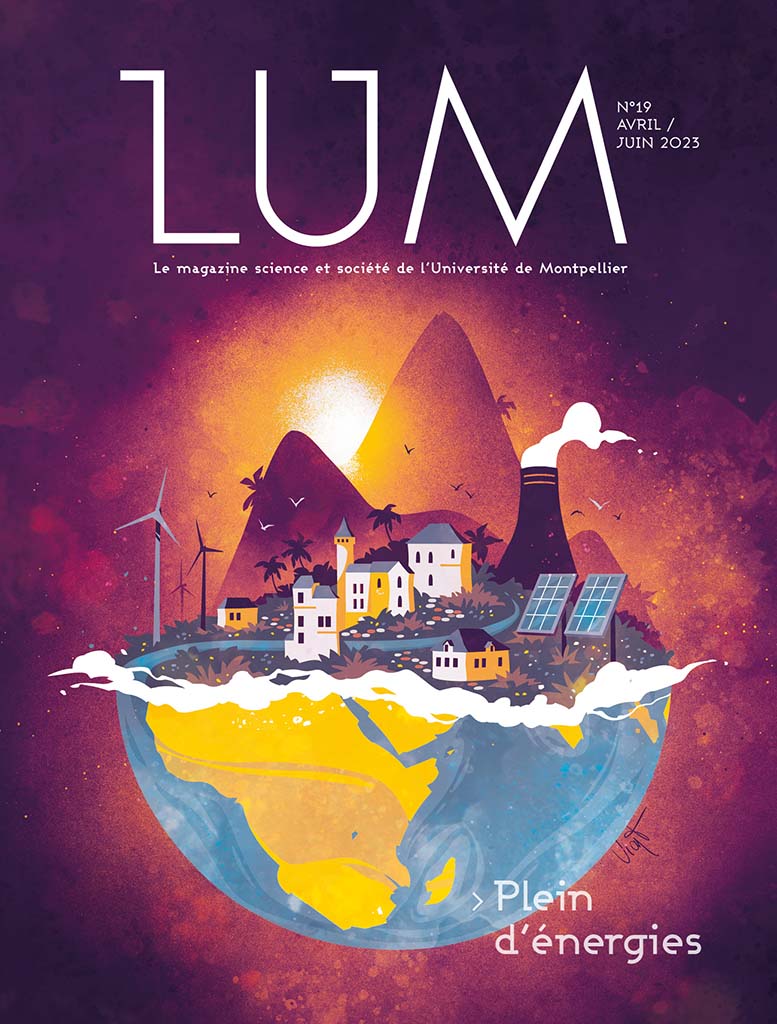
Energy is, of course, also an economic issue, and that’s the field we’ve chosen to focus on. Since 2021, energy rates have been rising steadily (read Energy Conservation Plan: Striving for the Best Possible Balance). The media and politicians have largely linked this rise in costs to the war in Ukraine, but does that really explain it? And besides, who among us really knows how energy prices are set? By whom? Based on what criteria? What are the consequences of opening up this essential commodity to competition? We’re asking all these questions today of François Mirabel, a researcher at the Montpellier Economics Research Laboratory, dean of the Faculty of Economics, and a specialist in energy and transportation.
See also:
- “Opening the electricity sector to competition comes at a very high cost,” LUM No. 19.
- Analysis: The Opening of European Markets to Competition: The Root Cause of Soaring Prices, The Conversation, September 20, 2022.
Our guest for the final three minutes will be Ly Yann Kauv, program manager at the Agropolis Foundation. She will introduce a series of three lectures on the topic of climate change in Africa, led by three IPCC authors, taking place on June 13 at the Corum in Montpellier.
At "UM : Science," here's the lineup—let's get started!
Co-production: Divergence FM / University of Montpellier
Host: Lucie Lecherbonnier
Interview: Lucie Lecherbonnier / Aline Périault
Production: Naomi Charmetan / Bruno Bertrand
Listen to the show “A l’UM la science” on Divergence FM 93.9

Check out theUM podcasts, now available on your favorite platform (Spotify, Deezer, Apple Podcasts, Amazon Music, etc.).