Science at theUM [S03-ep31]: Dear Mosquitoes
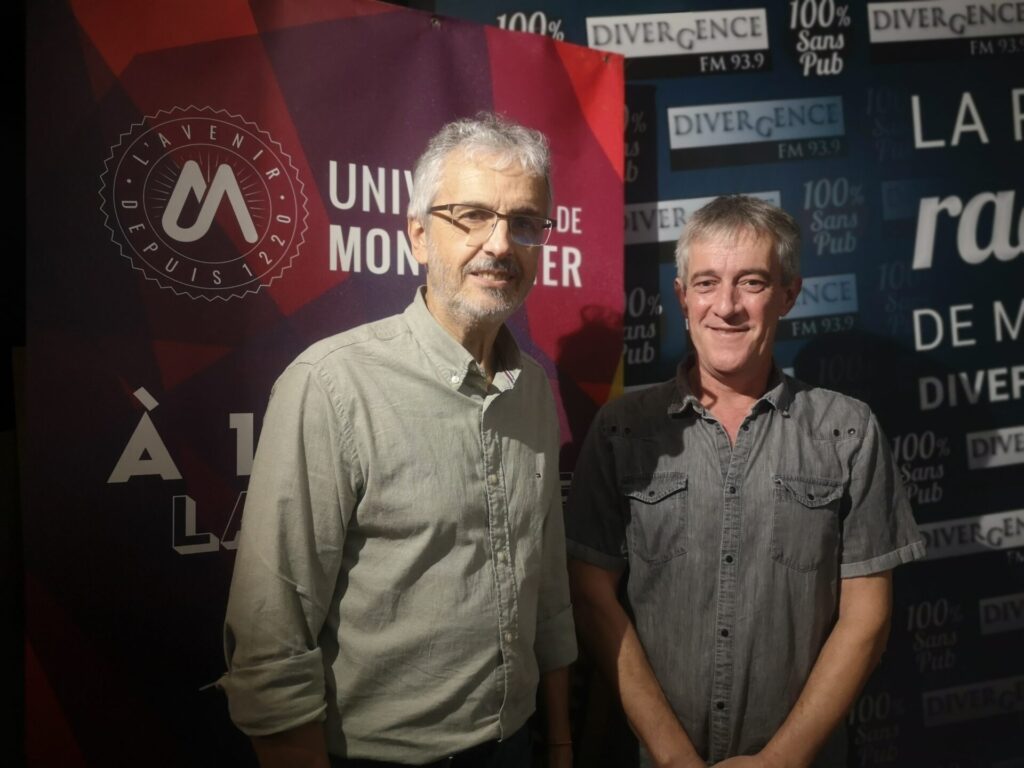
This week on the final episode of *A l’UM *—the science segment of the season—Frédéric Simard from the Mivegec and Jean-Michel Salles from the CEEM talk to us about the cost of mosquitoes, a topic that’s generating a lot of buzz. In the second half of the show, we’ll head to Mivegec , where Philippe Boussès gives us a behind-the-scenes look at a collection of very special arthropods… A program co-produced with Divergence FM and broadcast every Wednesday at 6 p.m. on 93.9.
And here we are again! The last episode of the season—after this, all that remains is the promise of the vacation ahead, with the blue of the sky and the sea as our only horizons, and the weight of files, orders, projects, and students traded for a few weeks for the weight of our suitcases!
Maybe you've even started making your little list. But have you thought about mosquito repellent?
An international study coordinated by scientists from the IRD, the CNRS, and the MNHN and published on May 17, 2024, in the journal *Science of The Total Environment* reveals a massive increase in the global economic cost of the invasive mosquitoes *Aedes aegypti* and *Aedes albopictus*—the latter better known by the gentle name “tiger mosquito”— which have served as vectors for dengue, chikungunya, and the Zika virus over the past few decades.
Between 1975 and 2020, the total recorded costs amounted to $94.7 billion—a figure that is likely significantly underestimated, according to our two guests who participated in this study: Frédéric Simard, a biologist at the Mivegec laboratory (infectious diseases and vectors: ecology, genetics, evolution, and control), and Jean-Michel Salles, an economist at CEEM, the Montpellier Center for Environmental Economics.
For more information:
- Read the press release: “Massive Increase in the Global Economic Cost of Invasive Mosquitoes and the Diseases They Transmit.”
- Also check out the episode of *A l’UM la science* on “The Cost of Invasive Species” at CIRAD’s wood library with Jean-Michel Salles.
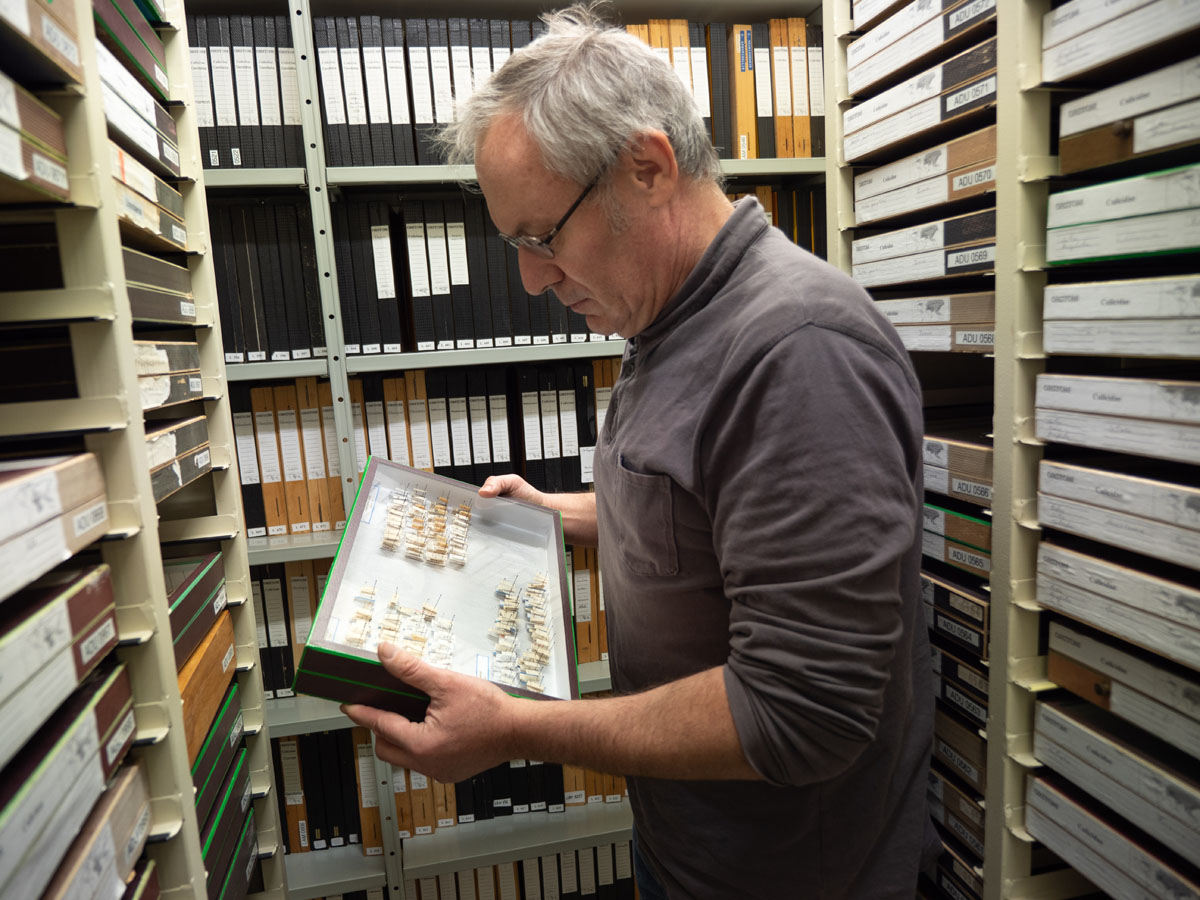
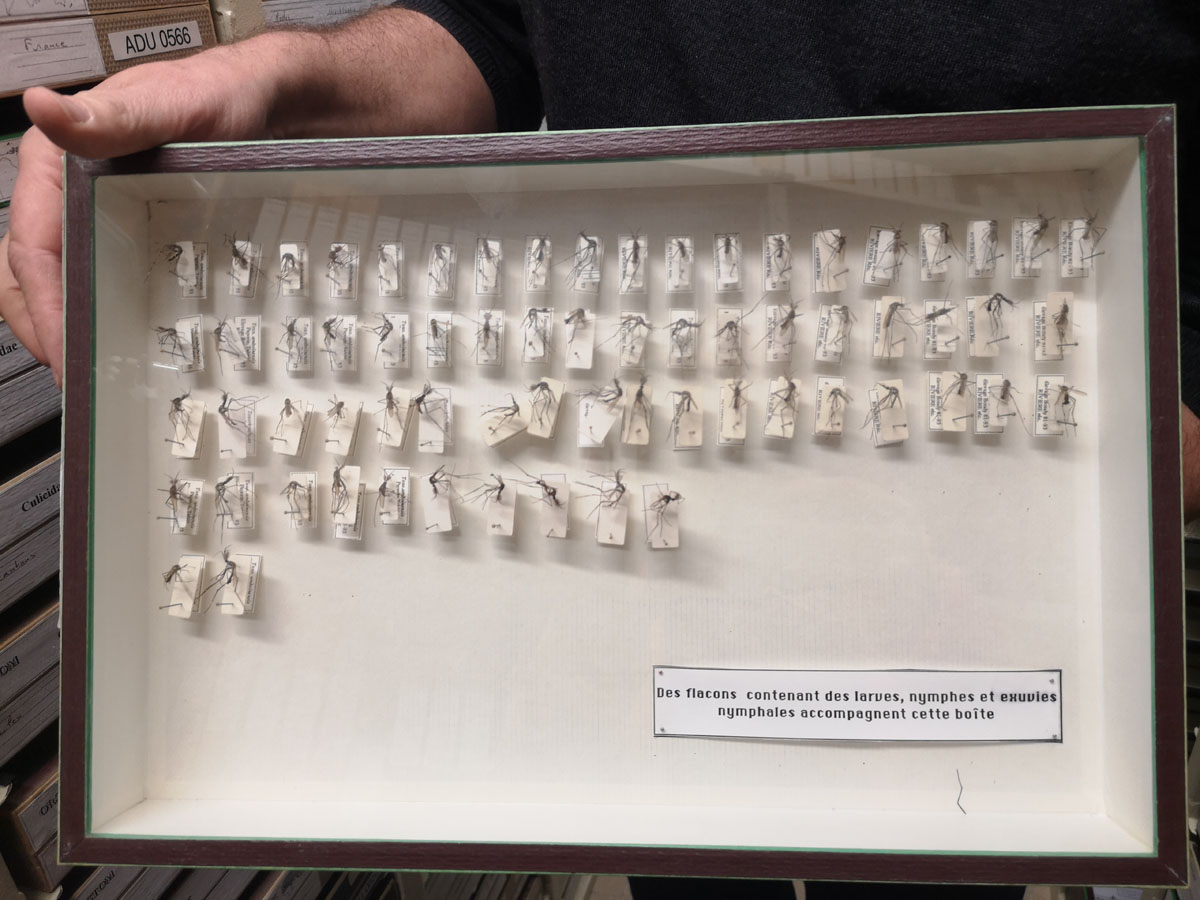
In the second half of the program, we’ll take you to the Institute of Research and Development (IRD) and, more specifically, to the Mivegec laboratory (Infectious Diseases and Vectors: Ecology, Genetics, Evolution, and Control) to explore Europe’s largest collection of medically significant arthropods, with specimens from 97 countries. Welcome to the Arim Collection; Philippe Boussès will be introducing you to these little creatures.
Recommended reading:
At "UM : Science," here's the lineup—let's get started!
Co-production: Divergence FM / University of Montpellier
Host: Lucie Lecherbonnier
Interview: Aline Périault / Lucie Lecherbonnier
Reporting and editing: Lucie Lecherbonnier / Aline Périault
Directed by: Tom Chevalier / Alice Rollet
Listen to the show “A l’UM la science” on Divergence FM 93.9

Check out theUM podcasts, now available on your favorite platform (Spotify, Deezer, Apple Podcasts, Amazon Music, etc.).